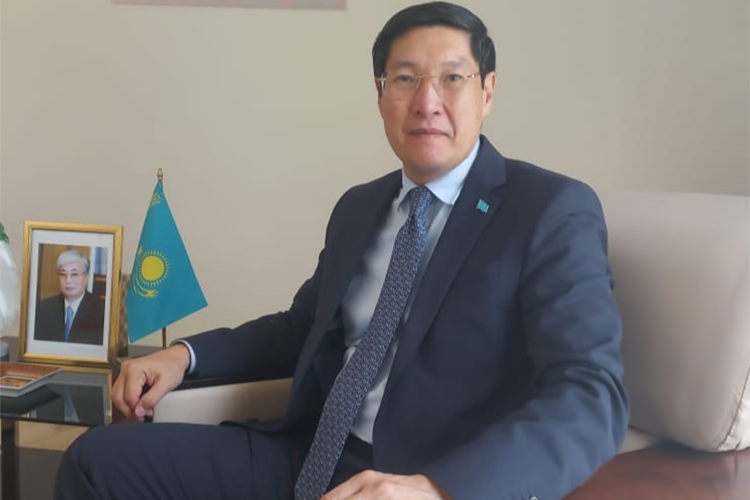
Kazakhstan’s Ambassador to Algeria, Anwar Bek Akhmetov, told Al-Shorouk:
We seek to launch projects in agricultural technology and improving plant varieties
We exported 350 thousand tons of wheat with a financial value of $93 million
The rapprochement between the two peoples will form the strongest pillar of our future partnership
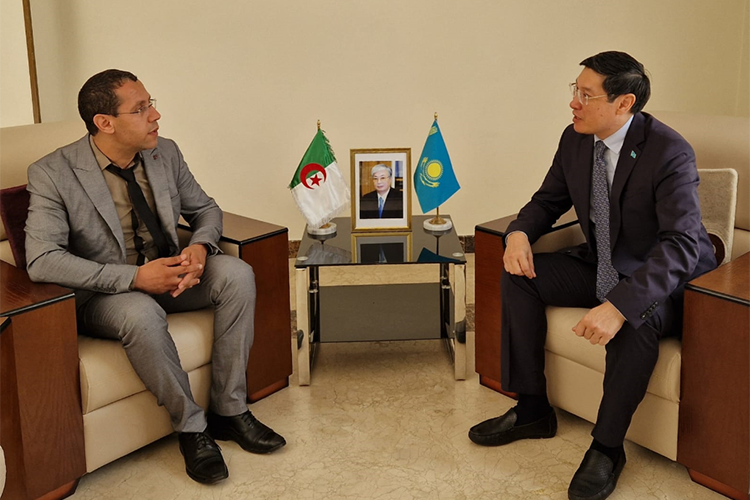
On the thirtieth anniversary of the establishment of diplomatic relations between Algeria and Kazakhstan, Al-Shorouk opens a window on the prospects for partnership between the two countries through a special dialogue with the Ambassador of the Republic of Kazakhstan to Algeria, Anwar Bek Akhmetov, who is the first ambassador of his country to reside permanently in Algeria since the establishment of relations between the two countries, in a step that reflects the common political will to advance bilateral cooperation to a new level.
In this dialogue, the Ambassador talks about the reality of Algerian-Kazakhstan relations and the promising economic opportunities, especially in the fields of agriculture, food security, investment and transportation. He also addresses the commonalities between the two countries in foreign policy and his vision for the future of the bilateral partnership. He also reveals the details of the new phase that Kazakhstan is entering with the entry into force of its new constitution, and the political and institutional reforms it brings, before sending a message to the Algerians inviting them to discover his country and strengthen bridges of rapprochement between the two peoples.
This year marks the thirtieth anniversary of the establishment of diplomatic relations between Kazakhstan and Algeria. How do you evaluate the reality of bilateral relations today?
Kazakhstan and Algeria, as the largest country in Central Asia and the largest country in Africa respectively, are two countries that possess similar components, in terms of strategic geographic location, enormous natural resources, and an independent foreign policy, as well as a common will to promote stability, dialogue, and sustainable development.
This convergence of visions forms a solid foundation for deepening our bilateral partnership.
On March 15, our two countries celebrated the thirtieth anniversary of the establishment of diplomatic relations. Over three decades, we have succeeded in building a relationship based on mutual trust, respect and regular political dialogue.
The decision of His Excellency the President of the Republic of Kazakhstan, Mr. Kassym-Jomart Tokayev, and His Excellency the President of the People’s Democratic Republic of Algeria, Mr. Abdelmadjid Tebboune, to open two embassies in the capitals of the two countries constituted an important milestone in the development of our bilateral relations.
What are today the most promising sectors of economic cooperation between the two countries?
The opportunities available are many, and the agriculture sector is a successful model of practical cooperation between our two countries. In 2025, Kazakhstan exported to Algeria approximately 350,000 tons of wheat worth approximately 93 million US dollars, which reflects great potential to strengthen our partnership in the field of food security.
Today, we seek to launch new projects in the fields of agricultural technology, improving plant varieties, food industries, and producing halal products.
We also hope to begin exporting live sheep to Algeria, starting next year. Thanks to Kazakhstan owning more than 21 million heads of sheep, it has great potential to meet the needs of the Algerian market while fully adhering to the legal standards of halal production. I also see promising opportunities in the fields of transportation, logistics, investment, digitization, and tourism, a sector that is still below the level of available capabilities.
What aspects do you share with Algeria?
In addition to economic aspects, Kazakhstan and Algeria share a common vision for international relations, as both countries adhere to the principles of the United Nations Charter, respecting the sovereignty of states, settling disputes peacefully, and promoting international multilateralism. In light of the profound transformations the world is witnessing, these principles remain essential for maintaining stability and achieving sustainable development.
You have been in Algeria for more than a year. What image have you formed of the country?
Since my arrival in Algeria, I have discovered a people who are proud of their history, committed to their identity, and enjoy exceptional hospitality.
I also discovered a country that looks confidently to the future, while preserving its authentic traditions and values.
Through my meetings with officials, academics, businessmen, and civil society representatives, I sensed a genuine interest in Kazakhstan. I am confident that the rapprochement between our peoples will form the strongest pillar of our future partnership.
Kazakhstan is entering a new phase of its development path with the entry into force of the new constitution. What is the importance of these reforms?
July 1, 2026 truly represents a historic milestone in our country’s journey.
For several years, the President of the Republic, Mr. Kassym-Jomart Tokayev, has been leading a broad program of political, economic, and institutional reforms, aiming to build a more just, effective, and transparent state, and more responsive to the aspirations of citizens.
The new constitution was approved through a popular referendum held on March 15, which received the support of 87.15 percent of voters, while the participation rate reached 73.12 percent.
This constitution is based on a new philosophy of governance based on justice and the rule of law and order, while strengthening guarantees of basic rights, consolidating the responsibility of public institutions, and increasing the efficiency of the state’s performance.
What are the most prominent developments brought about by the new constitution?
The reforms are deep and comprehensive. The constitution has modernized the system of government on the basis of a strong president, an effective and influential “kurultai” (parliament), and a responsible government.
It also stipulates the adoption of a single presidential term for a period of seven years, the establishment of a constitutional court that includes eleven judges, the creation of the position of vice president, in addition to the establishment of “Khaleq Kenesi,” a new advisory council responsible for representing the interests of the people.
The reform also strengthens the role of political parties, establishes a unicameral parliament that includes 145 representatives under the name “Kurultai,” enshrines environmental protection among constitutional priorities, guarantees free secondary education, explicitly protects personal data, and establishes the complete abolition of the death penalty.
They are comprehensive reforms aimed at aligning state institutions with the requirements of modern Kazakhstan.
What are the next stages of this reform path?
Following the entry into force of the new constitution, Kazakhstan will hold legislative elections, with the new parliament, “Kurultai,” assuming its duties on September 1, and undertaking the formation of the new government.
This stage will represent the beginning of a new chapter in the political development of our country.
It is also noteworthy that Algeria will also witness an important electoral milestone during the month of July, a coincidence that creates a suitable climate to further enhance dialogue and cooperation between our two countries.
What message would you like to send to Algerian readers?
I would like, firstly, to invite them to discover Kazakhstan. Our country is known for its vast area, but it is also a modern and open country with a history that extends back thousands of years, a distinct culture, and stunning landscapes.
I am confident that Kazakhstan and Algeria possess all the necessary ingredients to build a sustainable partnership based on trust, mutual respect, and common interests.
The first three decades of our diplomatic relations laid strong foundations for this partnership, but the next three decades should be the stage of major joint projects, enhancing rapprochement between the two peoples, and raising cooperation to more ambitious levels.