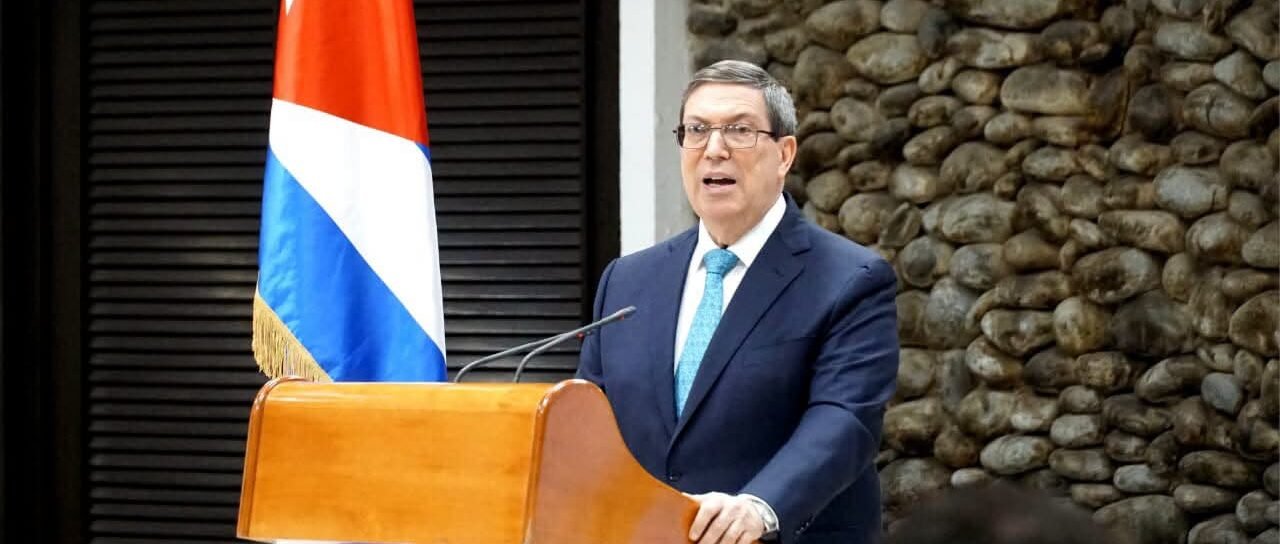

Cuba is taking its historic dispute with the United States government back to the international stage, with Foreign Minister Bruno Rodríguez announcing that Havana has formally requested a special session of the United Nations General Assembly on July 7 to address the U.S. embargo against the island.
The Embassy of the Republic of Cuba noted in a press release that Rodríguez, speaking at a press conference, said the Cuban government wants the international community to examine what it describes as the humanitarian impact of the decades-old U.S. policy.
It added that Rodriguez also accused Washington of attempting to derail the upcoming debate by pressuring other countries to oppose it.
According to Rodríguez, the effects of U.S. sanctions are already being felt across Cuba and continue to worsen.
The foreign minister argued that the United States’ multidimensional aggression against Cuba “is not a future danger or threat; it is a crime against humanity in full swing.”
The Embassy said he also condemned the energy embargo and other restrictive measures, describing them as “an act of genocide, also classified as collective punishment and a massive, flagrant, and systematic violation of the human rights of Cuban men and women and of international humanitarian law.”
Rodríguez maintained that Cuba poses no threat to the United States, which he noted is one of the world’s leading military and nuclear powers.
“The blockade and the policy of aggression and hostility of the United States government against Cuba is a threat to the existence and well-being of the Cuban people, and to the exercise of their human rights,” he emphasized.
Looking ahead to the July 7 session, Rodríguez said Cuba expects broad international backing. He claimed that the U.N. General Assembly has adopted resolutions criticizing the U.S. embargo on 31 previous occasions, each time receiving overwhelming support from member states.
The release said that the foreign minister also accused the United States of mounting an extensive diplomatic campaign to prevent the meeting from taking place.
 Rodríguez alleges that Washington has resorted to pressure, blackmail, and threats directed at governments and foreign ministries in an effort to discourage participation in the debate.
“The Permanent Mission of the United States in New York is threatening to take legal action to prevent the General Assembly from meeting and deliberating on this issue,” he stated.
Rodríguez further accuses the U.S. State Department of using its diplomatic network to stop the General Assembly from discussing what Cuba considers a matter of global importance.
“They are trying to censor their voice and their right to speak out on a matter directly related to international peace and security and the well-being of an entire people,” he added.
Despite those claims, the release indicated that Rodríguez said he remains confident that the overwhelming majority of U.N. member states will once again stand with Cuba during the July 7 session, which he described as an opportunity to uphold international law and the principles of the U.N. Charter.
He reportedly also defended the role of the General Assembly, saying “the General Assembly, the most democratic, universal, and representative body of the United Nations, will be able to address this issue objectively and surely in accordance with the purposes and principles of the Charter.”
As per the release, closing the press conference, Rodríguez warned that the situation facing Cuba continues to deteriorate.
“This is an urgent situation because the multidimensional aggression of the United States government against Cuba is already underway and intensifying. Its humanitarian damage is growing, and the suffering and deprivation it inflicts on our people increase every day,” he concluded.