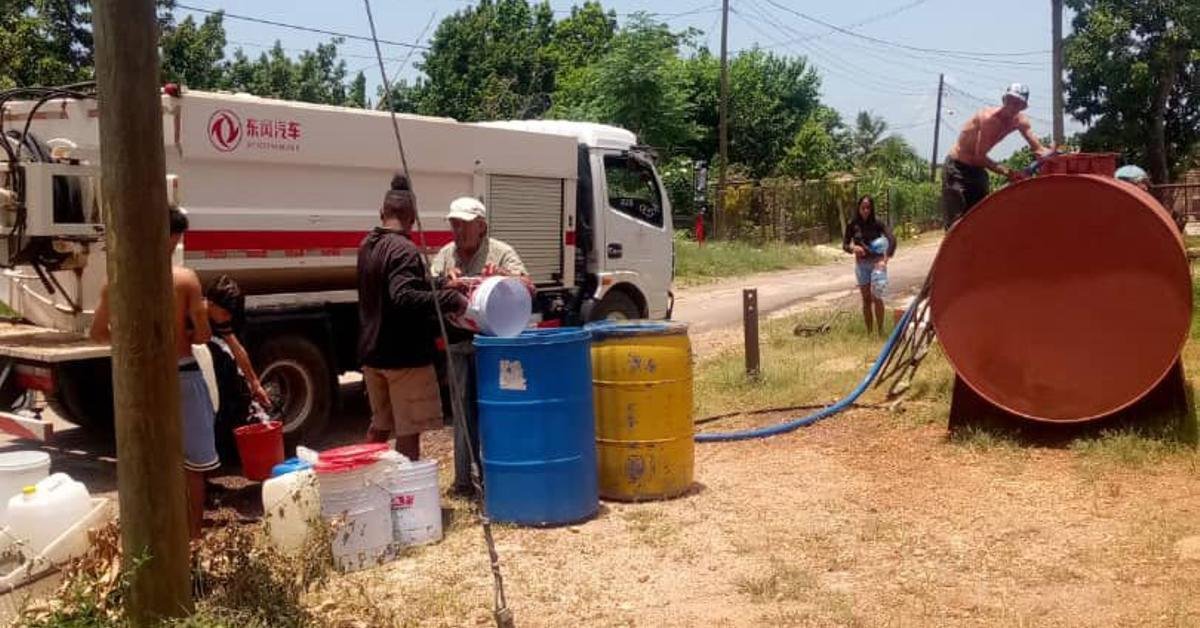
Madrid/The prolonged power outages and breaks in the pumping equipment keep 65% of the population of Artemisa with difficulties in accessing water, as recognized by the Provincial Aqueduct and Sewer Company.
According to data published by the official journal The Artemiseñosome 25,000 people suffer service interruptions due to breakdowns in pumping equipment, while another 200,000 are affected by the lack of electricity necessary to pump water. In total, around 225,000 inhabitants face supply problems.
The director of the Provincial Aqueduct and Sewer Company, Jorge Cobas Vidal, explained that of the 42 submersible pumps that the province has, three remain out of service. The municipalities with the greatest difficulties are San Cristóbal, Candelaria, Artemisa, Bahía Honda and Guanajay, where the pumping systems remain, on average, between 20 and 22 hours a day without functioning due to lack of electricity.
The most critical situation is recorded in San Cristóbal, where neighborhoods and towns depend on an electrical circuit that, according to the newspaper itself, has remained without service for more than 24 hours. Cobas Vidal explained that the two hours of electricity between blackouts are not enough to restore the necessary pressure and deliver water to all areas.
The two hours of electricity between blackouts are not enough to restore the necessary pressure and deliver water to all areas
Similar problems are mainly concentrated in the high areas of Artemisa, Guanajay, Bahía Honda and Candelaria, where prolonged blackouts and the lack of synchronization between the pumping and re-pumping systems prevent the restoration of the supply with just two or three hours of electricity.
According to Cobas Vidal, the state company stops earning about seven million pesos per month due to the lack of fuel and electricity: four million for maintenance that cannot be carried out and three million for the limitations in the pipe service. Added to this are another 20 million pesos that, according to the manager, are no longer collected because part of the population refuses to pay the water rate, thus making citizens responsible for non-payment of a service that the company itself admits it cannot guarantee.

/ Provincial Aqueduct and Sewer Company
Cobas Vidal also acknowledged difficulties in distributing water using tanker trucks due to fuel shortages. The manager pointed out that the complaints regarding the insufficient organization of distribution and illegalities regarding the sale of water are worrying. He admitted that there are complaints about illegal sales and assured that the agency has detected some cases, although he stated that many complaints are not formalized. The official insisted that authorized private pipes cannot market the water. “Even when in the current circumstances, the private sector has access to fuel and cases are authorized to load water in private pipes, it will never be allowed for sale and it must always be in an organized and controlled manner,” he said.
The situation in Artemisa is part of an alarming situation that is repeated throughout the country
The official newspaper, which presents these figures in a report with the title Initiative and commitment for more water supply, announces a set of measures to seek to alleviate this crisis: changes in electrical circuits to protect some pumping stations, the future installation of systems powered by solar energy, projects to take advantage of gravity supply from dams and the transfer of pumping equipment from facilities that are currently not used.
The situation in Artemisa is part of an alarming situation that is repeated throughout the country. The president of the National Institute of Hydraulic Resources, Antonio Rodríguez Rodríguez, admitted the past May that nearly 2.7 million Cubans lack regular access to the service every day due to the energy crisis and fuel shortage.
As reported by the official then, 87% of the national supply system depends on the national electrical energy system, so blackouts have a direct impact on the water supply. Only in Havana, more than 376,000 people Their water supply was affected, most of them due to the impossibility of keeping the pumping stations operating during power outages.
The supply crisis has also caused protests in different parts of the country in recent months. This Sunday, residents of the Mantilla neighborhood in Havana closed a street with buckets in their hands after spending more than 24 hours without electricity and water, in a new protest to the deterioration of basic services.