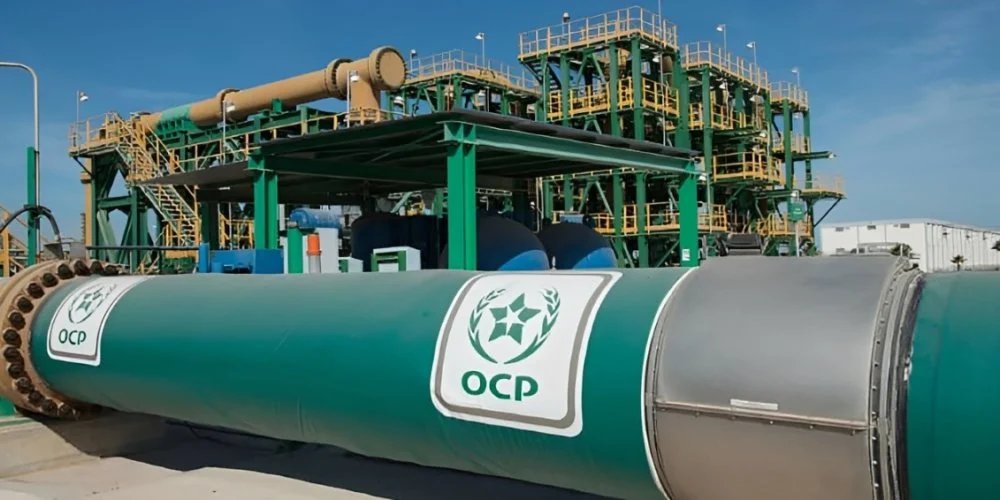
Five years after closing its market to Moroccan phosphate fertilizers in the name of protecting its national industry, Washington is backtracking. By a presidential proclamation issued on June 29, Donald Trump decided to suspendfor a period of up to eight months, countervailing duties applied to imports from the Kingdom. An exceptional decision, taken within the framework of a state of emergency, which reflects a profound change in American priorities: faced with the risk of shortage, the need to preserve agricultural production now takes precedence over protectionist considerations.
This measure temporarily puts in brackets the rights introduced in 2021 following a trade dispute opponent the American group Mosaic At OCP Group. At the time, the US Department of Commerce concluded that Moroccan producers benefited from government subsidies and therefore imposed countervailing duties of up to 16.81% on certain phosphate fertilizers. These restrictions had considerably reduced Moroccan exports to the United States, long one of OCP’s main outlets. However, the context has profoundly evolved. While national capacities struggle to meet demand and global chains remain weakened by geopolitical crises, the American administration now considers that maintaining these customs barriers constitutes a risk for its agriculture.

Washington faces the emergency of its agricultural supply
This urgency is reinforced by the American agricultural calendar. According to the proclamation, more than half of the phosphate fertilizers consumed each year in the United States are applied between fall and early spring, before planting. “Predictable and timely sources of supply must be secured to meet American demand,” the text underlines.
The American administration also draws a worrying report on the state of its industry. “US production of phosphate fertilizers is currently insufficient to support domestic food production”recognizes Donald Trump. If the federal government works with the private sector to increase its production potential, “these efforts will take time before significantly increasing supply,” he continues. In the immediate future, concludes the American President, “immediate action is necessary” in order to guarantee farmers sufficient access to fertilizers.
American authorities attribute this situation to several factors. Global supply chains have been disrupted “by conflicts in fertilizer-producing regions as well as trade actions taken by major producing countries,” the proclamation notes. Result: soaring prices, difficulties in accessing fertilizers and increased pressure on American farms. Indeed, American phosphate production fell by more than 50% since 1995. Under these conditions, the United States has no choice but to quickly diversify its import sources.
Morocco, pillar of the global phosphate chains
In this regard, the OCP Group welcomed a decision which paves the way for the restoration of its exports to the United States, and sees it as confirmation of Morocco’s role as a reliable, stable and strategic partner in global food security. The group indicates that it is preparing to resume deliveries in order to meet the needs of the American market before the start of the next agricultural season in the fall, with a presence in North America established for more than ten years through a dedicated subsidiary, serving farmers and its local partners.
An industrial strategy that is bearing fruit, from Rabat to Tokyo
This resilience finds a growing echo well beyond the United States alone. The group recalls the recent visit to Jorf Lasfar of Japanese Minister of Agricultureforests and fisheries, as well as the priorities now displayed by several European public policies in terms of security of fertilizer supply. So many converging signals that place the Kingdom at the heart of a new global geography of soil nutrition.
This influence is not limited to the major agricultural powers. OCP has made access for African farmers to suitable fertilizers one of the axes of its industrial strategy, through dedicated production units And soil nutrition formulas designed specifically for the needs of the continent. A dimension which gives the American decision a particular resonance: the group which today reassures the American authorities of its capacity to support their agricultural production is the same which, for several years, has positioned itself as a major player in African food sovereigntyillustration of Moroccan economic diplomacy which combines continental ambition and credibility with the greatest powers.
Thus, although the suspension of countervailing duties is, in theory, temporary, its scope is much broader. By recognizing the need for Moroccan imports to meet the needs of its agriculture, Washington ratifies the strategic role of the Kingdom in the global phosphate market. After five years of commercial litigation, the imperatives of security of supply now take precedence over protectionist logic. An inflection which confirms the place acquired by Morocco in a sector that has become decisive for global food security.