The draft law on the recovery of looted cultural property was referred to the joint equal-member committee of the French Parliament at the request of the government. This committee is responsible for searching for a basis for agreement between the two chambers, allowing the text to be finally adopted, or referred back to the legislative track in the event of a stumble.
The French Parliament merely announced the government’s invitation to the committee to meet without providing additional details about the reserved articles, the agenda, or its outcomes.
The committee consists of seven representatives and seven senators, in addition to a similar number of reserve members, who are summoned by the government. If an agreement is reached, the committee is considered a “decisive committee,” but if a consensus is not reached, the text can be re-presented for a new reading. If the dispute continues, the government has the right to request that the National Assembly undertake the final decision on the text. Amendments introduced by the French National Assembly led to the legislation being emptied of its content, according to the leftist opposition, as the return of property became more complicated, especially Algerian cultural property such as the Baba Merzouk cannon, as it must be proven that this property was subject to illegal seizures between the years 1815 and 1972 without the need to enact a special law for each case, as was previously the case.
It also stipulates the inclusion of a permanent mechanism within heritage law that allows for exceptions to the principle of inalienability of public collection property, exclusively for the purposes of cultural retrieval, with the adoption of two legal paths: a special regime for the period 1815–1972, and a judicial regime linked to the 1970 UNESCO Convention for the post-1972 period.
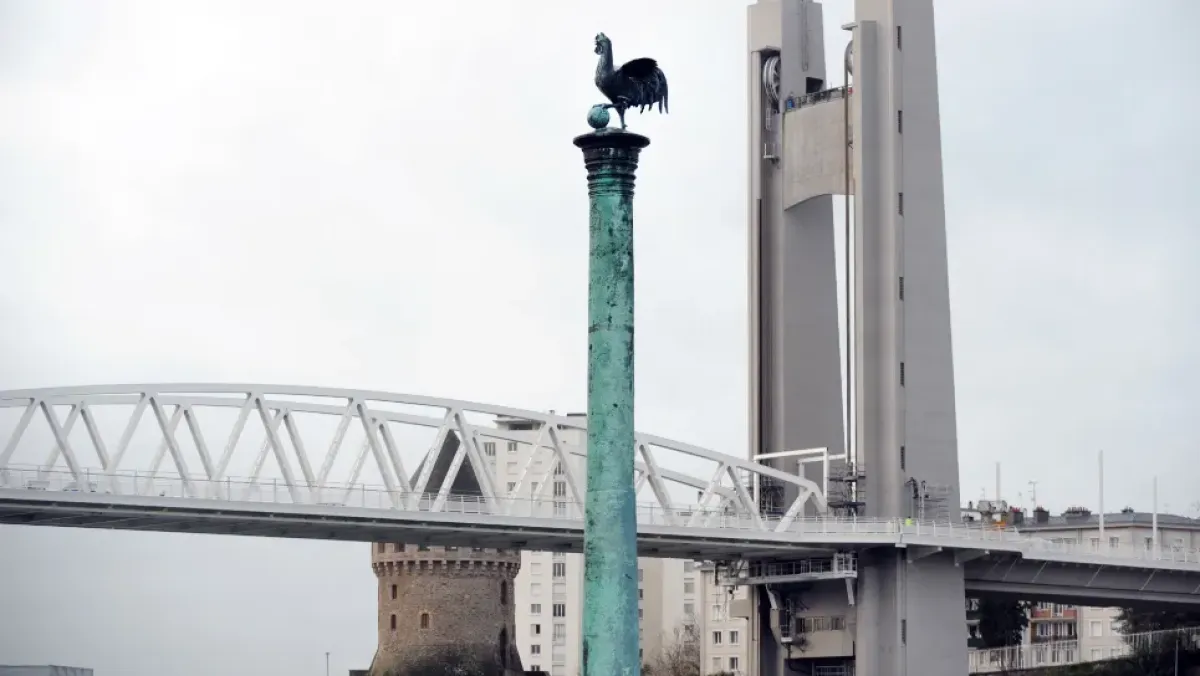
On the other hand, the French Regional Councilor Christian Guyonfarc, a member of the “Independence, Environment, and Regions” bloc within the Regional Council of the Brittany region in northwestern France, is leading efforts to return the Baba Merzouk cannon to Algeria.
French newspapers quoted him as saying, on the occasion of the discussion of the law related to the recovery of looted cultural property at the level of the French Parliament a few days ago, that the cannon’s presence in Brest does not reflect a real historical connection to the city or the heritage of the region, but rather, in his view, it represents part of the Algerian historical memory, which makes resubmitting its file a symbolic necessity. He stressed that the return of this symbol “should not be understood as an internal political measure,” but rather as a symbolic step that may reflect the end of a historical phase and contribute to calming relations between France and Algeria, considering that “such a decision may carry a strong meaning for both parties.” However, this effort, as previously mentioned, collides with complex legal and institutional obstacles, as the cannon is not classified as cultural property that can be recovered according to current legal frameworks, but rather is considered part of the military heritage of the French Navy.
In 2012, Algeria requested the return of the iconic cannon, a request that French officials promised to study at the time, even though they pointed out that the French Navy held onto it as “the property of the Ministry of Defence.”
The demand was repeated by the Joint Committee of Historians, but it fell on deaf ears from the French side, which treated it as a spoil of war.