Washington/The failure of the negotiations in Islamabad to end the Iran war and Viktor Orbán’s electoral defeat in Hungary, a close ally of the White House, represent a double setback for the vice president of the United States, JD Vance, who was personally involved on both fronts.
The ‘number two’ of Donald Trump’s Administration returned to Washington on Sunday empty-handed after having led the highest-level face-to-face with Iran since the Islamic revolution of 1979 and after having been unusually involved in Orbán’s failed electoral campaign.
Vance, favorite in the polls to succeed Trump as the Republican presidential candidate in 2028, had until now maintained a low profile in foreign policy, but the prominence shown in the last week makes him the face of two resounding failures.
Against all odds, the vice president was chosen to lead the American delegation that met on Saturday in Islamabad with Iranian authorities, in an attempt to find a way out of the war started by the United States and Israel on February 28.
The prominence shown in the last week makes him the face of two resounding failures
Vance had been one of the members of the Administration most opposed to the offensive, appealing to the “America First” slogan that Trump raised during his campaign, promising to end the protracted wars abroad.
According to leaks to local media, once Trump made the decision to attack Iran, Vance asked that the operation be devastating and quickly decapitate the ayatollah regime, but the conflict stalled and has caused serious economic disruptions after the blockade of the Strait of Hormuz.
After more than 40 days of war, Vance found himself in Pakistan, accompanied by White House envoys Steve Witkoff and Jared Kushner—Trump’s son-in-law—sitting in front of Iranian representatives such as the Speaker of Parliament, Mohamad Baqer Qalibaf, in the highest-level talks between the two countries in almost half a century.
The same day, Secretary of State Marco Rubio, who is closing the gap with Vance as a possible successor to Trump, went with the Republican president to an evening of mixed martial arts in Miami.
But after more than 20 hours, Vance concluded his mission without reaching an agreement with Iran, a country he blamed for the failure because, he said, it is not willing to give up its nuclear ambitions.
However, according to The New York TimesTehran proposed stopping these activities for a period of up to five years, in response to Washington’s demand for a much longer suspension, of around two decades, a proposal that was rejected by the US side.
According to Iranian and American officials cited by the media, Iran insisted on keeping reserves of highly enriched uranium within its territory, in disagreement with the United States’ request to withdraw them from the country, but offered as an alternative to significantly reduce its level of enrichment to prevent its immediate use in the manufacture of nuclear weapons.
Iran insisted on keeping reserves of highly enriched uranium within its territory, in disagreement with the United States’ request to withdraw them from the country, but offered as an alternative to significantly reduce its level of enrichment.
However, the officials, cited under anonymity by the newspaper, warn that this option maintains certain risks, since the material, although diluted, could be reprocessed in the future until it reaches levels suitable for military use, which continues to be a key point of friction between both parties.
Meanwhile, it was detailed that the possibility of a new round of face-to-face negotiations is on the table, although for now no plan has been finalized, amid persistent differences over the terms of an eventual agreement.
No understanding was also reached on free navigation in the Strait of Hormuz, a strategic oil trade route blocked by Tehran in retaliation for the attacks, or on the release of frozen Iranian funds.
After the fiasco, Trump ordered the US Navy to also block the passage to prevent the transit of Iranian ships or their allies, a gesture that threatens to further aggravate the conflict.
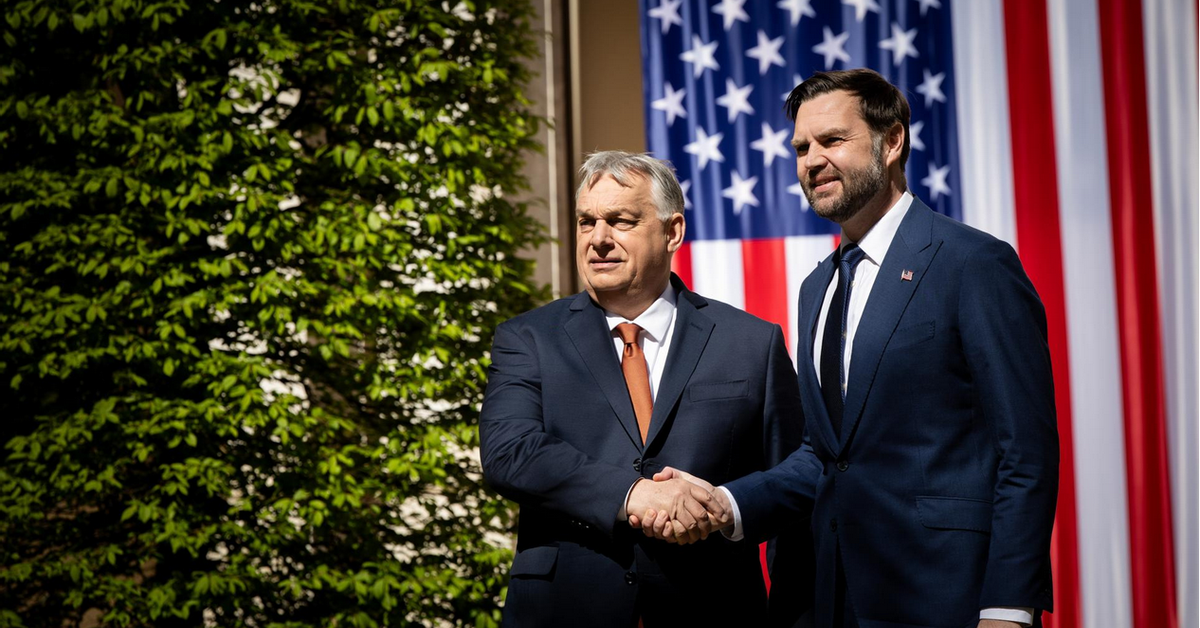
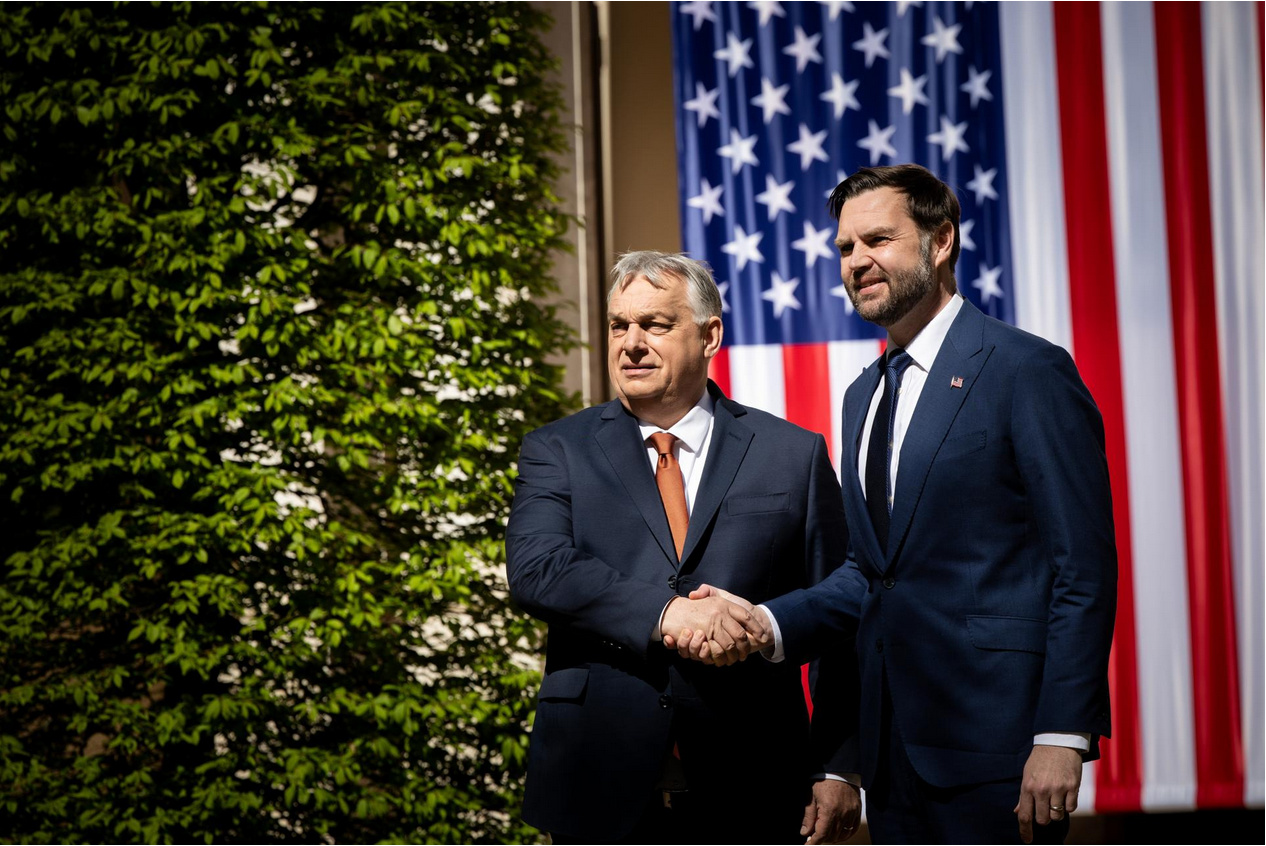
Before traveling to Pakistan, Vance stopped in Hungary to support Orbán, the main ally of Trumpism in Europe and who arrived at the polls weakened after 16 years in power.
In an unprecedented gesture for an American vice president, he participated in a rally of the ultranationalist president in which he openly asked for the vote for him, while praising him for his anti-immigration policy and for confronting, he said, “the bureaucrats” of Brussels.
But the bet did not work: Orbán was defeated by Péter Magyar, with a pro-European profile, according to the results announced on Sunday night, when Vance was already flying back to Washington after the frustrated Islamabad summit.
Shortly after, Trump posted an unusual message on social media in which he attacked Pope Leo XIV for his condemnation of war with Iran, accompanied by an image of himself represented as Jesus Christ, a post that outraged the American Catholic community and probably also bothered Vance, a well-known Catholic convert.