New Delhi/Islamabad/The two-week truce agreed this Wednesday between Iran and the United States was conceived in the halls of Islamabad in extremisjust ten minutes before President Donald Trump’s ultimatum threatening an all-out offensive against the Islamic Republic’s strategic infrastructure expired.
These are the keys to the diplomatic success that has defused, for the moment, an escalation of unforeseeable consequences:
A late morning
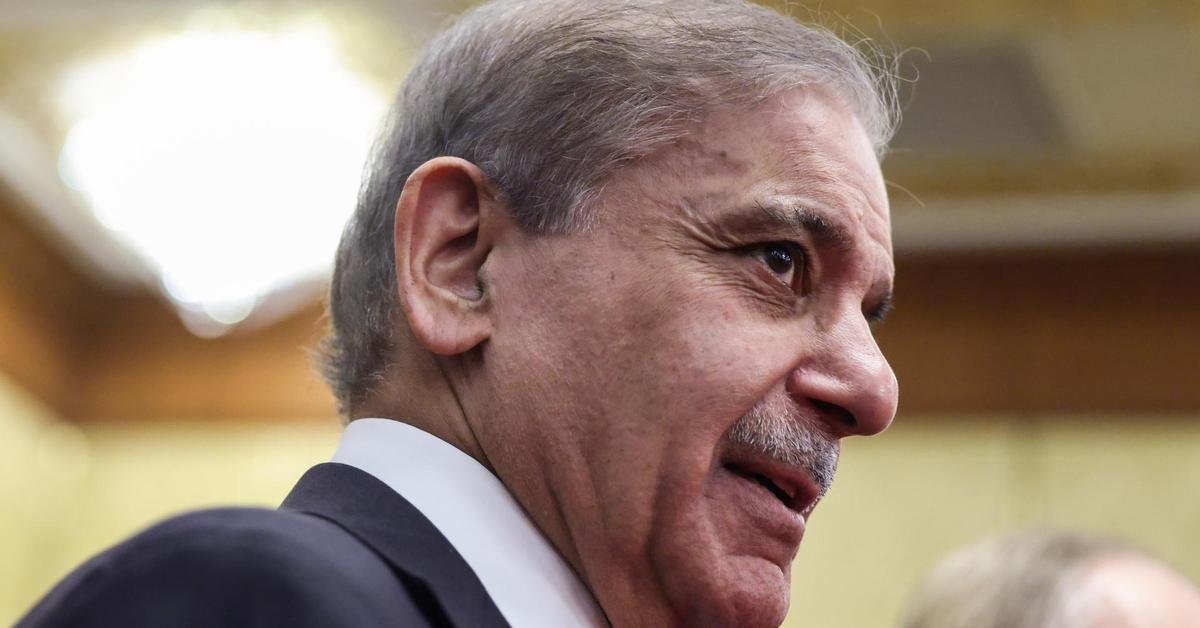
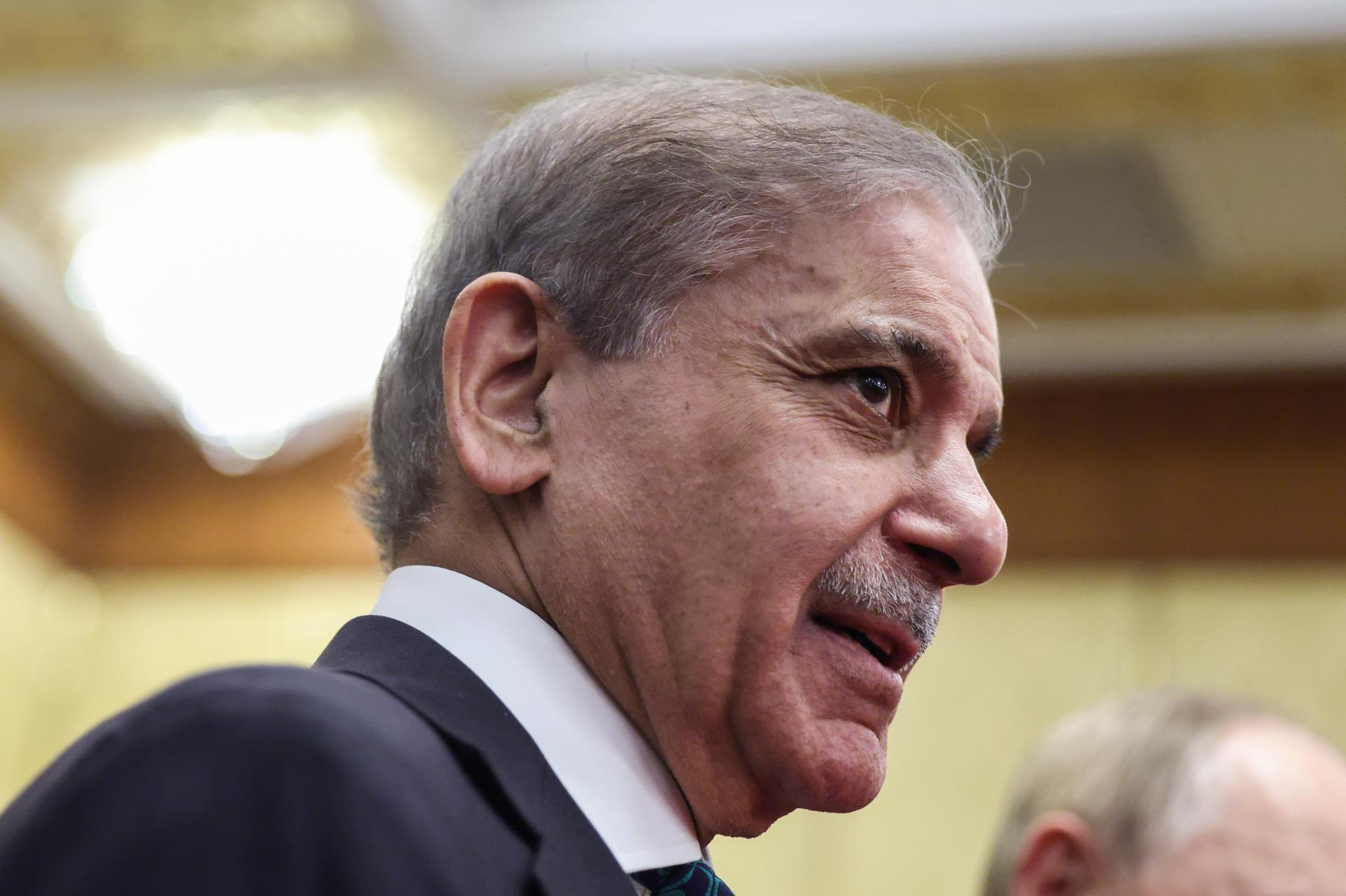
“With the utmost humility, I am pleased to announce that the Islamic Republic of Iran and the United States of America, together with their allies, have agreed to an immediate ceasefire everywhere, including Lebanon and elsewhere, EFFECTIVE IMMEDIATELY,” Pakistani Prime Minister Shehbaz Sharif wrote this morning on X. The news halted an attack that Washington had scheduled for 00:00 GMT.
Hours before the agreement, the Pakistani military establishment met in Rawalpindi, at the Army Headquarters, to condemn the latest Iranian attack on the Al Jubail energy complex in Saudi Arabia, warning Iran that an “unnecessary escalation” would compromise peace efforts.
Islamabad, which shares a mutual defense agreement with Saudi Arabia, kept contacts active between Islamabad, Washington and Tehran throughout the night.
“The prime minister, the field marshal and the government officials involved in the process were up all night to achieve it,” a senior government official who asked to remain anonymous told EFE.
Sharif: The “good cop”
After midnight, Pakistani Prime Minister Shehbaz Sharif reported that diplomatic efforts were “moving forward steadily, firmly and forcefully,” and called on both sides to take action. “To allow diplomacy to take its course, I strongly request President Trump to extend the deadline by two weeks. Pakistan, in all sincerity, requests the Iranian brothers to open the Strait of Hormuz for an equivalent period of two weeks as a gesture of goodwill,” he wrote in X.
Following Sharif’s message, the pieces began to fall into place between Washington and Tehran. Iranian Foreign Minister Abbas Araqchi confirmed that, at the request of his “brother Pakistan”, “safe passage” through the Strait of Hormuz will be possible for two weeks if the attacks against his country stop.
For his part, Trump announced that he was suspending the attacks after having “met and surpassed all military objectives”, under the condition that Tehran guarantees the “complete and safe” opening of the strait in the future.
Asim Munir, Trump’s favorite quarterback
The figure of the field marshal and chief of the General Staff, Syed Asim Munir, has been fundamental in unblocking the dialogue with the White House. Munir maintains direct communication with Donald Trump, who has publicly described him as his favorite quarterback.
In 2025, the marshal was received both by Donald Trump alone in the Oval Office, in an unusual private audience for a military leader, and by the Iranian supreme leader, Ali Khamenei, in Tehran.
“On behalf of the Islamic Republic of Iran, I express my gratitude and appreciation to my dear brothers, Prime Minister of Pakistan Sharif and Field Marshal Munir, for their tireless efforts to end the war in the region,” Iranian Foreign Minister Abbas Araqchi wrote early in the morning.
Pakistani diplomacy
The success of Islamabad crowns weeks of a diplomatic operation led by Foreign Minister Ishaq Dar, who has coordinated efforts with Turkey, Egypt and Saudi Arabia, whom he met last weekend in Islamabad. This mediation has had the strategic support of China, interested in stabilizing the region to protect its mining and energy investments.
The dreamed Islamabad Agreement
Sharif has formally invited delegations to the Pakistani capital this Friday, April 10, to negotiate a final peace agreement. “We sincerely hope that the ‘Islamabad Talks’ will achieve sustainable peace and we look forward to sharing more good news in the coming days,” the president said.
US Vice President JD Vance is expected to attend the meetings to discuss the ten-point plan proposed by Tehran, which includes the lifting of sanctions in exchange for Iran giving up nuclear weapons, according to the US network CNN.
“We do not trust the enemy’s promises and we will respond to any aggression with a higher level”
On the other hand, the Iranian Revolutionary Guard stated this Wednesday that it “does not have confidence” in the promises of the United States and assured that it will respond to any American or Israeli aggression that occurs during the ceasefire agreed last night. “We do not trust the enemy’s promises and we will respond to any aggression with a higher level,” said the elite military body in a statement collected by the Tasnim agency.
The military assured that they remain ready under the orders of the supreme leader, Ayatollah Seyed Mojtaba Khamenei, to face any “new mistake of the enemy.” The Revolutionary Guard also sent a message to regional countries that host United States bases. “The United States’ regional partners have witnessed the weakness of Washington and the Zionist regime, and they should take note and cease their cooperation with them,” he said.
Meanwhile, US President Donald Trump threatened this Wednesday to “immediately” impose 50% tariffs on countries that supply weapons to Iran, while ensuring that they are already negotiating with the Islamic Republic, where there has been “a very productive regime change”, to reduce tariffs and sanctions.
“The country that supplies military weapons to Iran will be immediately taxed with a 50% tariff on each and every one of the goods sold to the United States with immediate effect. There will be no exclusions or exemptions,” Trump alleged on his social network Truth Social.
“The United States will work closely with Iran, which we have seen has undergone a very productive regime change.”
The president also spoke out, after last night announcing the temporary truce to negotiate with Iran, ensuring that this country “has experienced a very productive regime change.”
“The United States will work closely with Iran, which we have found has undergone a very productive regime change. There will be no uranium enrichment, and the United States, in collaboration with Iran, will unearth and dispose of all deeply buried nuclear remains (from the B-2 bombers),” he noted in another message on Truth Social.
According to Trump, during the current war “nothing has been touched” of these nuclear remains, which remain under “strict satellite surveillance.” Furthermore, the president assured that they are already negotiating with Iran and assured that “many of the fifteen points have already been agreed upon,” alluding to his proposal and not to Iran’s 10-point proposal that was supposedly the starting point of the negotiations. “We are, and will continue to be, negotiating with Iran the reduction of tariffs and sanctions,” he stressed.
Trump assured last night that the possibility of reaching a “definitive” peace agreement with Iran is at “a very advanced stage,” in addition to indicating that the reason for this pact is to have “met and surpassed all military objectives.”