SINGAPORE – The quest to potentially tap the heat of the earth continues to sizzle, as Singapore will conduct a feasibility study on deploying geothermal energy systems here.
This comes as the Republic is exploring options, such as hydrogen and carbon capture, to decarbonise its carbon-intensive energy sector.
The Energy Market Authority (EMA) said on April 28 that it will issue a Request for Proposal for a comprehensive study to assess the feasibility of deploying geothermal energy systems in Singapore.
Geothermal energy, which is a renewable energy source, taps heat from the earth’s core, estimated to be 2,900km below the surface.
Conventional geothermal energy systems are typically deployed in locations with naturally high temperatures, aquifers and permeable rock formations. Aquifers refer to underground layers of water-bearing rock, sand or gravel that can store and transmit water.
These systems are commonly found in geologically active regions such as volcanic zones, making it unlikely that Singapore has such resources.
However, recent global advances in geothermal technologies have created new opportunities to harness sub-surface heat for power, heating and cooling needs, said EMA.
The feasibility study will assess the technical, environmental and commercial feasibility of deploying next-generation geothermal systems in Singapore, according to the authority.
It added that the appointed consultant will also be tasked to identify areas for further study and propose policy frameworks for potential geothermal projects.
The study builds on an ongoing nationwide non-invasive geophysical survey commissioned by EMA in 2024 to identify areas in Singapore where geothermal energy might potentially be present.
Together, the survey and the study aim to provide a holistic evaluation of Singapore’s geothermal energy potential, said EMA.
“This will provide the Government with a basis to decide on the next steps in the pursuit of geothermal energy systems in Singapore,” it said.
The consultant for the feasibility study is expected to be appointed in 2026. The duration of the study will depend on the proposal from the consultant, as well as the scope and complexity of work required.
Interested parties can submit their proposals by 4pm on June 29, said EMA.
Research has been conducted in Singapore to study possible sources of geothermal energy and their potential.
In July 2025, it was reported that a research team had made a second discovery of high temperatures underground in Sembawang, suggesting potential for electricity generation.
In March 2023, the team from Nanyang Technological University and Tumcreate – the multidisciplinary research platform of the Technical University of Munich – found temperatures of 70 deg C at a depth of 1.12km in Admiralty.
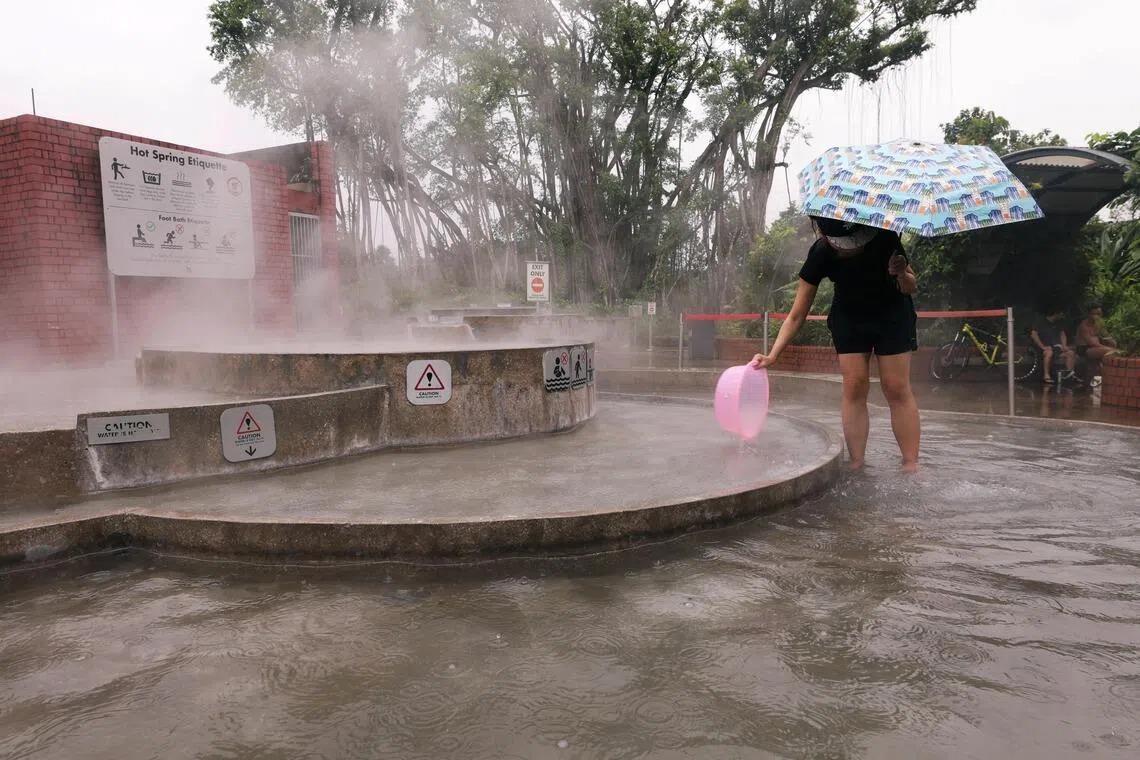
Besides Admiralty and Sembawang, another known hot spot is on Pulau Tekong, where a hot spring is located in the northern Unum region.
Singapore now relies on natural gas – a fossil fuel – for about 95 per cent of its energy needs. To reach the net-zero goal by 2050, it would have to reduce emissions in its energy sector, which accounts for up to about 40 per cent of the nation’s total emissions.
A 2022 report commissioned by EMA stated that emerging technology, including nuclear and geothermal, could potentially supply around 10 per cent of Singapore’s energy needs by 2050.
Minister-in-charge of Energy and Science and Technology, Dr Tan See Leng, had said in an interview with The Straits Times and Lianhe Zaobao in July 2025 that geothermal energy is on the table, though it remains at a “very nascent” stage.
For example, experts have said it remains to be seen if underground heat reservoirs can provide sufficient energy to generate electricity in a stable way and whether the energy is economically feasible.