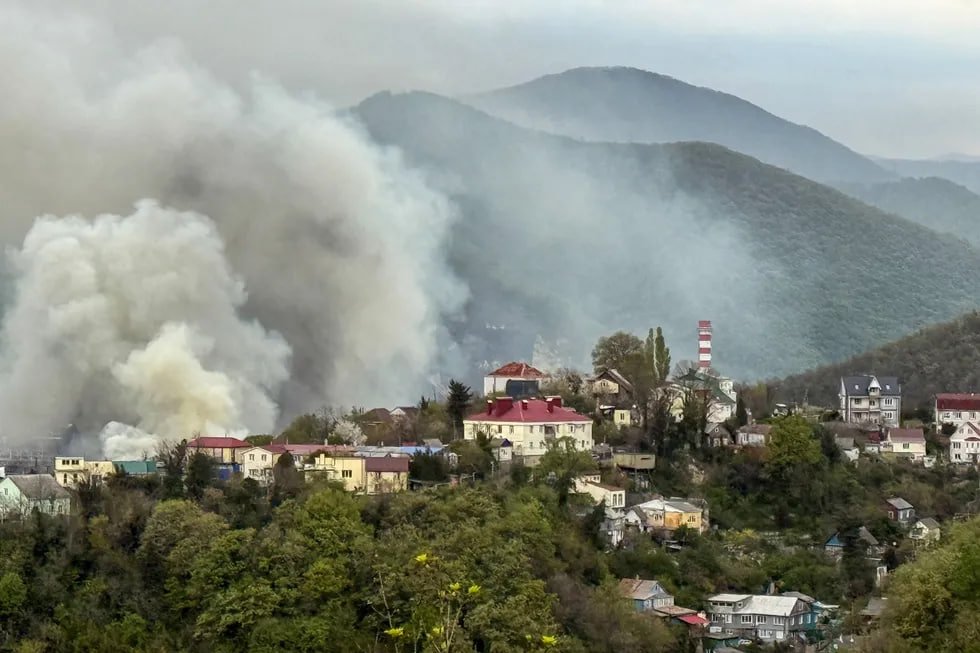
Ukraine attacked Tuapse for the fourth time in a month. In Perm, fires at oil facilities are being extinguished. Environmental disasters have occurred in both cities.
Tuapse. On the night of May 1, Ukraine launched another attack on the city of Tuapse, Krasnodar Territory. According to the operational headquarters of the region, a fire broke out in the area of the sea terminal. More than 100 people and more than 40 pieces of equipment were involved in extinguishing the fire. Officials said no one was injured.
Exelinova+, a monitoring agency in Ukraine, reported that several oil storage tanks in the terminal area caught fire. In the footage taken by witnesses, thick black smoke can be seen rising into the sky of Tuapse.
AFP / Scanpix / LETA
Governor of Krasnodar Krai, Veniamin Kondratev, did not comment on Ukraine’s new attack on Tuapse. On his telegram channel, congratulations were announced on the occasion of the May 1st holiday, the governor wished the residents of the country that “peace, goodness and prosperity always reign” in their homes.
Ukraine has been regularly shelling Tuapse in recent weeks. Since April 16, Ukrainian drones have repeatedly attacked the sea terminal in Tuapse and the local oil refinery, which is part of the same complex with this terminal. Large-scale fires broke out in the city, and in each case it took several days to put out the fire. The last fire at the refinery was extinguished on April 30, just before the next strike.
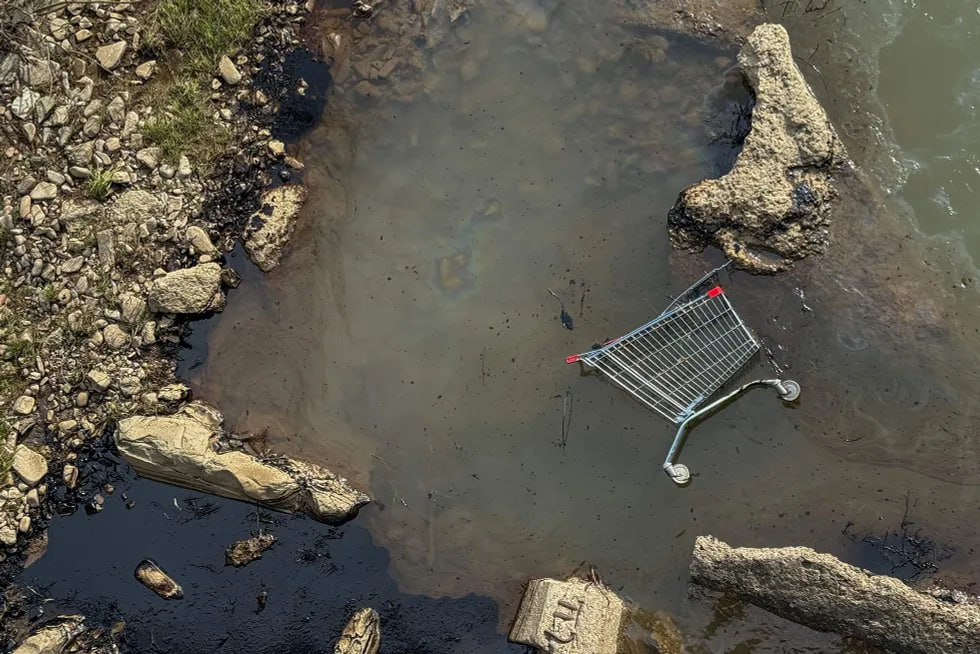
Due to fires at oil facilities, the environmental situation in Tuapse has deteriorated sharply: “oil rain” has fallen on the city several times, and oil product residues have been found in the river and sea (the work of collecting them continues). The latest oil refinery fire spilled boiling oil into the streets.
Perm. Firefighters continue to put out fires in the city of Perm and outside of it, caused by strikes on the facilities of Transneft and Lukoil on April 29 and 30.
Photos and videos posted on the local “Perm 36.6” telegram channel show black smoke covering the city sky. According to journalists, the city has changed direction and now the smoke is heading towards the southern regions of the Perm Territory. “The residents of Perm are a little relieved: the smell either disappeared or decreased,” the authors of the channel write. At the same time, “oil rain” continues to fall in Perm.
Environmentalists told “Agenstvo” that the environmental disaster in Perm is no less than the one in Tuapse in terms of scale and consequences. One of them said on condition of anonymity that smoke and “oil deposits” contain “the most harmful substances – polyaromatic hydrocarbons”, including benzene, a dangerous carcinogen of the first degree.
Another expert said that the fires in the Perm region “may be even stronger, and therefore more dangerous, than the fires in Tuapse.” “It’s the same fire as in Tuapse, I think the toxic and carcinogenic substances in the air there are the same,” said “Ekozashita!” Vladimir Slivyak, a representative of the ecological group, told “Agenstvo” publication.
The governor of Perm region, Dmitry Makhonin, wrote that on May 1 he went to the scene of a fire in an industrial area (it is not clear whether it was an oil refinery or an oil pumping station). Alexander Urusov, head of the regional department of the Ministry of Emergency Situations, said that the fire was contained.
The governor noted that Rospotrebnadzor continues to continuously monitor air quality: “Samples are taken regularly, no excess indicators of pollutants have been recorded. There is no danger for the population.”
Ukraine is carrying out a series of attacks on oil facilities in Russia in order to deprive the Kremlin of a source of income used to wage war. According to Bloomberg, in April, Ukraine launched the maximum number of attacks on Russian oil facilities in the period after December 2025. According to the agency, Ukraine launched at least 21 strikes against Russian oil refineries, offshore facilities, and oil pipelines within a month.
According to Bloomberg, nine Russian oil refineries stopped working in April. The average output of Russian refineries fell to 4.69 million barrels per day, the lowest since December 2009, according to data from oilX analysis company.