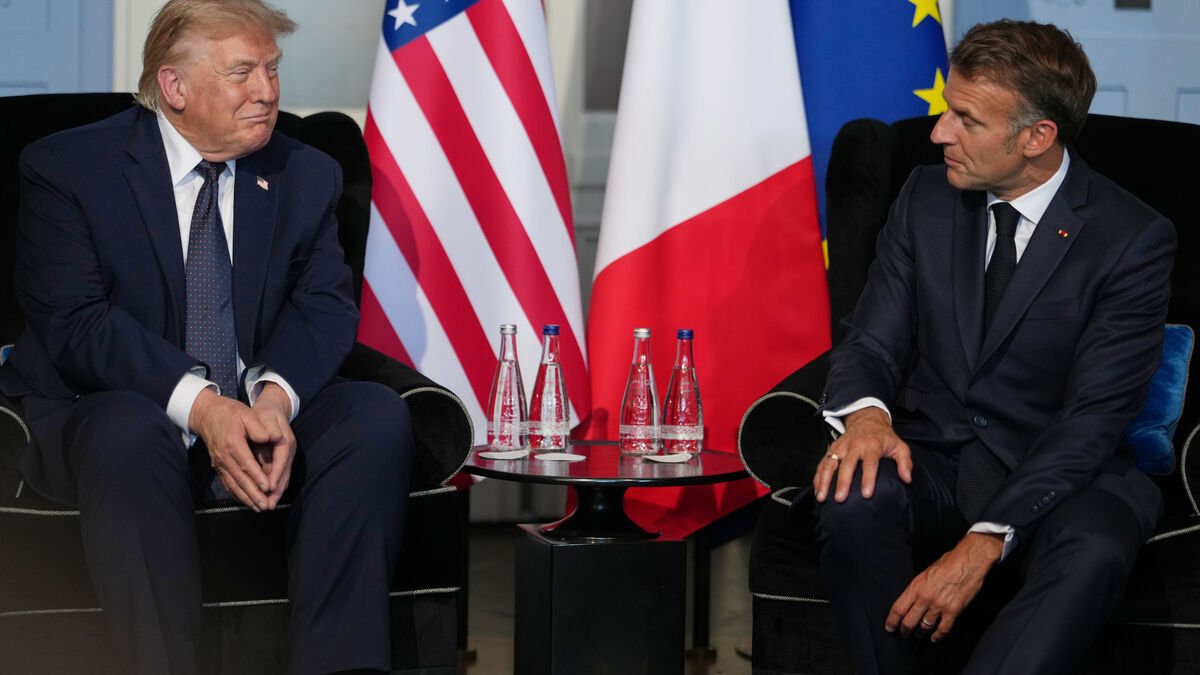
The statement comes from Trump during a meeting with French President Emmanuel Macron at the ongoing G7 meeting in France.
The full extent of the settlement is not known – and many questions remain to be resolved.
Trump said during the meeting with Macron, where media were present, that the United States has not paid out any of the Iranian assets it has frozen.
The Foreign Ministry in Tehran said in connection with the final negotiations that the United States will release Iranian assets frozen in foreign accounts – and also compensate Iran financially for damage caused in the war.
Opens on Friday
The US president also said, during his meeting with the French president in Evian-les-Bains, that the Strait of Hormuz would be opened to traffic on Friday. The strait in the Persian Gulf is a bottleneck through which much of the world’s oil exports usually pass, but Iran had blocked traffic in retaliation after the outbreak of the war.
According to previous reports, the US-Iran preliminary agreement also includes a 60-day ceasefire. While it lasts, the countries will continue to negotiate on issues where they still do not agree, such as Iran’s nuclear program.
The agreement also explicitly covers the war in Lebanon, where Israel has escalated a ground invasion and aerial bombardment alongside the war with Iran. Previous agreements between the US and Iran have not resolved whether Lebanon is included.
Lebanon comments on the deal
Lebanese President Michel Aoun welcomes the deal between the US and Iran.
In a phone call with Iranian Foreign Minister Abbas Araghchi, Aoun says the deal is a step in the right direction to reduce tensions, “it opens the door to diplomatic solutions.” Araghchi responds that “It is important to respect Lebanon’s sovereignty.”
Threatening to resume attacks
Donald Trump is threatening to resume US attacks on Iran if the parties fail to reach an agreement on Iran’s nuclear program, The New York Times reports.
In an interview with the newspaper, the president is asked a more detailed question about how much Iran will be allowed to enrich uranium – and how it will differ from the scrapped 2015 nuclear agreement.
They are only allowed to enrich for non-military purposes. Forever, Trump replies.
Much is unclear about the statement of intent that the US and Iran have agreed to end the war with Iran. This is what is known at this time:
Negotiations on Iran’s nuclear program for 60 days: When the US and Israel attacked Iran, it was justified by the fact that the country was close to acquiring nuclear weapons. How to prevent this – including how underground facilities and highly enriched uranium can be destroyed – will be addressed in technical talks during the period, according to the White House.
Strait of Hormuz opens: The shipping route between Iran and Oman, so important for international oil trade, opens to traffic when the agreement is signed on Friday. According to President Donald Trump, traffic will be “free of charge” and the US blockade will be lifted. However, Iran wants to be able to charge a fee for passing ships, according to the AP.
Lifting sanctions: International sanctions against Iran are to be lifted and some frozen assets will become available. It is unclear which sanctions these are.
Peace in Lebanon: The deal also includes a halt to fighting between Israel and the Iran-backed Shia militia Hezbollah in Lebanon. However, it is unclear how Israel will respond to this.
Source: AP and others