US forces strike Iranian-flagged oil tanker, Israel attacks Beirut
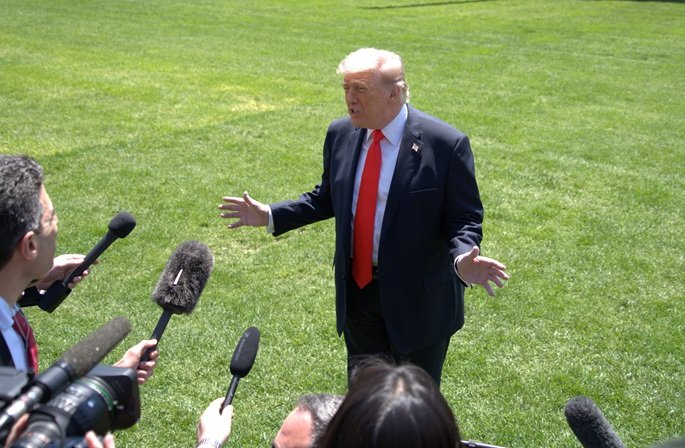
U.S. President Donald Trump on Wednesday again expressed optimism about reaching a peace deal with Iran, reported Xinhua.
“I think it’s got a very good chance of ending, and if it doesn’t end, we have to go back to bombing the hell out of them,” Trump told U.S. media outlet PBS News in a phone interview.
The president said that he feels the United States is closing in on a deal. “But I felt that way before with them, so we’ll see what happens,” Trump added.
The possible deal could include Iran exporting its highly enriched uranium to the United States, according to a PBS News report.
The report said that this time Trump is “unlikely” to send his special envoy Steve Witkoff and son-in-law Jared Kushner to talks with Iran.
Earlier on Wednesday, Trump threatened that if Tehran doesn’t agree to a peace deal with Washington, U.S. forces will resume bombing “at a much higher level and intensity than it was before.”
If Iran agrees to the proposed terms, the massive U.S. military campaign against Iran, dubbed Epic Fury, “will be at an end,” and the U.S. blockade would allow the Strait of Hormuz to be reopened to all shipping, including Iranian vessels, Trump wrote on Truth Social.
On Tuesday, Trump halted the Pentagon’s mission to guide commercial vessels out of the Strait of Hormuz while maintaining its blockade of Iranian ports, citing that “great progress has been made toward a Complete and Final Agreement with Representatives of Iran.”
The United States and Iran are closing in on a one-page memorandum to end their war, which would involve Iran committing to a moratorium on nuclear enrichment and the United States agreeing to lift sanctions, with both sides lifting restrictions on transit through the Strait of Hormuz, U.S. online media Axios reported on Wednesday.
Ebrahim Rezaei, spokesman for Iran’s parliamentary national security committee, dismissed the Axios report, calling it “more a list of American wishes than a reality,” according to reports.
U.S. Secretary of State Marco Rubio said at a White House news briefing on Tuesday that Operation Epic Fury was already over. “The operation is over, Epic Fury, as the president notified Congress. We’re done with that stage of it,” he said.
Meanwhile, U.S. forces on Wednesday morning struck and disabled an Iranian-flagged unladen oil tanker sailing toward an Iranian port, the U.S. Central Command said on X, reported Xinhua.
The strike took place at 9 a.m. U.S. Eastern Time on Wednesday, when the targeted vessel, Hasna, was transiting international waters en route to an Iranian port on the Gulf of Oman, said the command in a statement.
“After Hasna’s crew failed to comply with repeated warnings, U.S. forces disabled the tanker’s rudder by firing several rounds from the 20mm cannon gun of a U.S. Navy F/A-18 Super Hornet launched from USS Abraham Lincoln (CVN 72),” the statement read.
Hasna is no longer transiting to Iran, it added.
The U.S. blockade against ships attempting to enter or depart Iranian ports remains in full effect, said the command.
One day earlier, U.S. President Donald Trump announced on Truth Social that he has halted Pentagon’s mission to guide commercial vessels out of the Strait of Hormuz while maintaining its blockade of Iranian ports “in full force and effect.”
Meanwhile, Trump on Wednesday said the United States has had very good talks over the past 24 hours with Iran on ending the war that has lasted more than two months.
Iran wants to “make a deal badly,” Trump said, repeating his claim at an event in the White House.
“They want to make a deal,” he told reporters. “We’ve had very good talks over the last 24 hours, and it’s very possible that we’ll make a deal.”
Trump reiterated that if the United States were to leave Iran right now, it would take the country 20 years to rebuild due to the heavy damage it suffered from the U.S.-Israeli strikes launched on Feb. 28.
Iranian media denies new US exchanges, rejects reports of nearing deal
Iran said Wednesday it has not exchanged any new written messages with the United States, pushing back against reports that the two sides are close to a one-page agreement to end hostilities.
The semi-official Fars news agency called reports by Axios and Reuters “fabricated,” saying they were designed to influence global markets and drive down oil prices rather than reflect the situation on the ground.
Fars, citing two unnamed sources, said Iran has not yet responded to the latest U.S. message, which was delivered through Pakistan. Iranian Foreign Ministry spokesman Esmaeil Baghaei said Tehran is still reviewing the U.S. proposal and will respond after completing its assessment, according to the Iranian Students’ News Agency.
Last week, Iran sent a 14-point counterproposal to Washington through Pakistan in response to a nine-point U.S. plan outlining conditions for ending the conflict. Tehran later confirmed it had received a reply from Washington.
Ebrahim Rezaei, spokesman for the Iranian parliament’s national security and foreign policy committee, wrote on X that Axios had published “a U.S. wish list rather than reality.” He said Iran would not accept pressure and warned of a “harsh response” if attacked or provoked.
Axios reported that a potential deal could include Iran agreeing to suspend uranium enrichment in exchange for U.S. sanctions relief, with both sides easing restrictions on shipping through the Strait of Hormuz. The duration of any enrichment pause remains under discussion, with proposals ranging from five to 20 years.
Separately, Iran’s Tasnim news agency reported widespread GPS disruptions in the Strait of Hormuz for a third consecutive day, with some marine tracking data showing vessels appearing to move on land.
Israel strikes Beirut’s southern suburbs for 1st time after ceasefire
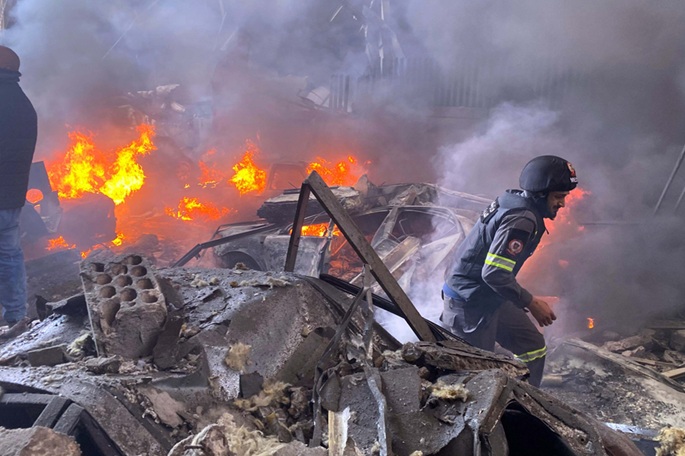
Israel on Wednesday evening launched its first airstrike on Beirut’s southern suburbs since a ceasefire with Lebanon took effect in mid-April, Lebanon’s TV channel al-Jadeed reported, said Xinhua.
An Israeli warship fired three missiles at a residential apartment in the municipality of Haret Hreik in the area, causing heavy destruction and prompting ambulances to rush to the site, according to Lebanon’s National News Agency (NNA).
The agency also reported intensive low-altitude flights by Israeli military drones over Beirut and its southern suburbs.
Israeli Prime Minister Benjamin Netanyahu and Defense Minister Israel Katz confirmed the airstrike in a joint statement, saying it targeted Malki Blout, commander of Hezbollah’s Radwan Force, “in an attempt to neutralize him.”
Blout was “responsible for directing fire toward Israeli communities and targeting soldiers,” the statement said.
According to Israel’s state-owned Kan TV, Israeli security officials believe Blout was killed in the strike, which they said was coordinated with the United States.
NNA said that Israeli airstrikes and artillery on Wednesday killed at least 17 people and wounded dozens more across southern and eastern Lebanon, including a village mayor and his three family members.
Hezbollah claimed retaliatory attacks on Israeli military vehicles and troop gatherings.
The violence came despite a ceasefire that took effect at midnight between April 16 and 17. Under the U.S.-announced agreement, Israel retains the right to take “all necessary measures to defend itself” against any attacks.
According to the Lebanese Health Ministry’s Emergency Operations Center, Israeli strikes between March 2 and May 6 have killed 2,715 people and injured 8,353 others.