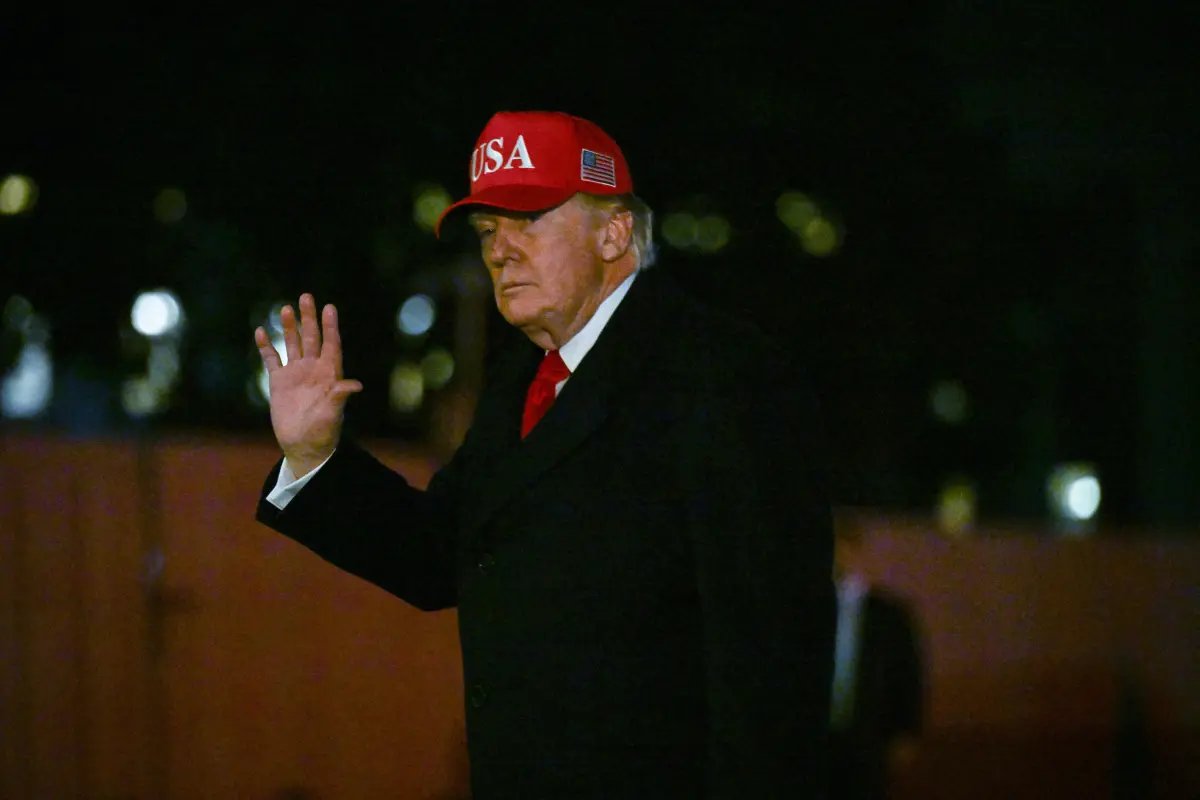
He president of the United States, donald trumpstated that contacts with Iran could resume within two daysin a sign that Washington is still betting on a negotiated exit in the midst of the crisis that is shaking Middle East. As stated in an interview with New York Postthis new approach could occur in Pakistana country that has gained prominence as a possible facilitator of the process.
The statements of trump coincided with another high-impact diplomatic move in Washington: the beginning of direct talks between Israel and Lebanona rare event after decades without a political channel of that level between both parties. The Secretary of State, Marco Rubiopresented this meeting as an exceptional opportunity to weaken the regional weight of Hezbollah and lay the foundations for an eventual architecture of stability.
Although the two fronts are different, they are both part of the same American commitment: containing regional escalation through military pressure, strategic isolation and reopening diplomatic channels.
Trump insists on reactivating the route with Iran
The US president’s announcement came after days marked by military tension and economic pressure. trump He maintained that the negotiations with Tehran could restart soon and highlighted the role of Pakistan as a possible scenario for this new attempt at dialogue. The possibility of resuming these contacts was also seen with optimism by the secretary general of the UN, Antonio Guterreswho considered it highly likely that the talks will get underway again.
The expectation of a new diplomatic round has generated international attention because it occurs while the fight between Washington and Tehran by war, the Iranian nuclear program and the control of key routes for global energy trade. Reuters also reported that hope for new rapprochements helped partially calm oil markets.
Israel and Lebanon open an unusual channel
In parallel, Israel and Lebanon held in Washington a direct dialogue unprecedented in decades. Blond described the quote as a “historic” opportunity to move towards a broader framework of peacein a region marked by the confrontation between Israel and Hezbollah and by Iranian influence.
According to reports about the meeting, the Israeli side assured that during the meeting The need to work on security and limit the weight of the Shiite group within Lebanese territory was raised.. The meeting took place in a particularly delicate context, with clashes still recent on the border and with Hezbollah rejecting any political solution that does not first go through a cessation of hostilities.
The value of these conversations lies in the fact that they break with years of absence of direct dialogue and occur when USA tries to redraw the regional balance.
Hormuz: official version and real traffic
The new diplomatic offensive coincides with naval pressure from USA about the Iranian environment. He US Central Command stated that In the last 24 hours no ship had crossed the US device related to the blockade. That version was reinforced by reports according to which six vessels turned back after warnings from Washington.
However, navigation logs showed a less clear picture. Reuters reported that at least eight shipsamong them three tankers linked to Iranthey managed to travel through the Strait of Hormuz despite the operation. This contrast reveals that, although US military pressure has altered maritime traffic and increased uncertainty, the energy corridor has not been completely paralyzed.
The situation in Hormuz It continues to be closely watched for its impact on oil and gas. This is a critical route for global supply, so any alteration has an immediate impact on prices, maritime insurance and global economic expectations.
Diplomacy under maximum pressure
The general picture leaves USA moving in two simultaneous lanes: on the one hand, press Iran with military measures and maritime restrictions; on the other, it leaves the door open for a high-level negotiation. At the same time, it promotes a political channel between Israel and Lebanon with the expectation of reducing the maneuverability of Hezbollah in the conflict.
The combination of diplomacy, military pressure and dispute for control of energy routes turns these hours into a key moment for the direction of the crisis in Middle East. If conversations with Iran They actually resume in the coming days, Washington will try to show that there is still room to conduct a de-escalation in one of the most volatile regions in the world.