The president of United States, donald trumpannounced the extension of the ceasefire between Israel and Lebanon after the second meeting between envoys from the two countries in Washington.
He stated this Thursday (23) that the US will work with Lebanon to help the country “protect itself from Hezbollah” and who hopes to bring together the Israeli Prime Minister, Binyamin Netanyahuand Lebanese President Joseph Aoun “in the near future.”
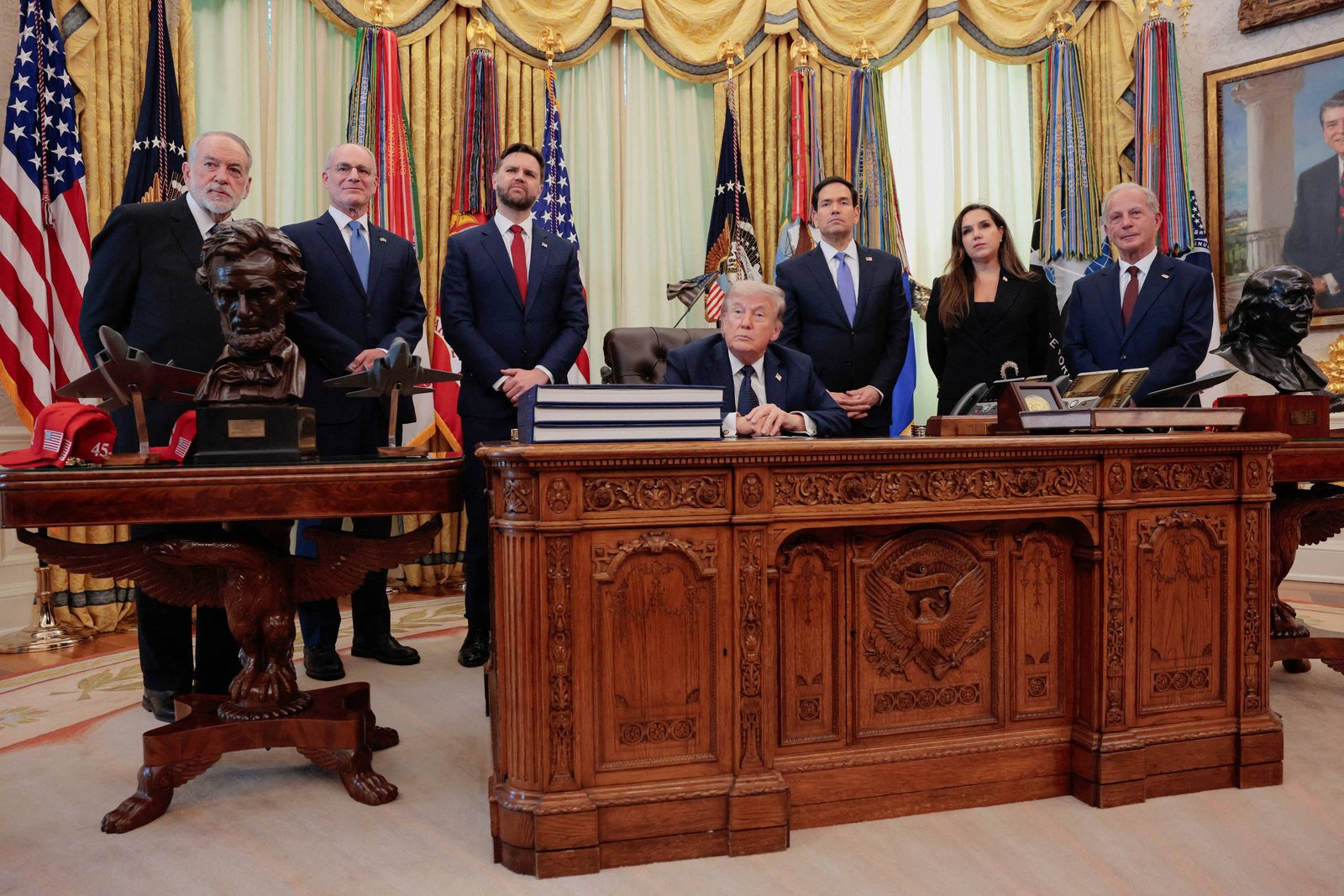
This Thursday’s meeting moved from the State Department to the White House and was attended by the American president, the vice president, JD Vance, the Secretary of State, Marco Rubio, and the US ambassadors to Israel and Lebanon, in addition to the ambassadors of the two countries in Washington.
The meeting took place one day after Israeli attacks on its neighbor killed at least five people despite the truce — Wednesday (22) was the deadliest day in Lebanon since the ceasefire began on April 16. Among those killed in the offensive was Lebanese journalist Amal Khalil, according to Lebanese authorities and the newspaper Al-Akhbar, where she worked.
The US-brokered ceasefire, which was set to expire on Sunday, resulted in a significant reduction in violence, but attacks continued, particularly in southern Lebanon, where Israeli troops remain. positioned in a strip of Lebanese territory of 5 to 10 km along the entire border.
Hezbollah, an extremist faction supported by Iranclaims to have the “right to resist” the occupation. The Israeli Army reiterated a warning to residents of southern Lebanon not to enter the area.
Aoun, the Lebanese president, said that Beirut’s envoy for Thursday’s negotiations would seek an extension of the ceasefire and an end to demolitions carried out by Israel in southern villages. The Arab country was represented by the Lebanese ambassador to the USA, Nada Moawad.
Aoun cited the death of journalist Khalil and stated that Israel’s “deliberate and recurring attack” against press professionals aims to “conceal the truth about its aggressive acts against Lebanon.” He called the episode a “brazen crime” that violated the “most basic rules” of international law.
Hassan Fadlallah, a Hezbollah lawmaker, told reporters that complying with the truce entails “stopping killings, completely ceasing attacks and stopping the destruction of villages.” According to him, the Israeli withdrawal must occur through measures led by the Lebanese State, without direct negotiations.
A Lebanese official also stated that the country wanted to first extend the ceasefire and then move forward with negotiations, including Israel’s withdrawal, the release of Lebanese detainees and the definition of the land border. Tel Aviv states that its objectives in negotiations with Lebanon include ensuring the dismantlement of Hezbollah and creating conditions for a peace agreement.
Israel has sought to align itself with the Lebanese government over Hezbollah, which Beirut has been trying to peacefully disarm for a year. The complexity of the process reflects Lebanon’s sectarian politics, in which the Shiite faction is also a party with representation in Parliament and government positions, as well as a social organization with deep reach, particularly among the country’s Shiite Muslim population.
Washington denies a link between mediation in Lebanon and negotiations on the war with Iran. Hezbollah says that the truce is the result of Iranian pressure, not American action.
Lebanon was drawn into the conflict after Hezbollah attacked Israel on March 2, in support of Iran. The Persian country, in turn, had been attacked by Washington and Tel Aviv on March 28, which triggered a conflict that spread across the Middle East.
The ceasefire in Lebanon was negotiated separately from Washington’s attempts to resolve the conflict with Tehran, although Iran has advocated including the Arab country in a broader truce as it negotiates a deal to end the war with the United States.
On Wednesday, Hezbollah said it had carried out four operations in southern Lebanon in response to Israeli attacks. Nearly 2,500 people have been killed in Lebanon since Israel began its offensive following the Hezbollah attack on March 2, according to Lebanese officials.