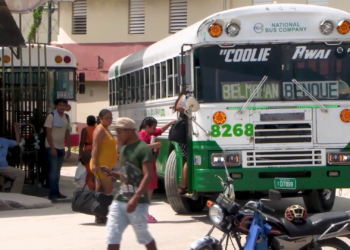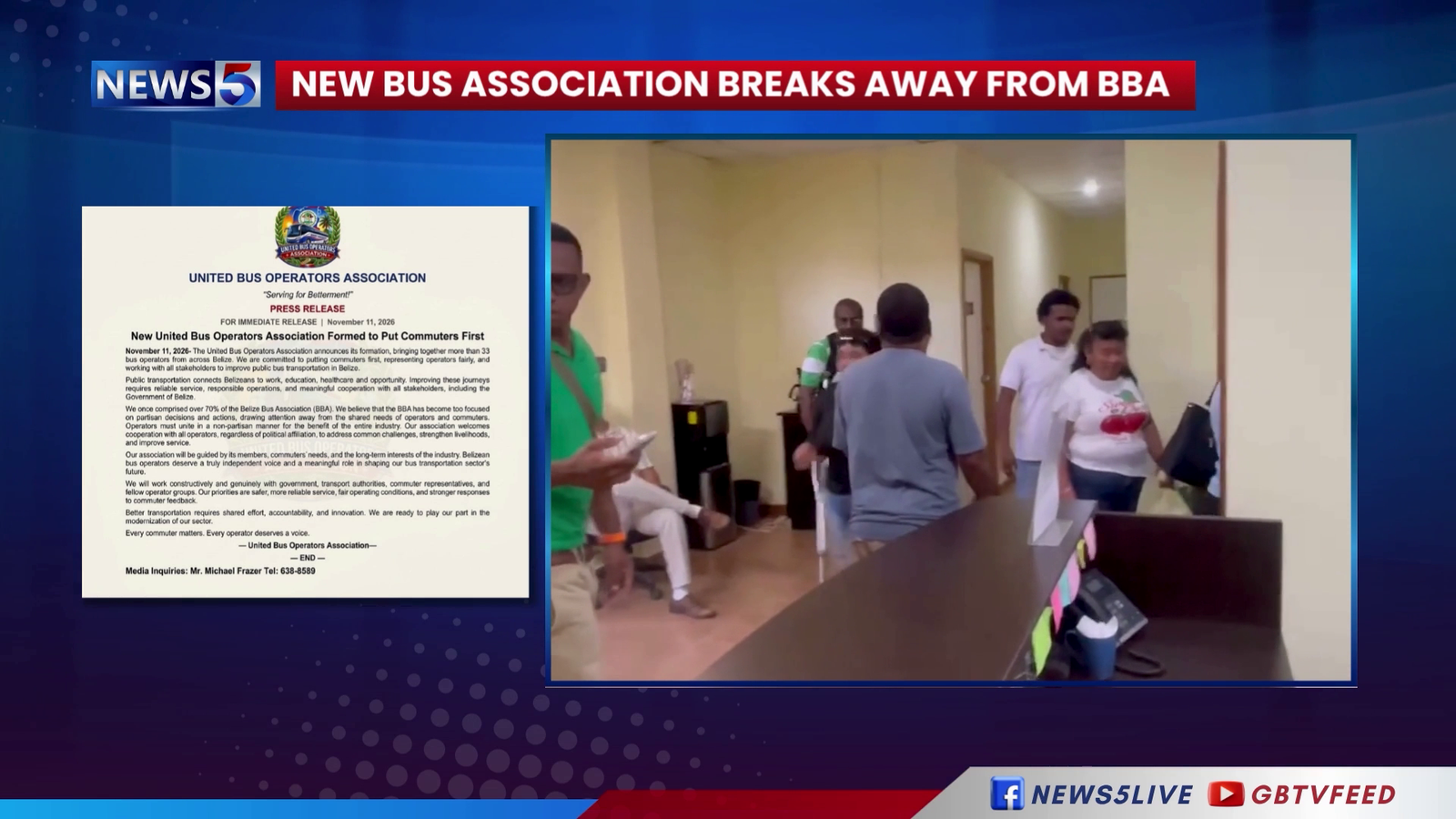
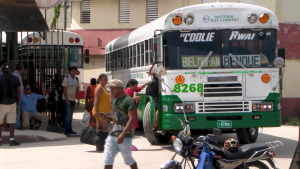
More than thirty bus operators have formed the United Bus Operators Association, promising to put commuters first and work with the government to improve public transportation. But the arrival of a second operators’ group has also deepened divisions within the industry at a critical moment. The split comes as the government moves ahead with sweeping transportation reforms and plans for the National Bus Company. News Five’s Britney Gordon looks at what triggered the breakaway and what it could mean for Belizean commuters.
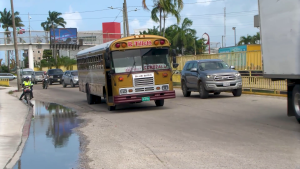 Britney Gordon, Reporting
Government’s bus overhaul is moving ahead, but operators are heading in different directions. The Senate passed the Public Transportation Investment Bill 2026 on Wednesday, while more than thirty operators broke away from the Belize Bus Association. Their new group says commuters, not politics, should drive the debate. Founding member Michael Frazer says operators formed the association on November fourth after repeated attempts to have their concerns addressed within the BBA failed.
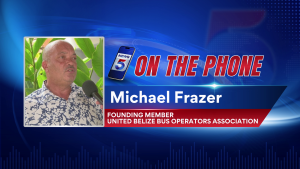 On the Phone: Michael Frazer, Founding Member, United Bus Operators Association
“We didn’t feel quite represented, and everything was not done in proper consultation. Many of us tried to resolve the issue through phone calls, through messages and even through meetings, but to no avail. So eventually, one by one, members started falling out and coming out of the BBA. We then decided to form our own association, which we did November the fourth.”
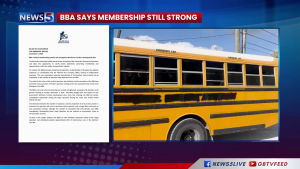 But the Belize Bus Association disputes the suggestion that it is losing its influence. The BBA says its membership has actually grown and claims only a few inactive members joined the new association. It says its major operators remain united behind a transportation development plan for northern Belize and will soon present their own proposal to the government. The split has sparked claims of political interference, but Transport Minister Dr. Louis Zabaneh denies government engineered it. He says some operators viewed the BBA as partisan, while the ministry remains open to working with everyone.
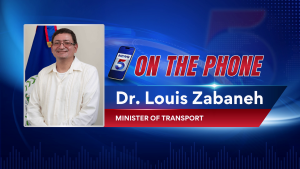 On the Phone: Dr. Louis Zabaneh, Minister of Transportation
“They did not feel that it was wise for the BBA to be taking a partisan position because I’m sure that they have seen that the ministry has been nonpartisan. In fact, one of the largest members of the National Bus Company has been a senior member of the UDP, and we treated him with the greatest respect, as we’ve treated all members of the BBA. So the government cannot be accused in any way, shape or form of taking any political side.”
Zabaneh says the ministry will not choose sides and will engage both associations, provided they approach the transportation reform process constructively.
 On the Phone: Dr. Louis Zabaneh, Minister of Transportation
“We have our doors open to everyone, and we will continue to work with all our operators in a genuine manner.”
 For the new association, however, the bigger issue is what commuters experience every day. Frazer acknowledges that passengers have complained for years about aging buses and unreliable service. But he says operators often lack the financial support needed to modernize their fleets. The group now plans to seek government assistance while keeping commuters informed about its efforts to improve service.
On the Phone: Michael Frazer, Founding Member, United Bus Operators Association
“For too long, commuters, the general public on a whole, have been complaining about the dilapidated buses. And we want to make sure that we can make a difference. Whatever we do, we will keep the public informed because too many times the bus operators are blamed for the type of buses they have, not knowing that we are not getting the assistance required. So that is what we are going to try to get.”
The Belize Bus Association insists it remains the dominant voice in the industry, while the United Bus Operators Association says it offers operators and commuters a new alternative. But beyond the battle over membership and representation, both groups now face the same test: proving that their competing plans can deliver safer, more reliable and more comfortable transportation for the travelling public. Britney Gordon for News Five.
Attention readers: This online newscast is a direct transcript of our evening television broadcast. When speakers use Kriol, we have carefully rendered their words using a standard spelling system.
Watch the full newscast here: