Transport volumes are rising in Switzerland, and so are the costs
Keystone-SDA
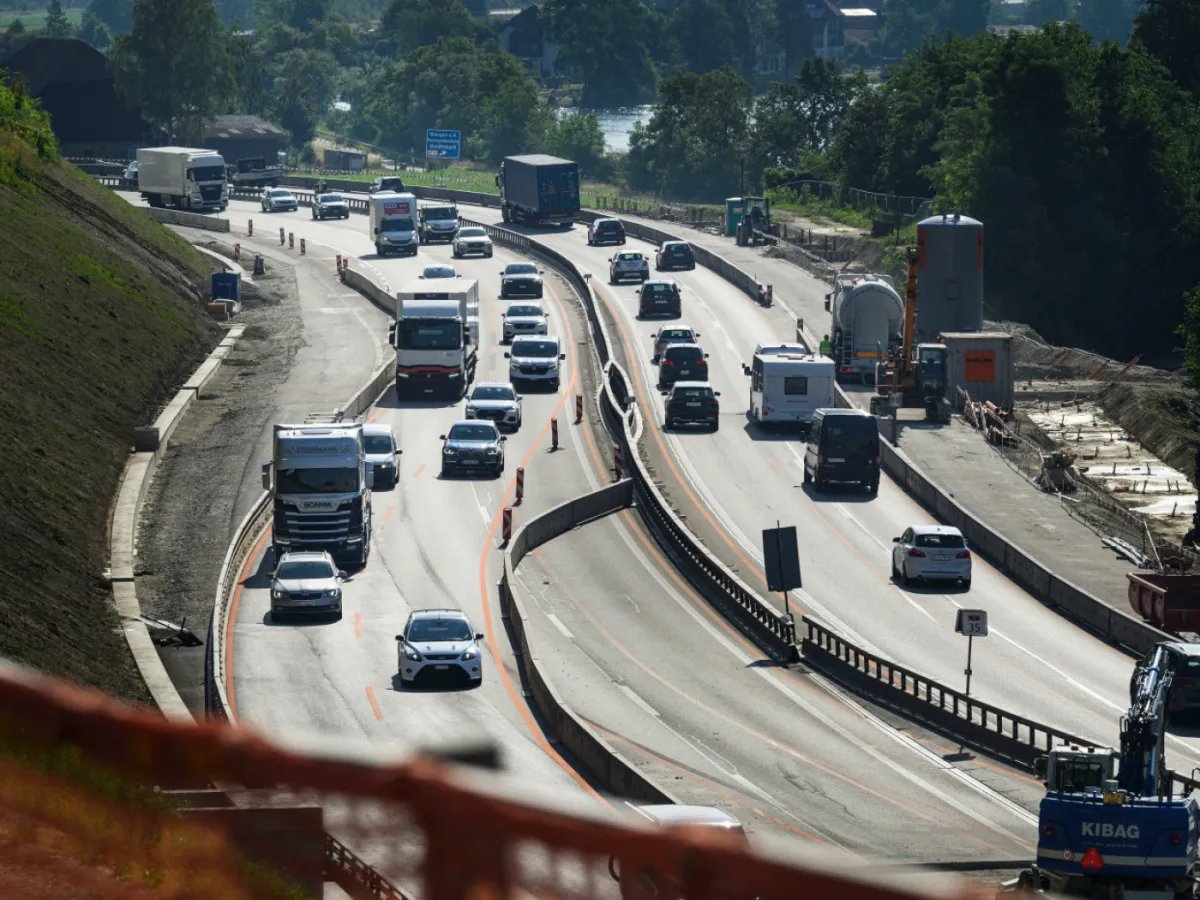
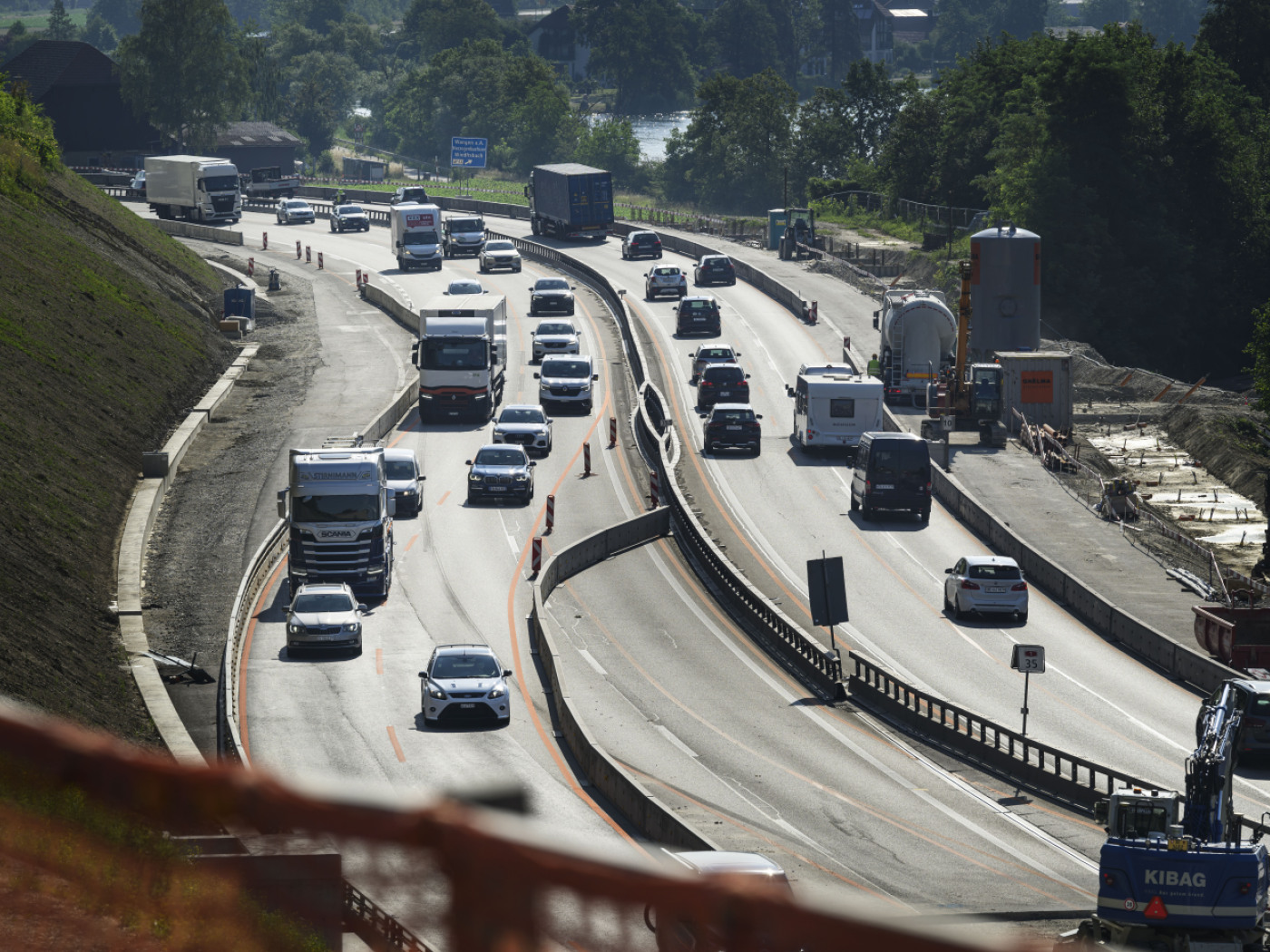
In 2023, transport in Switzerland generated costs of around CHF117 billion. At the same time, traffic volumes have risen significantly since 2000, with the car remaining the dominant mode of transport.
The figures come from a report published by the Federal Statistical Office.
Passenger transport accounted for 77% of the total costs, while freight transport made up the remaining 23%. Between 2019 and 2023, overall transport costs increased by 8%.
+ How Switzerland is stalling on implementing new climate rules
Passenger traffic volumes have grown by more than a quarter since 2000. In 2024, cars accounted for 68% of passenger kilometres travelled, compared with 18% for rail.
According to the latest available data from 2021, people in Switzerland spent an average of 80 minutes a day travelling. The largest share of that time – 41.6 minutes – was devoted to leisure activities.
The number of motor vehicles on Swiss roads reached 6.9 million. Of these, 4.8 million were passenger cars, double the figure recorded in 1980. In 2025, one in every 20 cars was electric.
Freight transport stable
Unlike passenger transport, freight volumes have remained broadly stable over the past two decades. Road haulage accounted for 63% of freight transport and rail for 37%.
The number of trucks crossing the Alps has fallen by one-third since 2000.
Despite the high volume of traffic, carbon dioxide emissions from the transport sector have fallen by 16% since 2000. In 2024, transport was responsible for 42% of Switzerland’s total CO2 emissions and 38% of the country’s energy consumption.
Road safety has also improved. The number of people killed in traffic accidents has fallen significantly since the 1970s.
More
More
Swiss CO₂ progress in transport sector limited: WWF
+ How we produce English news
Translated from French, reviewed by an English Department journalist.