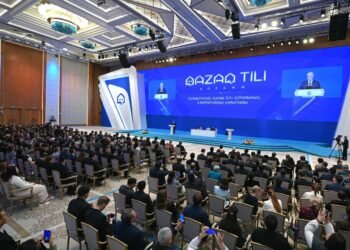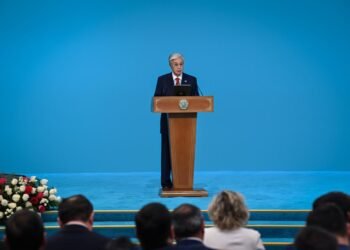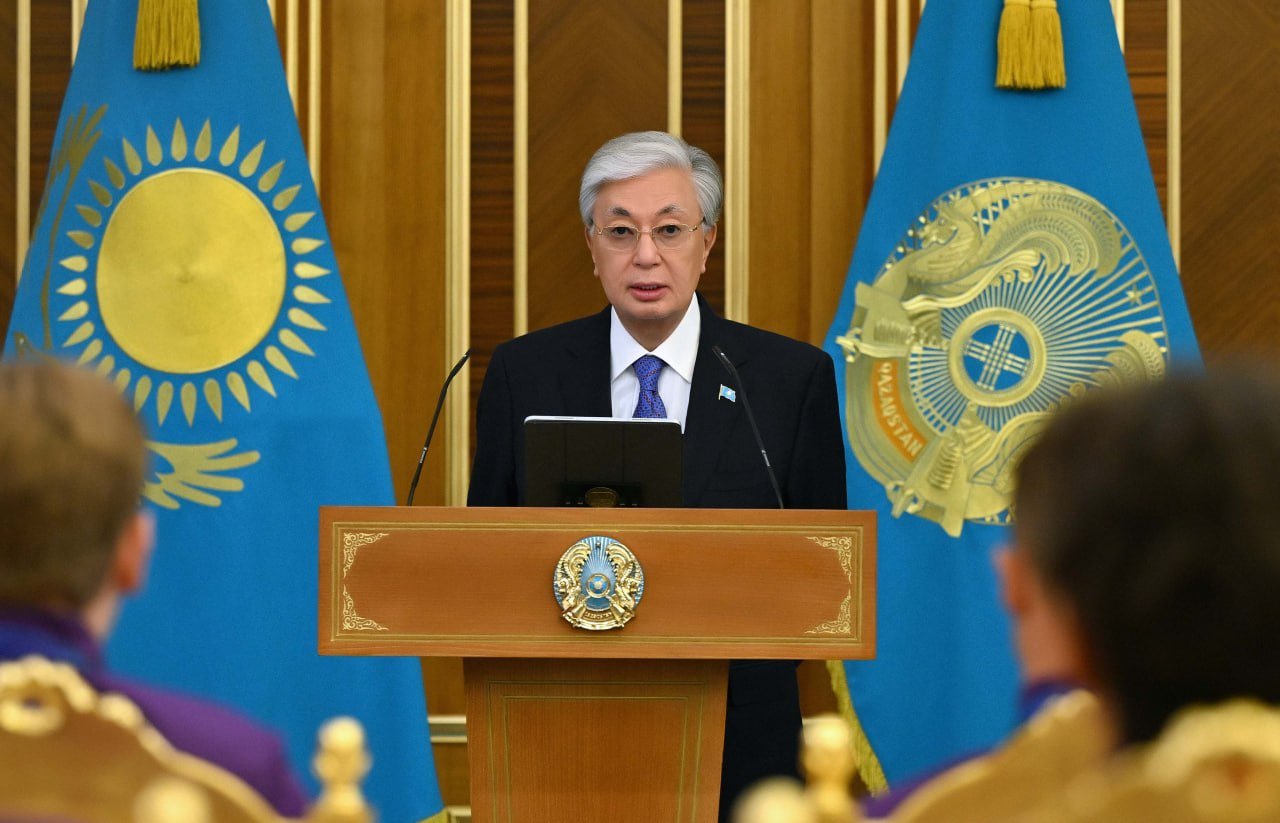
BAKU, Azerbaijan, November 10. Kazakhstan needs
to standardize the spelling rules of the Kazakh language and update
its dictionaries by the end of 2027, President Kassym-Jomart
Tokayev said at the 10th congress of the International Kazakh
Language Society on Tuesday, November 10.
According to the presidential press service, Tokayev said that
some words, concepts and terms were currently being used
differently, creating confusion and affecting the consistency of
the language.
He said the issue required a systematic approach, including the
revision of spelling rules and the updating of dictionaries. The
president noted that the official spelling dictionary of the Kazakh
language dated back to 1983, when it was approved by a decree of
the Presidium of the Supreme Soviet.
Although several dictionaries had been published since then,
Tokayev said none had received state-level approval or acquired
legal force. He pointed out that some neighbouring countries update
such academic works every five years, and said Kazakhstan should
also review the scientific foundations of its spelling system
without delay.
Tokayev said the work should be completed by the end of next
year. He proposed establishing a special working group comprising
professional linguists, researchers, experts and representatives of
the public. The group’s activities, he said, should be coordinated
by the Presidential Administration.
The president also called for a balanced approach to the
development of Kazakh vocabulary, particularly when introducing new
terms or translating foreign concepts.
He said a number of Kazakh words that had previously been rarely
used had become widely accepted equivalents for terms such as
concept, principle, plan, scholarship, internship, universal,
systematic, fertilizer, refugee, terrorism, internet and artificial
intelligence.
However, Tokayev questioned the need for some artificially
created translations of everyday words. He cited proposed Kazakh
equivalents for piano, balcony, fountain, shower, cabbage,
newspaper and elevator, saying that such choices might not be
necessary.
He also expressed reservations about the growing use of Arabic
words in place of traditional Kazakh religious vocabulary, saying
that professional linguists should assess the issue and provide
balanced conclusions.
Tokayev said Kazakhstan needed a universal and accessible
digital system related to linguistics to support the consistent use
of the language.
He linked the proposed reforms to the broader development of
Kazakh as a language of science and production. Universities, he
said, should give greater attention to research conducted in
Kazakh, while the country should improve the quality of textbooks
and teaching materials in fields including engineering, medicine,
law, economics and natural sciences.