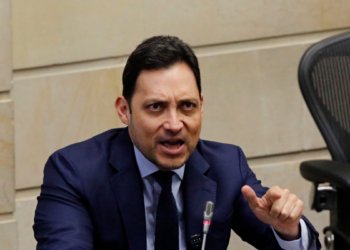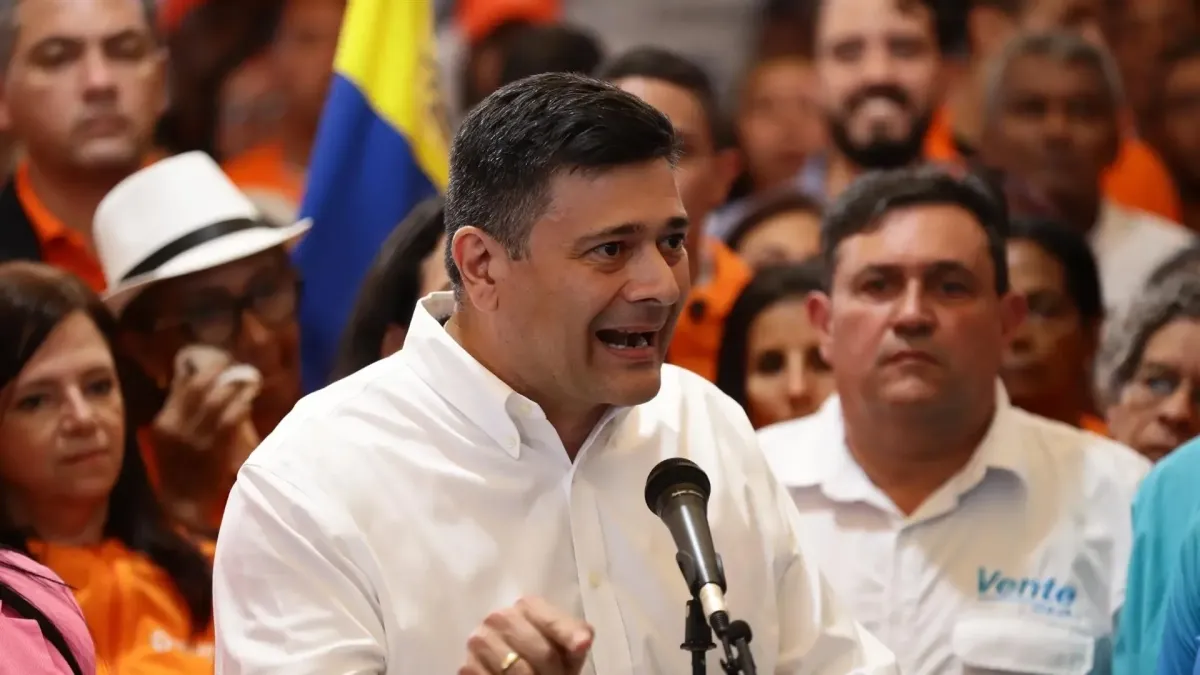
On July 3, 2024, a video recorded by a citizen recorded the moment of the opponent’s arrest Freddy Superlanoone of the main allies of María Corina Machado. The images show how several men dressed in black, who were traveling in a van, intercepted the vehicle in which the former deputy was traveling. Caracas.
READ ALSO
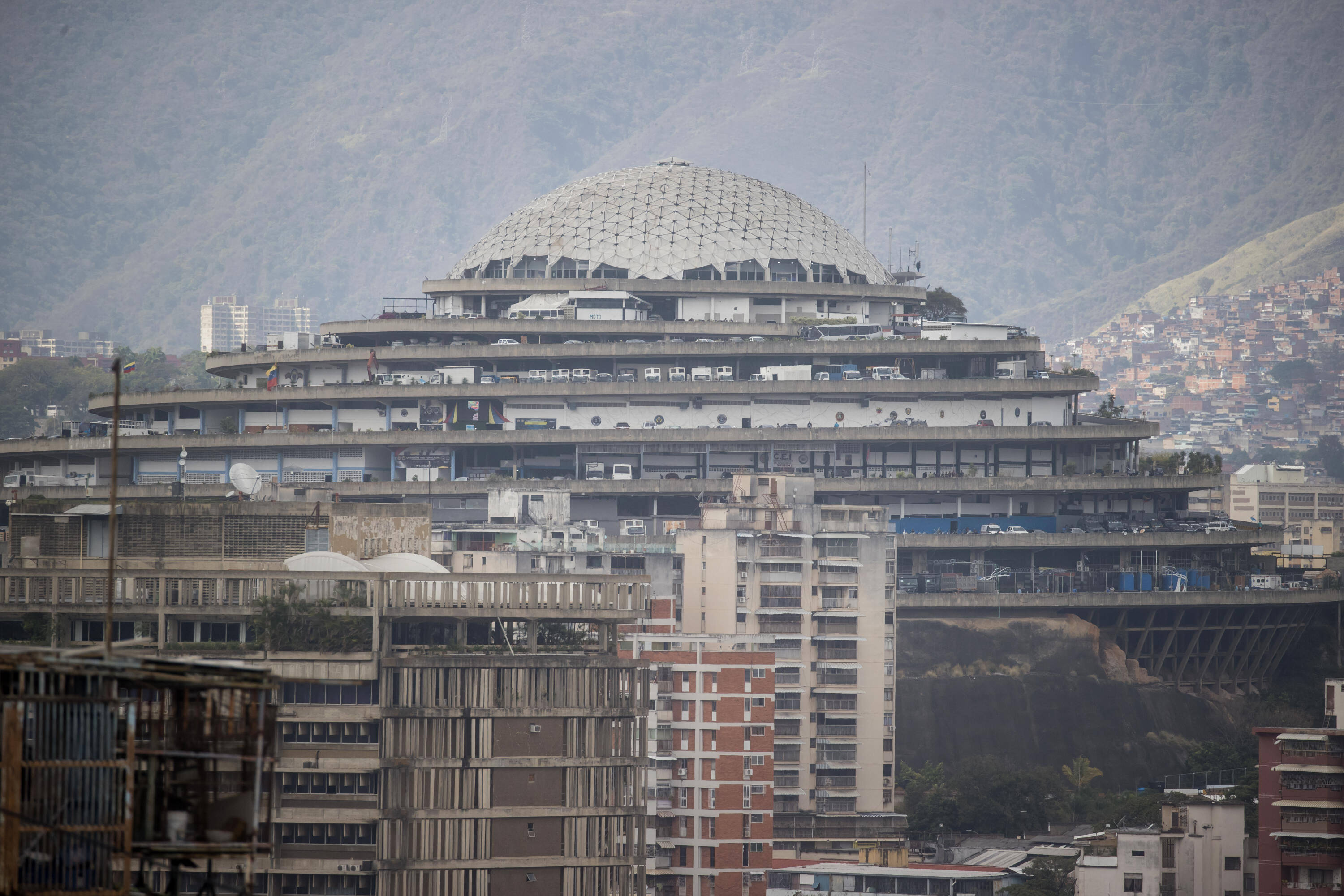
It took 19 months for him to regain his freedom. During that time, his wife was only able to see him almost a year and a half after his arrest. Finally, on February 27 of this year, he was granted a house arrest in prison with an electronic shackle and, subsequently, He obtained full freedom thanks to the Amnesty Law promulgated by Delcy Rodríguez.
Now, back to political life, Superlano, in an interview with EL TIEMPO, He says that the state apparatus has not changed at all and that it even bears similarities to that of Hugo Chávez. Even so, he believes that it is the duty of the opposition to continue building the foundations for a sustainable transition over time. However, he warns that “as long as there are political prisoners, the transition is non-existent”because “the government uses the situation to delay elections.” Furthermore, he maintains that as long as figures like Diosdado Cabello remain in power, real changes will remain limited.
Today I have been released from prison, after 18 months of unjust imprisonment I was able to reunite with my family. Let us continue praying and asking God for all political prisoners to be released in the next few hours. pic.twitter.com/bC44BCCglR
— Freddy Superlano (@freddysuperlano) February 9, 2026
What political scenario did you encounter after regaining your freedom?
The first thing is that there is a process of reunion with the people, the structures, the cadres and the teams. There is a lot of expectation and, as the days go by, people begin to demand the electoral schedule.
What is your reading of the moment that the opposition is going through today?
You find positive things. For example, I think that the Panama Manifesto (document presented by María Corina Machado for the transition in Venezuela) is positive. Although it is true that a discussion has been going on for a long time about how to insert ourselves into this process, Where at some point you did not feel invited, now you begin to say: “Not only am I present, but I also have proposals.”
What do you consider to be the main contribution of the Panama Manifesto?
The Panama Manifesto is the conclusion of an entire process developed from day one, after January 3. The Unitary Platform has always maintained coordination with María Corina Machado and other factors outside the platform to present itself to the country in a unitary manner. Even before the Americans themselves, a clear position is established: we are willing to a negotiation process, but not just any process, but one with conditions and, above all, with the support of those who can most directly influence the regime. Back in the country, I think people see this positively, beyond a priori criticism. People are beginning to assimilate that it is not an immediate process, that it needs support and that it requires us to be articulated, unified, organized and on the streets.
READ ALSO
Several of the opponents who were imprisoned have begun tours around the country…
That is precisely what we have been doing. We started with separate tours, but little by little we have found each other along the way. We have already visited several states; This week we will be in Anzoátegui, the next one in Carabobo, and we are all still waiting for María Corina’s return.
And what does the return of María Corina Machado depend on? From the USA?
I think it depends not only on Americans, but on the Venezuelan political climate. It depends on your presence here in Venezuela not being a mere whim of the people, but rather responding to a completely strategic movement. That is to say, it is not about applying pressure for the sake of exerting it, but rather that this pressure will result in the appointment of a new electoral council and, of course, the definitive formation of an electoral schedule. People need and want to know when the presidential election is. The moment that is known, it will be an open invitation to the entire world to pay attention to what happens here.
María Corina Machado in Panama. Photo: X: @MariaCorinaYA
From what you propose, is the return of María Corina Machado conditioned by various factors, both internal and external?
It would be to deny reality to say that this does not also depend on a coordinated movement with North American allies; It depends on that. We do not intend to go one way and they go another, but we have to do our homework. And our task has to do with mobilizing in the country. Although they (the regime) want to normalize politics, it will not be normalized as long as there are still political prisoners, as long as not all the exiles enter and as long as the repressive scaffolding of the State remains as it is. To achieve change, he needs us on the streets, sending a clear message to people. This is happening in a very organic way, but, above all, coordinated.
Do you think the election scenario is viable this year?
The political will exists. I don’t rule it out; I think that with political will it could be done. I understand that this is what is needed, and I am not saying this on our part, but on the part of those who today continue to control power and have territorial control of the country. If there was political will, we would do our best to reduce the technical and logistical delays for an election. But nothing else depends on us.
Once again free, do you feel that there is a risk of new persecution against you?
This is a very gradual thing. At first, when I left, they were still monitoring the officials. Over time, this has disappeared. In the last three weeks I have not had any more episodes of this type. Organizations that work with human rights have been very attentive to our case. We have not seen direct harassment recently, beyond noticing that they infiltrate assemblies or get involved in street activities. The harassment characteristic of before, when you arrived at an airport, has decreased.
READ ALSO
So you’re not afraid anymore?
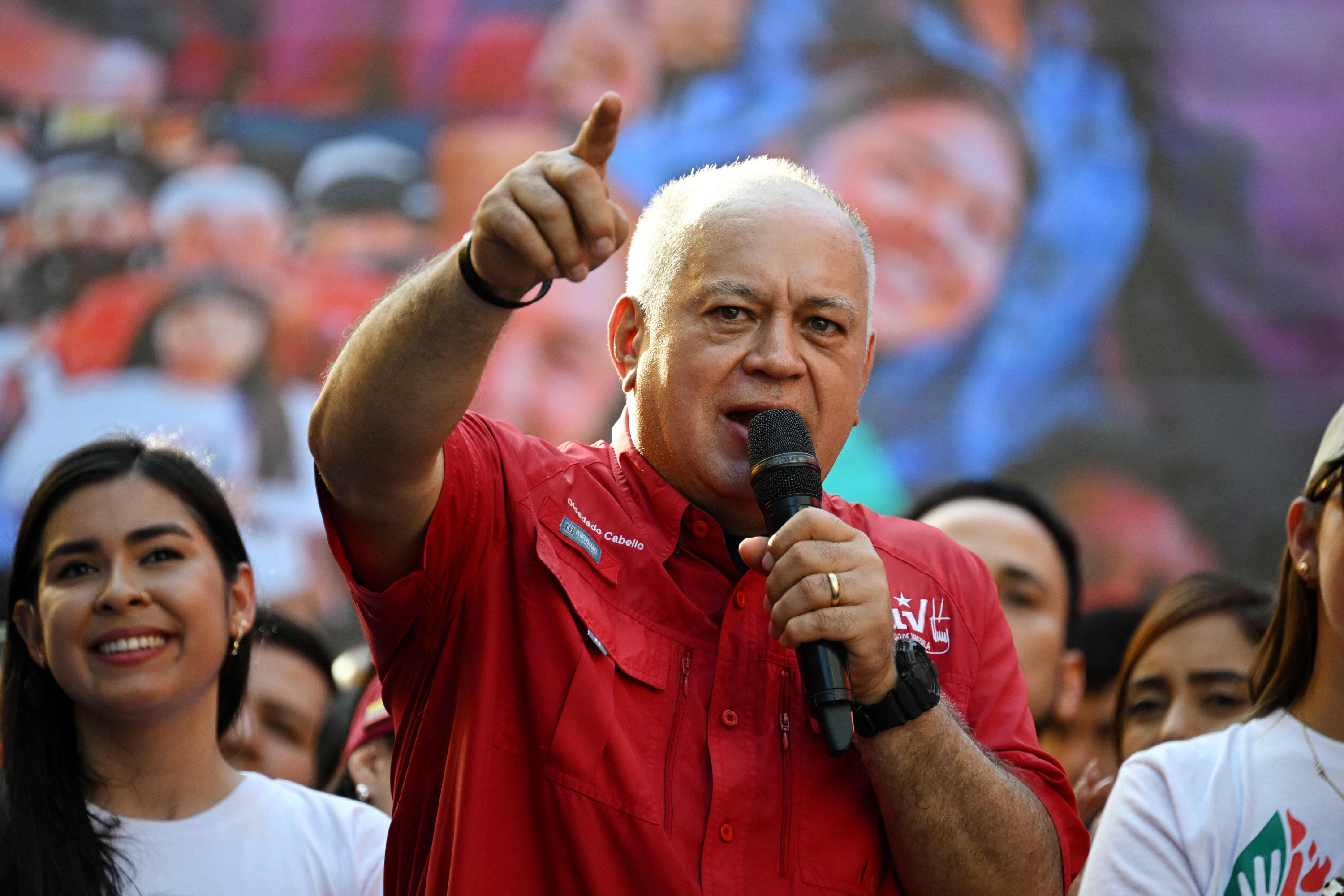
There will always be the fear of a setback or a worsening of repression. No one can be completely calm while Diosdado Cabello is in the Ministry of Interior Relations, or while those who are in charge of the National Police are the same. You are always going to be careful and somewhat afraid, so to speak.
What was your process to be amnestied like?
I left under a substitute measure. They took me out of jail and gave me a house in jail with an electronic shackle. While at home I received the amnesty. Then I had to appear before the court because I had two open cases: one in a terrorism court and another in which the Perkins Rocha comrades and other leaders were involved. Ultimately, both were dismissed.
Beyond the demand for elections and the Panama Manifesto, what is the opposition’s proposal for Venezuelans? What comes after an eventual election?
I believe that after the election there has to come a process of re-institutionalization of the country. That is, institutions have to respond to the needs of society and not to those of a political circle or group, as has been the case in recent years. For there to be sustainability over time of political change in Venezuela, there must be strong institutions.
How to make this re-institutionalization happen?
For that to happen, we need a Parliament that has the responsibility and the ability to make these changes and to place the most suitable people there. It depends on that, in addition to generating the conditions so that the political climate is one of participation, as civilized as possible within the Constitution, and that differences can be resolved in politics, in Parliament or in the electoral field. It all starts there, going through the reform of the Constitution and the repeal of many laws that they implemented. It is a reformist process in which we should not be afraid to move forward.
The president of the Parliament of Venezuela, Jorge Rodríguez (c). Photo: EFE
How do you evaluate the role that the United States has played in this process? Do you think you will maintain your level of involvement in the coming months?
In democratic countries, public opinion matters. For the United States, at this moment, perhaps the only thing they can show as a victory to their electorate is the issue of Venezuela, although it has not yet come to fruition. Therefore, I do believe that they will maintain interest so that Venezuela shows progress, and not only economically.
In fact, for the common citizen there is no real economic progress; The Venezuelan does not feel this supposed recovery in his pocket. Americans feel that oil is coming to them, but Venezuelans do not see the benefit here. Nor can one believe that there is a real political change just because some prisoners were released, while the perpetrators are still there.
What balance do you make of these months since January 3?
There is a person who governs outside the Constitution because there is a vacuum that we all know. They interpret the Constitution according to their convenience, when what corresponds is to call elections as soon as possible, as established by law. They use the political situation to delay this process. Therefore, we cannot yet speak of a transition as such; As long as there are political prisoners, the transition is non-existent.
READ ALSO
Despite this, it is undeniable that some positive things have happened, such as the release of several prisoners and the recognition of certain errors committed. But that is not enough to affirm that we are already heading towards a transition. I believe that today they represent an authoritarianism very similar to that exercised by Chávez in his moment of greatest strength: they maintain control of the institutions, although they allow elections to be held, yes, with a wide advantage in their favor. We are not facing a normal process.
ANA MARÍA RODRÍGUEZ BRAZÓN – EL TIEMPO Correspondent – Caracas