“Nauru is a true friend of Israel, and the opening of the embassy will undoubtedly contribute to deepening the relations between the countries,” Sa’ar wrote on X.
“The Foreign Ministry, under my leadership, will provide all the necessary assistance to open the embassy as soon as possible. We look forward to hosting you soon in Jerusalem, our eternal capital!” he said.
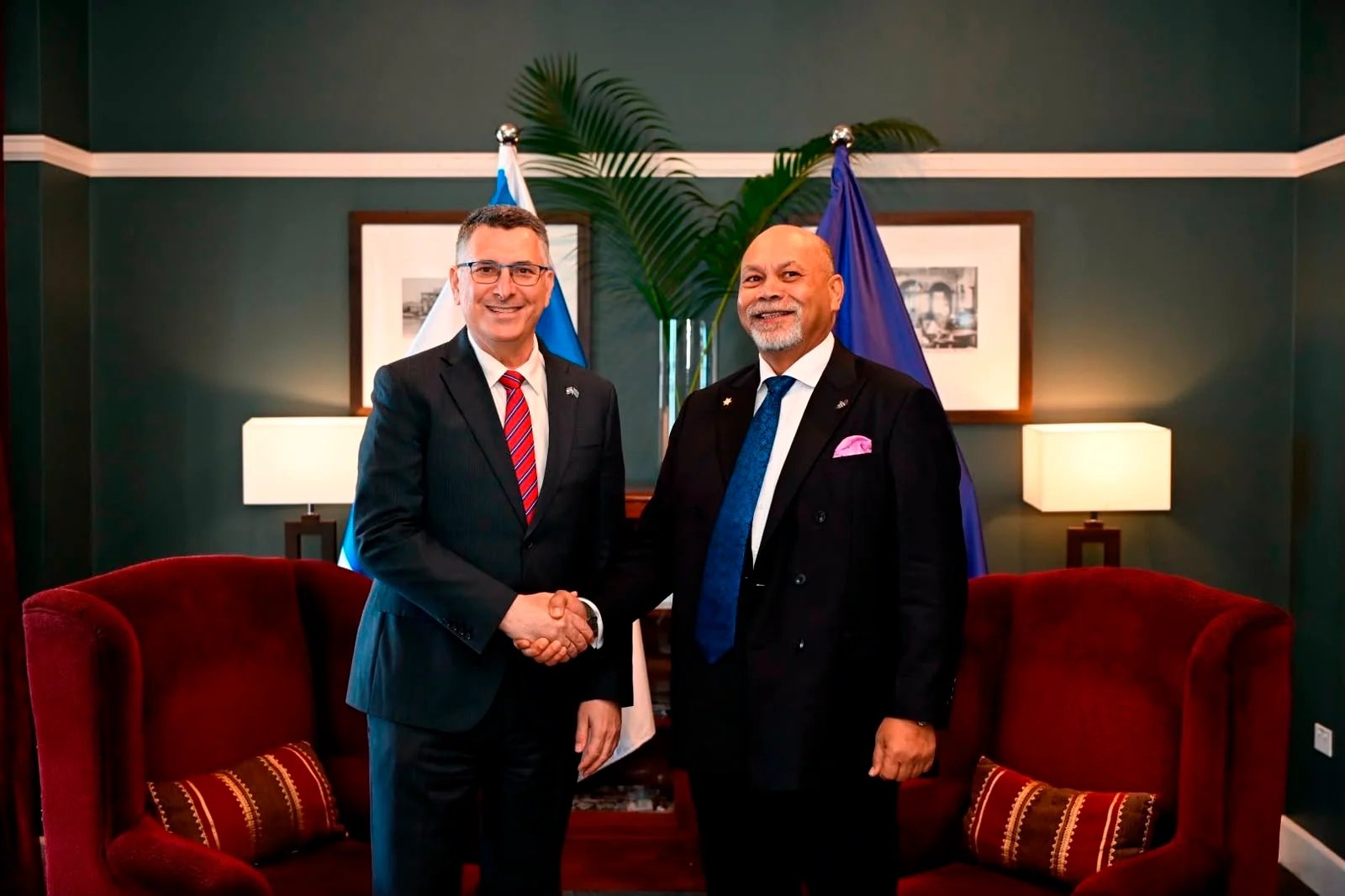
Sa’ar and Nauruan Foreign Minister Lionel Aingimea met last June in Fiji and agreed on the opening, according to Sa’ar’s office.
There was no immediate confirmation from Nauru itself of the decision, as of late Wednesday morning Israel time.
Get The Times of Israel’s Daily Edition by email and never miss our top stories
Already in 2023, however, Prime Minister Benjamin Netanyahu said its leader had expressed an intention to open an embassy in Jerusalem.
The embassy is expected to open in the coming months, according to Sa’ar’s office. It will be Nauru’s first embassy in Israel.
Foreign Minister Gideon Sa’ar (left) meets with Nauruan Foreign Minister Lionel Aingimea in Fiji, June 2025. (Gideon Sa’ar on X)
Nauru is one of the smallest nations in the world, with a population of about 12,000. Israel is represented in Nauru by a non-resident ambassador based in Fiji.
It is a firm supporter of the Jewish state, and Israel has previously thanked it for its support in the UN and other forums.
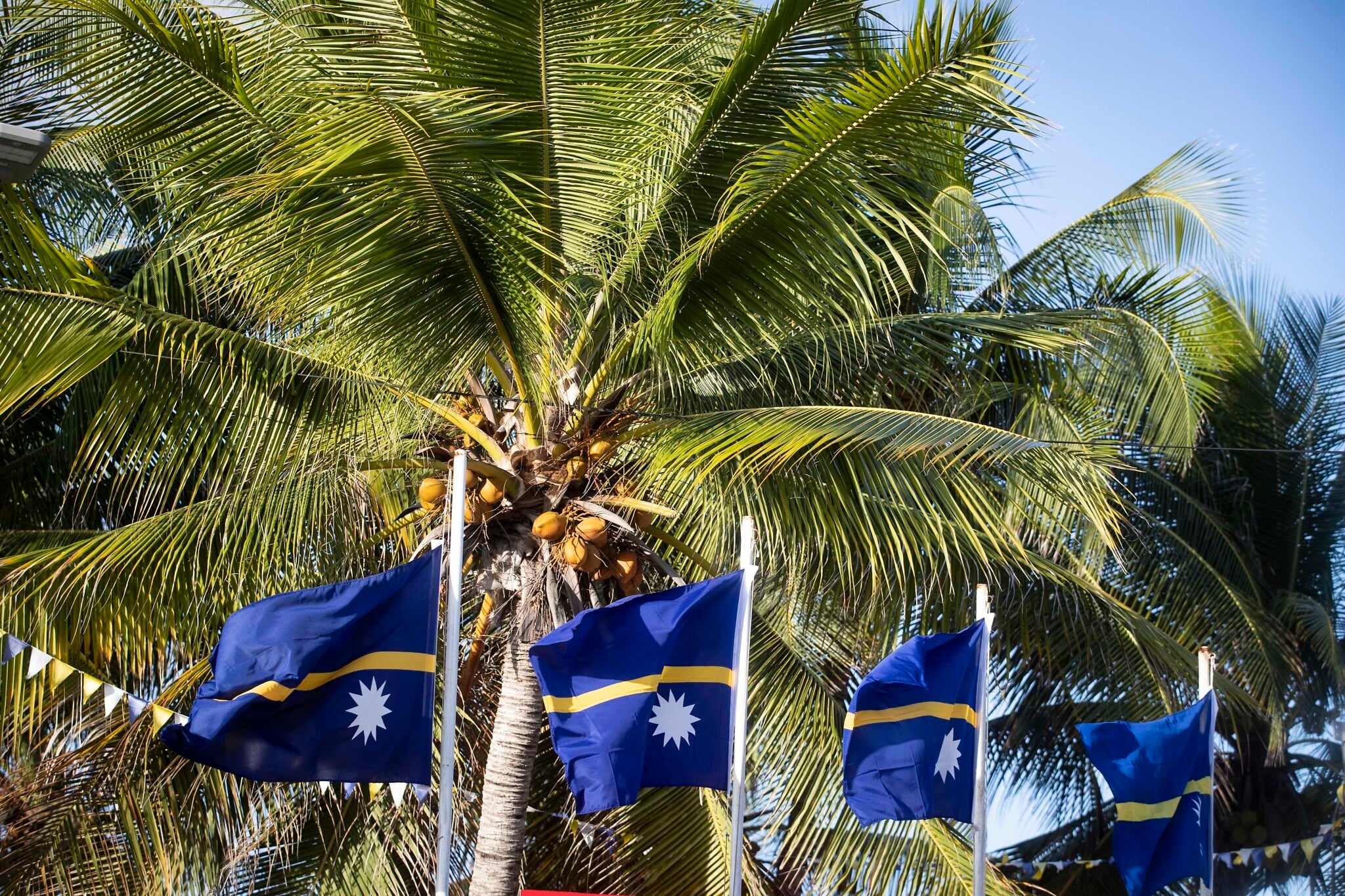
National flags for Nauru fly at the Pacific Islands Forum on the tiny Pacific nation of Nauru, September 3, 2018. (Jason Oxenham/Pool via AP)
The United States, Guatemala, Honduras, Kosovo, Papua New Guinea, Paraguay, Fiji, and Somaliland have embassies in Jerusalem, while Colombia announced its intention to open one last week.
Other countries — including Hungary, the Czech Republic, and Slovakia — have embassy branches in the capital.
Most countries that have an embassy in Israel have it in Tel Aviv, rather than Jerusalem, saying that the status of Jerusalem should be determined during a future two-state solution to the Israeli-Palestinian conflict.
We can’t do this work alone.
The war with Iran has been draining for all of us in Israel. But when I heard about a high casualty incident – ballistic missile impacts in Arad and Dimona that left nearly 200 people wounded – I drank a cup of coffee, packed a bag, and headed south.
There, I spoke with Shilgit, the head of an after-school program for underprivileged youth. Standing outside her destroyed center, Shilgit said it was a miracle that no children were hurt and spoke about the community coming together in the hours since.
As a Times of Israel reporter, I’m committed to telling stories of resilience like Shilgit’s. But my colleagues and I can’t do this alone. If you value work like this,please consider joining our reader support group, The Times of Israel Community. Your financial support is essential to keep real human reporting like this going.
We’re really pleased that you’ve read X Times of Israel articles in the past month.
That’s why we started the Times of Israel – to provide discerning readers like you with must-read coverage of Israel and the Jewish world.
So now we have a request. Unlike other news outlets, we haven’t put up a paywall. But as the journalism we do is costly, we invite readers for whom The Times of Israel has become important to help support our work by joining The Times of Israel Community.
For as little as $6 a month you can help support our quality journalism while enjoying The Times of Israel AD-FREE, as well as accessing exclusive content available only to Times of Israel Community members.
Thank you, David Horovitz, Founding Editor of The Times of Israel