While the country is awaiting the presidential elections and the war in the Middle East, the government of José Balcázar deals a blow to private investment with a controversial decision.
And it is that he Mining Council has resolved to annul the ministerial authorization that empowers Southern Copper to start exploitation activities in the project Aunt Mary (Arequipa).
See also:

This, in clear contradiction with the government’s decision to declare National Interest the execution of the US$1.8 billion megaproject.
The Mining Council is, however, quite categorical in its determination to freeze the start of exploitation of Tía María, as can be seen in the respective resolution, dated March 19.
In it, the body attached to Minem justifies its decision to annul the authorization granted by the General Directorate of Mining (DGM), under the assumption that Southern Copper had failed to satisfactorily respond to two observations made to its request to start exploitation.
One, the “observation 5.1, referring to the detailed design of dumps“, and the other, “observation 9, referring to the schedule for the execution of activities (exploitation)”.

Resolution of the Mining Council against the start of the Tía María project.
For this reason it has resolved “declare the nullity ex officio of the Directorial Resolution No. 0692-2025-Minem/DGM” and return the case to the DGM to evaluate, again, whether the company “has fully complied” with absolving the observations.
All this occurs when the mining company has already advanced more than 30% with the construction of the megaproject and is preparing to start production next year, after having invested more than US$800 million along the way.
For Oswaldo Tovar, mining consultantthis is an inconceivable situation, since the DGM and the National Mining Council are only five meters apart in the same building and “Can’t you get together to talk and agree?“
“Bureaucratic attitudes like this – points out – They are what motivates us to seek solutions based on Artificial Intelligence, in order to replace delays, paperwork, and sterile bureaucracy.”.
Maria Cristina Alva, partner of the mining area of CMS Grauwarns that the decision of the Mining Council does not configure an ideal scenario for any investment project. However, he points out that the observations made by said body are formal and not material.
This means, he points out, that Southern Copper can continue with construction of the project and, in parallel, absolve the observations. Above all, because its construction permit is still valid and has not been revoked.

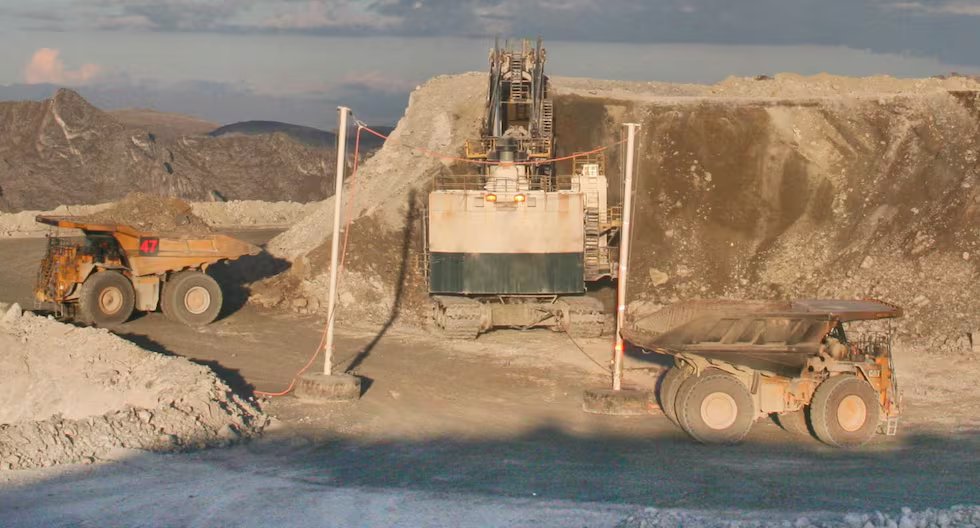
Tía Maria will produce copper cathodes (sheets), which will be sold locally and abroad. (Photo: Diffusion)
Asked about it, southern He indicated that he has requested an interview with the Government to clarify the decision of the Mining Council. The company also indicated that the decision would not affect them because Tía María is not yet in the exploitation stage.
Sources from the mining sector indicated to this Diary that the decision to pause Tía María would be due to a political determination by the Government aimed at ingratiating itself with the population of the south in view of the presidential elections.
Alva considers, however, that this is not a politicized issue because the Mining Council is an autonomous body (technical and independent) with people with many years of experience.
The controversy in Tía María adds to the arrest of Zafranal project (US$1.2 billion), whose operator, the Canadian Teckindicated a few days ago that it was postponing its investment decision until 2027.
Tía María will produce 120 thousand tons per year of copper cathodes (sheets) with ESDE technologywhich does not generate tailings.
Southern estimates that the project could generate, at current copper prices, a total of $20.2 billion in exports and $4.6 billion in taxes and royalties during its first 20 years of operation.