This week’s dismissal of the Anneli Auer case raises uncomfortable questions about the Finnish judiciary, Helsingin Sanomat writes.

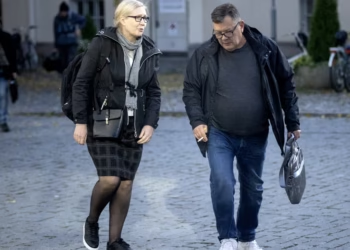
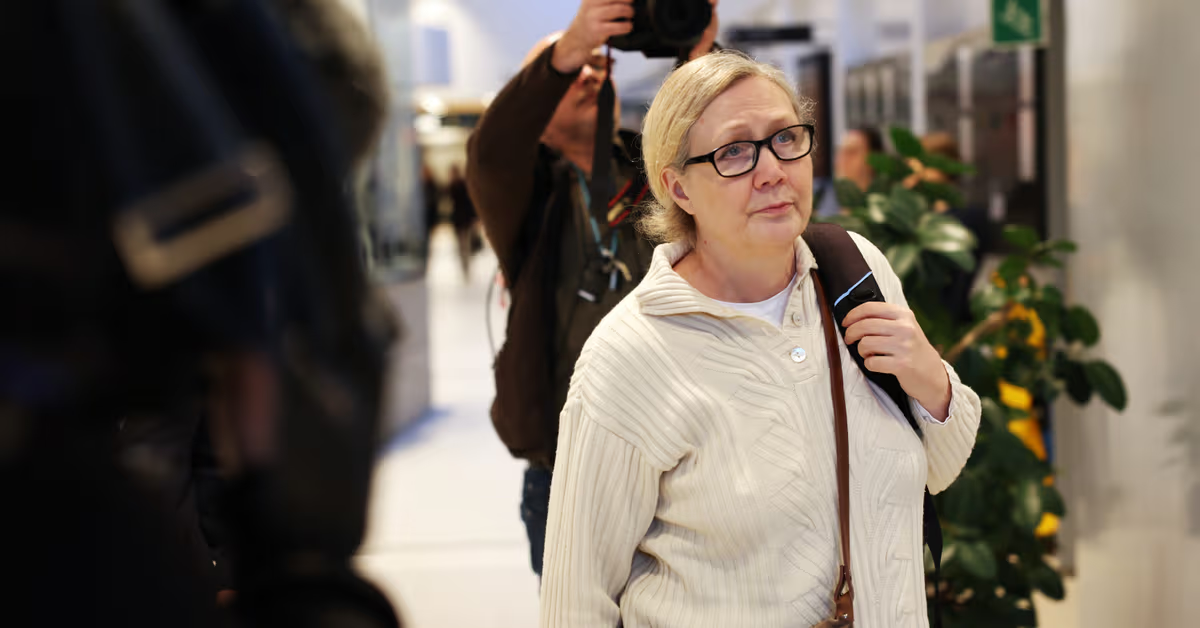
Helsingin Sanomat revisits Wednesday’s dismissal of all sexual offence charges brought against Anneli Auer and her ex-boyfriend Jens Ihle.
“It seems that in Finland, some convictions have been based on evidence that doesn’t really hold up scientifically. The case raises many uncomfortable questions and could weaken trust not just in the courts, but in the rule of law itself,” HS writes.
The editorial recounts how, by the time the supreme court overturned the convictions in 2024, Auer and her partner had already been released from prison. The court’s decision followed testimony from Auer’s three younger children, who said the alleged acts never happened and that they had been pressured into fabricating them.
Auer was twice convicted by a district court of her husband’s murder, but both verdicts were overturned on appeal. The killer was never found. While Auer was in custody, her children were placed with a foster family, where they began making allegations of sexual abuse. That set off another legal process, in which Auer and her former partner were handed lengthy prison sentences.
Golden years?
How much do retirees have left after their monthly expenses, asks Iltalehti.
Based on responses from a study by the pension firm Ilmarinen, retirees are left with, on average, less than 600 euros a month after covering essentials.
Respondents reported an average pension of 2,221 euros. Of that, about 420 went to taxes, 580 to housing, and 642 to other essential expenses such as food and medication. That left roughly 579 a month to spend freely.
This month, the All Points North podcast unpacked the myths and realities of the Finnish pension system.

Burial delays
The dead can’t wait forever, not even in cold storage under ideal conditions.
Each month, between 400 and 500 people die in Helsinki.
Laura Pikkarainen, a chief physician for the city of Helsinki, told Hufvudstadsbladet that over the past two decades, burial timelines have stretched. The deceased may now be kept for weeks, and in the worst cases, even months.
A new mortuary has now opened at Malmi cemetery, giving the city the capacity to store up to 300 deceased. The construction took two years and cost 12.9 million euros.