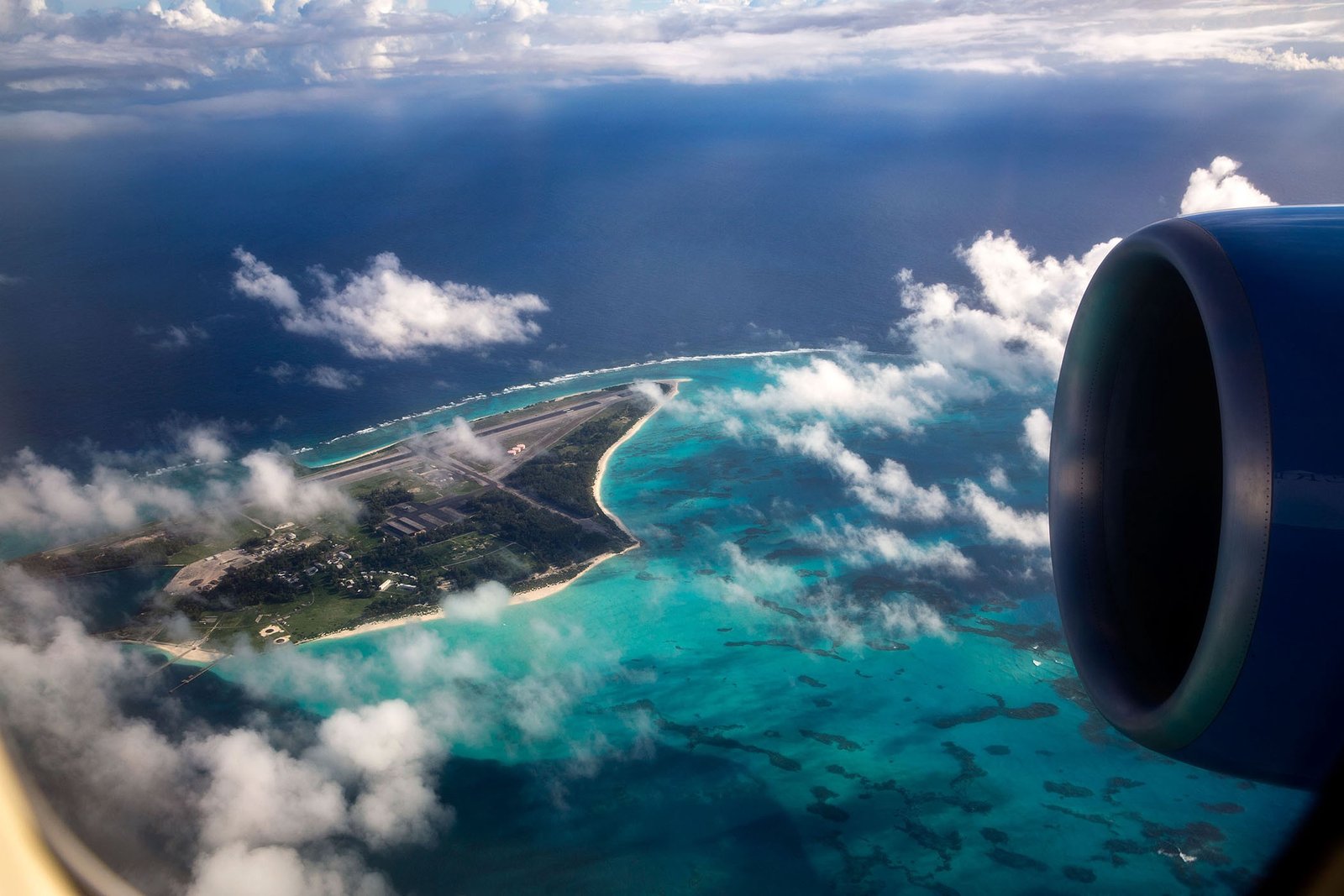
An airport with no scheduled airline service is still a linchpin that makes your flight across the Pacific possible. Midway Atoll’s Henderson Field gives airlines somewhere to land if something goes wrong, and having it available lets them plan routes they’d otherwise have to avoid.
Now its future involves a repair bill exceeding $100 million. The most revealing consequence may be on a flight that hasn’t started yet: Qantas’s planned Sydney–London nonstop.

Midway Atoll, September 1, 2016. Photo: Pete Souza / The White House, public domain, via Wikimedia Commons.
An airport can become unavailable before the runway closes
The FAA’s July 24 notice describes deteriorating infrastructure and asks what happens if Midway can no longer serve as an ETOPS alternate. The comment deadline was September 22.
The FAA says airlines need Midway to maintain its Part 139 airport certification standards to include it in their ETOPS planning. ETOPS is Extended Twin Operations, and two-engine aircraft get certified for safety and operational rules to fly long-distance routes over oceans and remote areas. ETOPS also means Engines Turn Or Passengers Swim. Planes need to be within a specified amount of time from the nearest diversion airport. Midway is strategically located for efficient Pacific flying as a result.
Wake Island Is A Key Fallback
The FAA identifies Wake Island, Eareckson Air Station in the Aleutians, and Marshall Islands International at Majuro as other alternates. How much they help depends on where the flight is going and which airports are available that day.
For Qantas’s proposed Sydney–London operation, assuming 240-minute diversion approval the preferred route heads toward Alaska, and losing Midway would leave Wake as a single point of failure. Qantas estimates a reroute would add about 20 minutes, require another 2,200 kilograms of fuel, and reduce payload by the equivalent of approximately 22 passengers.
Qantas plans just 238 seats on these aircraft. Twenty-two passenger equivalents represents 9.2% of capacity as a weight penalty. It could mean leaving passengers or cargo behind, and at that margin could be the difference between profit and loss and the route – and whether the route could operate at all.
An Alternate Airport Has To Work With Weather
The Airline Dispatchers Federation’s September 22 account of its filing explains the value of Midway beyond just its location. It cites a 20-year weather analysis showing Midway below alternate minimums only 3.7% of the time. It also documents the exposure to poor weather, volcanic ash, equipment outages and military activity for northern alternatives.
United and Delta Have Already Needed This Runway
The Fish and Wildlife Service documents actual airline diversions:
- A United Boeing 777 flying Honolulu–Guam landed at night in 2014 with 348 passengers aboard.
- A Delta Boeing 747 flying Honolulu–Osaka diverted in 2011 with roughly 380 people aboard after a windshield cracked.
Delta’s 747 had four engines but still neded somewhere to land. Midway is valuable even for four engine aircraft like the Airbus A380.
Midway has limitations. It has a 7,800-foot runway, but only 7,400 feet of landing distance in the runway 24 direction. There’s no control tower. Transient traffic is barred. Heavy bird activity restricts approved operations to darkness from November through June. (Emergency landings can still be made in daylight.)
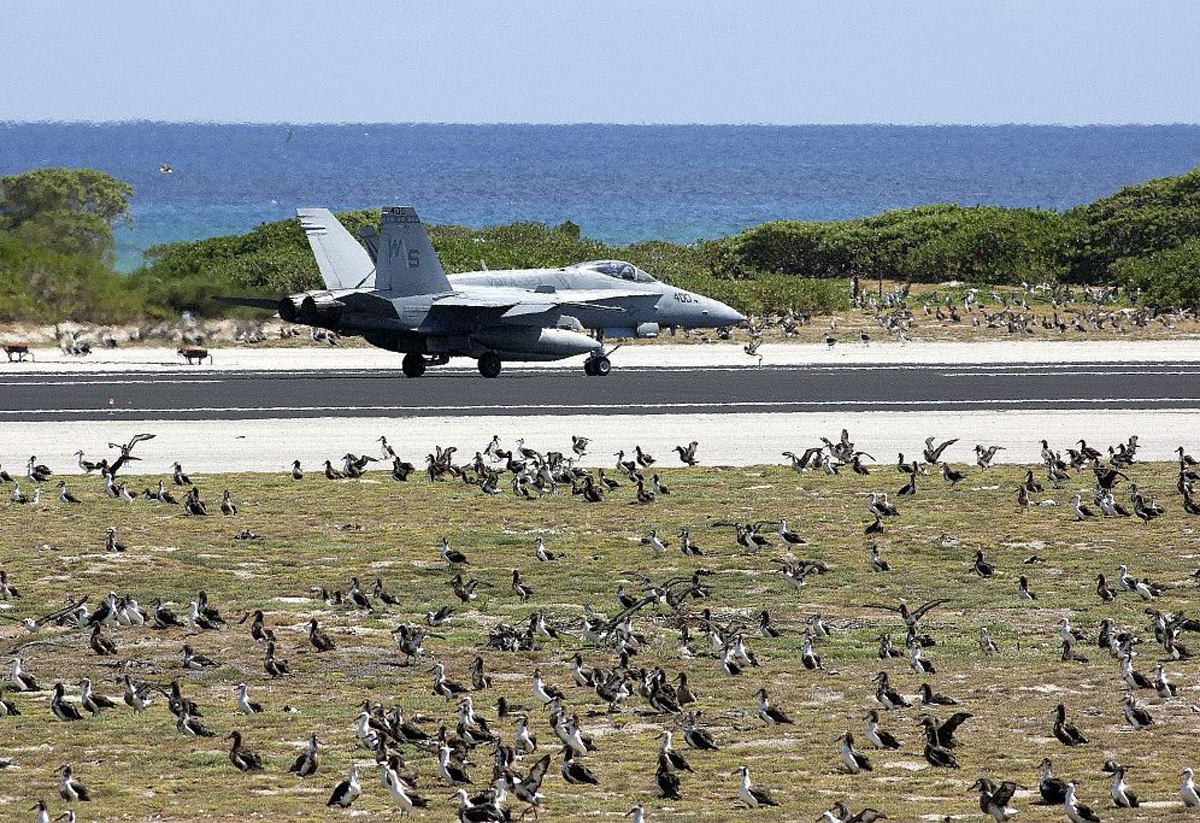
Emergency landing at Midway on July 14, 2015, credit: David Dow / USFWS
Finding Funding To Fix Midway Atoll
The U.S. Fish and Wildlife Service operates Midway. The FAA contributes $2.5 million per year, Fish and Wildlife kicks in $2.6 million. However the airport needs more than $100 million in runway and seawall work. Harbor improvements may also be necessary. Tens of thousands of flights annually use Midway in their planning, though most never ultimately land there.
Airlines benefit when Midway is available without landing there. The airport incurs costs whether or not a jet arrives. Landing fees don’t work as a way to collect the value of the service being provided. Airlines want taxpayers to preserve an asset that lowers their operating costs. I suspect an availability charge makes sense in some manner. And it’s also not obvious that $100 million is really the needed amount.
(HT: One Mile at a Time)