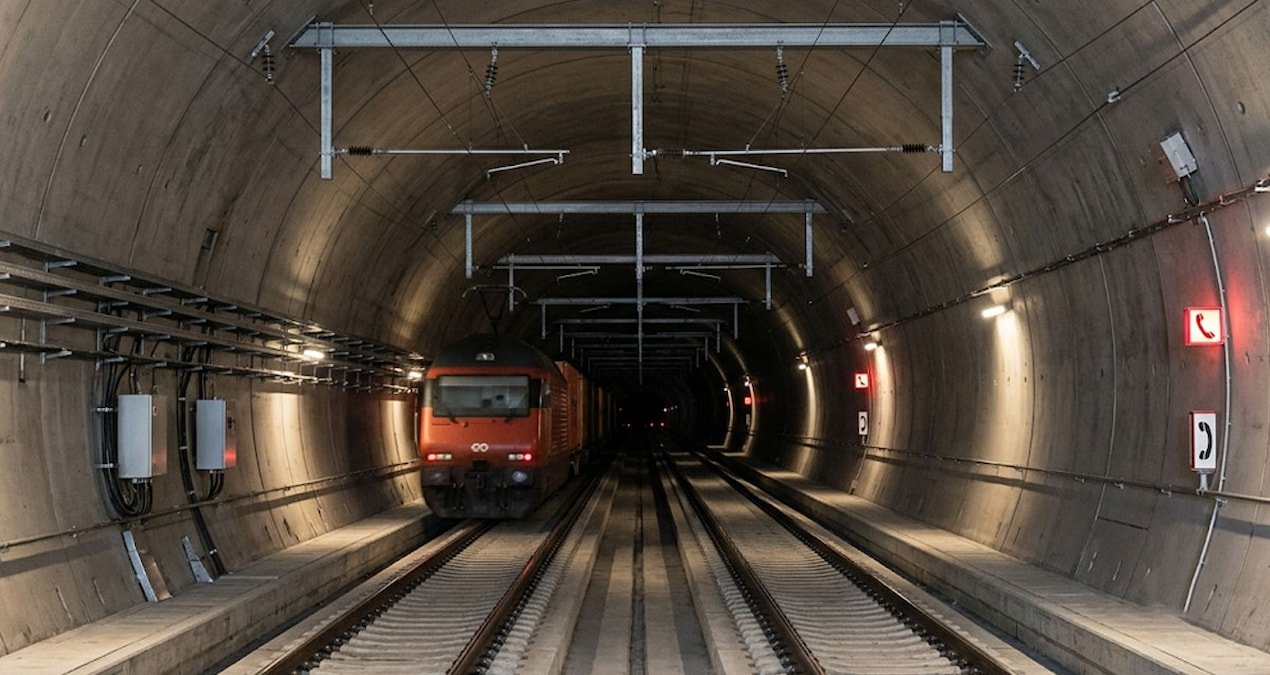
Switzerland has largely integrated road transportation in the Alpine valleys with railways, with its underground infrastructure investments for nearly thirty years. The network, consisting of more than 1,400 tunnels and galleries with a total length of more than 2,000 kilometers, is at the center of the country’s strategy to reduce the environmental burden in transit freight transportation.
THE LONGEST RAILWAY TUNNEL IN THE WORLD
The New Trans-Alpine Rail Link (NRLA) project, which was implemented within the scope of the “Alpine Initiative” approved by Swiss voters in the 1990s; It combines the Lötschberg, Gotthard and Ceneri base tunnels in one straight line.
Thanks to the Gotthard Base Tunnel, which is the longest railway tunnel in the world with a length of 57 kilometers, passenger trains complete the passage in approximately 20 minutes. Being a straight line without slopes allows locomotives to pull longer and heavier freight trains with less energy.
IT CONSUMS FIVE TIMES MORE ENERGY
According to research, freight transportation by train across the Eurozone consumes five times less energy per tonne-kilometer compared to heavy-tonnage trucks and produces a quarter of greenhouse gas emissions.

As a result of the distance-based heavy vehicle fees and infrastructure investments, the annual Alpine road truck transit, which was around 1.4 million in 2000, decreased to 941 thousand in 2018, and the share of the railway exceeded 72 percent. According to official data for 2022, the number of truck trips decreased to 880 thousand, while the share of the railway increased to 74 percent.
Analysts calculate that if this transport model change policy had not been implemented, 651 thousand additional trucks would have passed through the Alps in 2016 alone and at least 0.7 million tonnes of CO2 emissions would have been avoided in 2017. Data from the Swiss Federal Office of Transport shows that the current number of trucks is still above the official target of 700 thousand per year.
NATURAL AREAS HAVE BEEN RECONSTRUCTED
In the Gotthard project alone, 28 million tons of rock were excavated and large amounts of concrete were used. According to environmental reports, during the construction of 152 kilometers of shafts and passages, most of the materials were transported by rail and ships, and particle filters were integrated into the work machines.
While construction site wastewater was purified and cooled before being discharged into rivers, dust and noise barriers were built in settlements with the topsoil from the excavation areas. At the end of the project, river beds were restored and natural areas for wildlife were rebuilt.
All copyrights of the articles, news and photographs published on the website www.sozcu.com.tr belong to Mega Ajans and Rek. Tic. It belongs to A.Ş. It cannot be quoted without permission, even by citing the source.