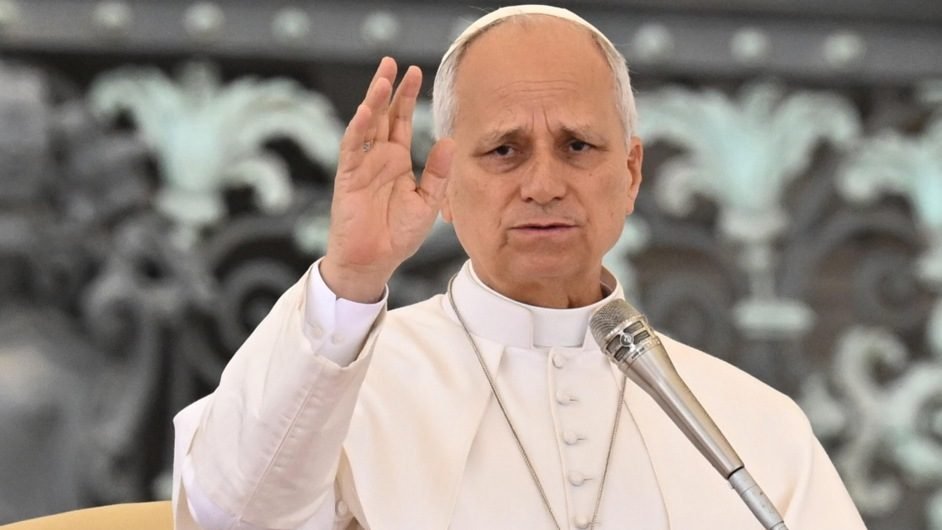
Pope Leo XIV deserves great credit for making artificial intelligence the subject of his first encyclical, Magnifica Humanitas.
The world is dangerously unprepared for the social and economic transformation that artificial intelligence is bringing.
Pope Leo’s call for more reflection and action on artificial intelligence should be heard by decision makers and the public, whether religious or secular, everywhere.
Lion rightly notes that artificial intelligence represents a transformation comparable in scope to the Industrial Revolution – and that, as with industrialization, whether the technology will be beneficial or harmful will depend on how it is used.
He is also right that the “invisible hand” of the market cannot be trusted to steer AI towards the common good, and that urgent regulation is necessary.
The encyclical takes a sober look at the limits of technological utopianism. The promise that artificial intelligence will free humanity from hard, monotonous work and usher in an era of leisure has also been made in connection with mechanization, automation, and the Internet.
Each time, the benefits went disproportionately to those who already had wealth and power, while many were made worse off. It will happen again, unless governments are persuaded to take strong action before it is too late.
Nowhere is this more urgent than when it comes to employment. Magnifica Humanitas devotes considerable attention to the disruptions in work that artificial intelligence is already causing and which will probably occur on a much larger scale in the coming years.
Leo insists that work is not only a source of income, but also a fundamental expression of human dignity – “a normal path to maturity, development and personal fulfillment.”
A society in which artificial intelligence concentrates productivity gains in the hands of a small elite, while pushing large numbers of people into “enforced inactivity,” may be narrowly more efficient, but it will not be a better society, nor will it have a higher overall level of well-being.
We should not expect a gradual and manageable transition. The speed and extent with which artificial intelligence will displace human workers is likely to be unprecedented in history, and will affect both clerical and manual jobs: radiologists and lawyers, teachers and writers, factory workers and truck drivers.
Technological optimists assure us that new technologies always create new jobs. But that historical pattern may not hold when it comes to technology that can perform both cognitive and physical tasks in almost any domain.
The Pope’s call for governments to support retraining, to protect workers in times of crisis and to ensure that the use of artificial intelligence is evenly distributed is well-intentioned. But is it enough?
Retraining programs, however well designed, cannot absorb millions of displaced workers if the jobs they are being trained for are themselves subject to automation.
The link between work and income needs to be reconsidered, whether through a universal basic income, a significant reduction in working hours or some other mechanism.
The question of how to fairly and humanely distribute the productivity gains of artificial intelligence needs to be addressed now, not in some indefinite future.
Even so, however, the question is what will replace the role that work plays for many people in providing meaning and in building social connections beyond the family and local communities.
It would be wonderful if people found satisfaction in volunteering to benefit the disadvantaged or to protect our fragile natural environment, but they are just as likely to overcome boredom in ways that are less fulfilling and less socially beneficial.
Here Pope Leo XIV’s vision of communion and solidarity could offer more. The encyclical does recognize work as a “primary good for families and society,” but it does not elaborate on the question of what might replace it in a world where, for a significant portion of the adult population, work as we know it today is simply no longer available.
When the encyclical touches on the difficult question of the moral status of artificial intelligence itself, it disappoints. Lion specifically claims that AI systems “do not experience.” That may be true today, but it may no longer be true for future AI models.
Even as a claim about current AI systems, the Pope’s certainty is not justified. Dario Amodei said in February: “We don’t know if the models are aware.” If Amodeus and his colleagues, who developed Cloud, do not know this, it is unlikely that Pope Leo does.
This has practical consequences. The framework of the encyclical is based on an understanding of human dignity that reflects a distinctly anthropocentric ethic.
If AI systems do one day demonstrate consciousness, then ethics based solely on human dignity will be insufficient, in the same way that ethics based solely on the interests of one nation or one race have always been insufficient when expanding moral consideration.
The same anthropocentrism that limits the encyclical’s treatment of artificial intelligence has a long history in Catholic moral thought.
He led Thomas Aquinas, the most influential Catholic theologian of the last millennium, to deny that we have any duties towards non-human animals. Although Pope Francis broke with that tradition in the encyclical Laudato Si’, Leo seems to have returned to it in Magnifica Humanitas.
He calls for the inclusion of the vulnerable, but fails to mention – not once in 42,000 words – the billions of animals whose lives and deaths are already affected by the role AI plays in factory farms that cause suffering on a barely comprehensible level.
The same technocratic paradigm that treats workers as resources for optimization also treats conscious animals as mere units of production. If the moral framework of the encyclical cannot encompass that reality, it is not because the problem is small, but because the framework is too narrow.
The encyclical offers a vision of technology geared toward human development and flourishing. That vision must be expanded to include the interests of every sentient being – human and non-human, biological and potentially artificial.
The hope is that Leo XIV’s first encyclical will start the conversation we urgently need.
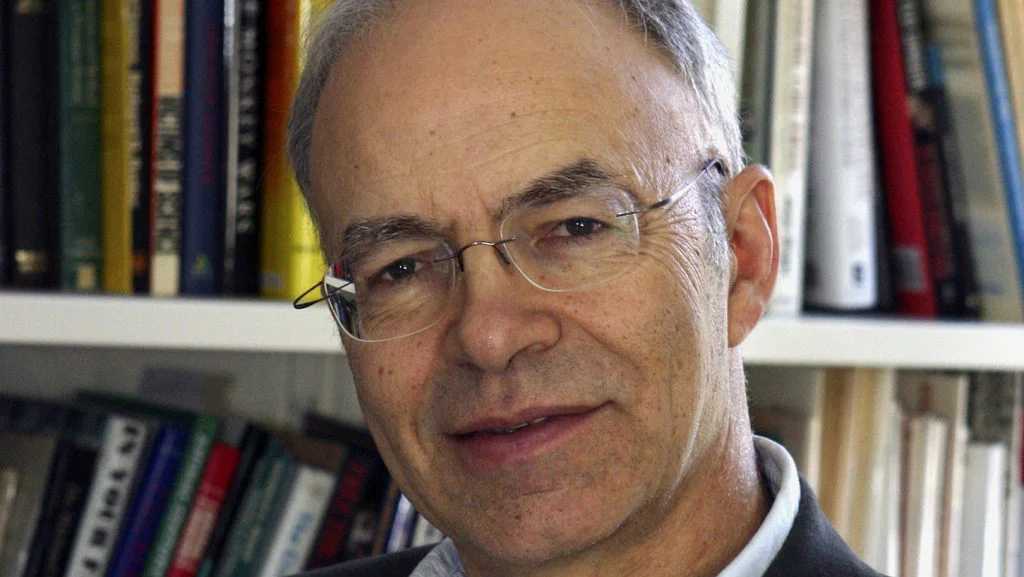
The author is Professor of Medical Ethics at the Center for Biomedical Ethics at the National University of Singapore and Emeritus Professor of Bioethics at Princeton University. His books include The Life You Can Save. He is also the founder of a non-profit organization of the same name.
Copyright: Project Syndicate, 2026.
www.project-syndicate.org
Today, it has the exclusive right to publish in Serbia
Follow us on our Facebook and Instagram page, but also on X account. Subscribe to PDF edition of Danas newspaper.