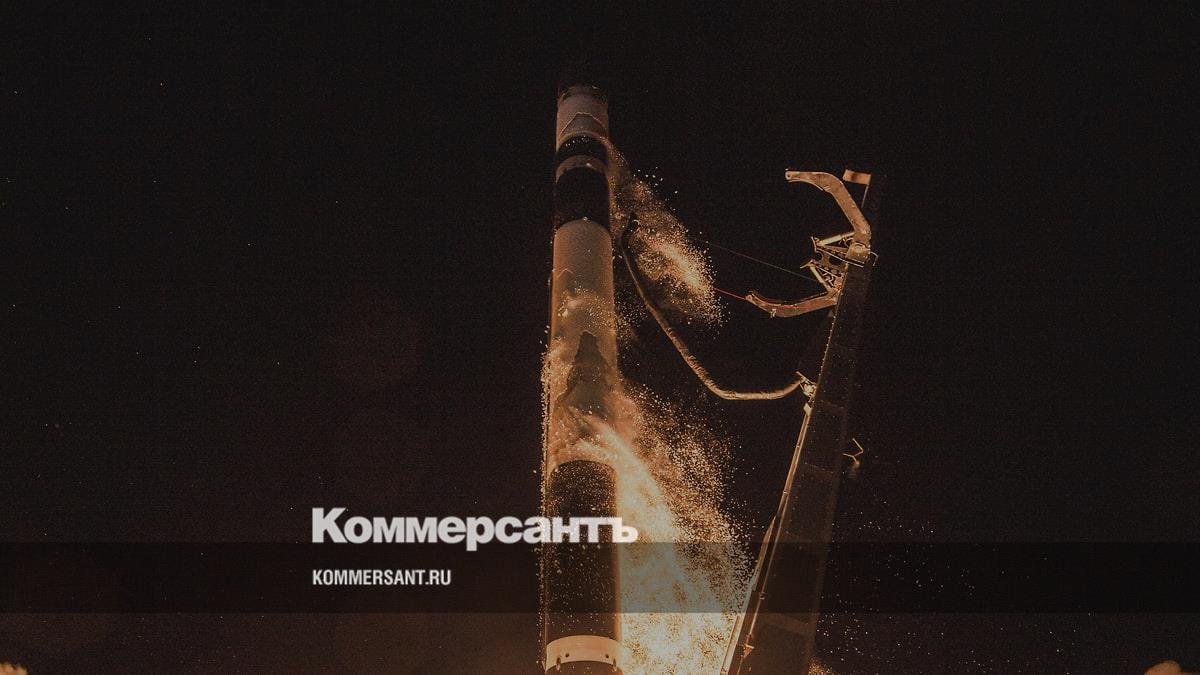
The US Space Force conducted a demonstration of the capabilities of the Tactically Responsive Space (TacRS) program, during which it first practiced launching a military satellite less than 24 hours after receiving the order. Rocket Lab’s Victus Haze was launched into orbit 16 hours and 42 minutes after the launch command and must perform a series of rendezvous maneuvers with another object. The launch took place as part of the US transition to a model of rapid deployment of satellites using private contractors. Meanwhile, Russia and China are developing primarily inspection and long-term orbital tracking systems for objects.
On June 19, Rocket Lab launched an Electron rocket from Mahia in New Zealand, placing the Victus Haze Puma into sun-synchronous orbit. The launch benefited the US Space Force as part of the fourth demonstration of the TacRS program.
According to the US Space Systems Command, the rocket was launched 16 hours and 42 minutes after receiving the official order (Notice-to-Launch), which became a new program record. The previous one was recorded during the Victus Nox mission in 2023, when Firefly Aerospace launched 27 hours after receiving the command.
After entering orbit, the device passed a systems check and was put into operation after 37 hours 36 minutes, with a standard of 72 hours. Next, he will have to carry out rendezvous operations and interaction with the American device Jackal-004 from True Anomaly, which has been in orbit since May.
In a statement, the US Space Systems Command said that both devices will practice the tasks of observing, identifying and assessing objects in orbit. I. o. Space Combat Power program director Colonel Bryon McClain said the mission was designed to demonstrate the ability to respond to “irresponsible on-orbit behavior” under near-operational conditions.
Unlike Victus Nox, where the focus was on speed of preparation and launch, the current demonstration also includes training in maneuvering and rendezvous with another spacecraft.
The TacRS program is being developed by the US Space Force as a mechanism for quickly replenishing satellite constellations. The US military has previously noted that in crisis scenarios, it may be necessary to quickly replace disabled vehicles, deploy additional sensors or inspect objects in orbit within a few days instead of months or years.
Another feature of the mission was the participation of private companies. Rocket Lab acted as the prime contractor on the $32 million contract, providing development of the vehicle, launch and orbital operations. True Anomaly received a contract of approximately $30 million to provide the mission’s second vehicle.
Rocket Lab founder Peter Beck noted that the project demonstrates the ability to carry out military tasks in a full cycle by the commercial sector. The US Space Force also says that using private contractors reduces the cost and shortens the time to deploy satellite systems.
In general, in global space practice, according to analysts of the Secure World Foundation in the annual reviews of Global Counterspace Capabilities, two parallel approaches are being formed.
- The first involves the long-term placement in orbit of inspection vehicles capable of tracking targets and performing rendezvous maneuvers.
- The second is the creation of the ability to quickly launch specialized satellites to respond to emerging threats.
Both approaches are considered dual-use technologies, applicable in both the civilian and military spheres.
Russia For more than ten years, it has been developing technologies for rendezvous and inspection of spacecraft. The most famous are the spacecraft of the Cosmos series within the framework of the Leveling project and the geostationary satellites of the Luch series: Western observers classify them as inspector satellites. Public communications mentioned cases where Russian satellites carried out long-term tracking of foreign satellites. For example, in 2025, space program researcher Bart Hendricks, citing tracking data reported about the maneuvers of the Cosmos-2558 apparatus near the American satellite USA 326.
Russian satellites, as a rule, remain in orbit for a long time and can track targets for many months and even years. In the USA Similar tasks in geostationary orbit are performed by GSSAP satellites, which continuously monitor the space situation.
China also develops satellite rendezvous and servicing technologies. According to the same reviews, the Shijian series vehicles have repeatedly performed orbital maneuvers near other objects, and the development of mobile launch systems is considered by the Chinese authorities as a factor that increases the possibility of rapid deployment of spacecraft.