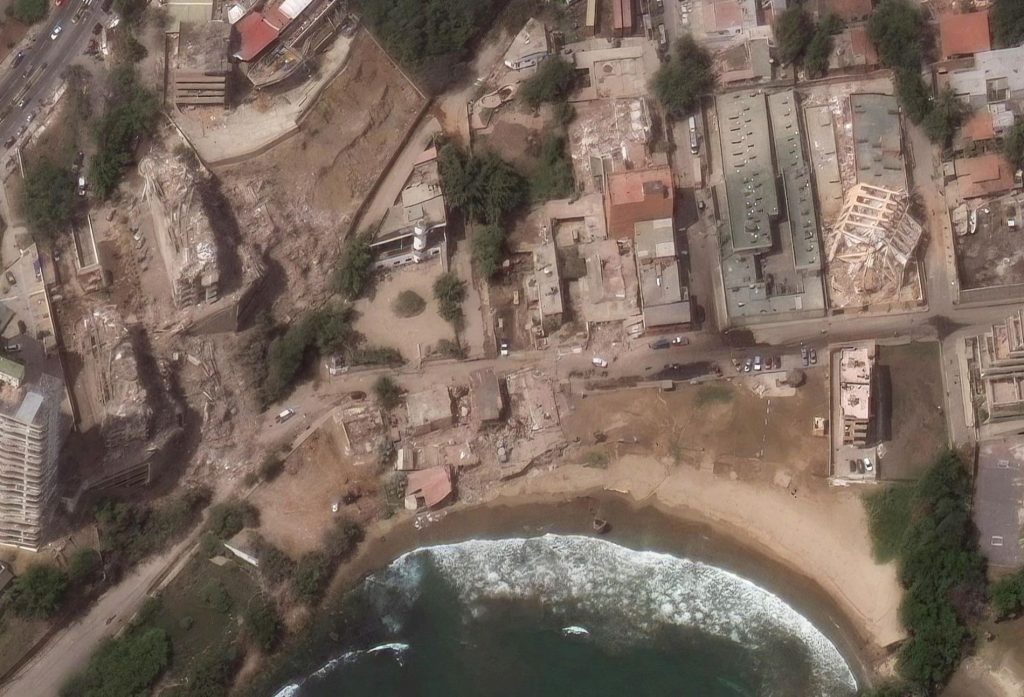
He earthquake that shook Venezuela June 24 was not only the most powerful recorded in the country in more than a century. It also surprised scientists with an unusual feature: it was not a single event, but a sequence of two large earthquakes, separated by just about 40 seconds.
For the Mexican specialists consulted by DW, what happened is relevant for two reasons. On the one hand, it raises new scientific questions about the behavior of geological faults. On the other hand, it remembers a lesson known, but often neglected in Latin America: Earthquakes are inevitable, but their consequences depend largely on the preparation of each society.
“A seismic doublet”
Gina Paola Villalobos Escobar, civil engineer and doctor in seismology, summarizes the most striking thing about the event: “What is most interesting is that it was a seismic doublet.” That is, two events of similar magnitudes, very close in time and space. “It is a phenomenon already documented, but unusual,” he explains.
Raúl Valenzuela Wong, seismologist at the UNAM Institute of Geophysics, agrees that The Venezuelan sequence deserves special attention. According to him, the first earthquake had a magnitude of 7.2 and the second, which occurred about 40 seconds later, reached a magnitude of 7.5. What is unusual is not only the temporal proximity, but that both events seem to have responded to different states of effort.
After the first earthquake, Valenzuela says, there would have been “a rearrangement of efforts” that was projected onto a nearby fault, “which was also close” to breaking. In other words: the first earthquake could have altered the balance of the crust and almost immediately facilitated the rupture of another fault.
José Antonio Bayona, Mexican seismologist and researcher at the University of Bristol, goes further. “We have never observed these earthquakes occurring so close together,” he points out. In his opinion, the Venezuelan sequence will be a case study for seismology, because it could force us to review ideas about how some ruptures propagate in complex fault systems. “It will break new mental structures about our current knowledge of the earthquake generation process,” he says.
Magnitude is not intensity
For the public, one of the keys is to distinguish between magnitude and intensity. The magnitude measures the energy released by the earthquake. Intensity describes how it feels and what damage it causes in each location.
“The magnitude is a measure proportional to the energy released,” explains Villalobos. “The intensity, on the contrary, does depend on the proximity to the epicentral area, the type of soil” and also on factors such as the size of the population centers, the perception of the people and the type of design and construction of the buildings.
Therefore, two earthquakes of the same magnitude can have very different consequences for nearby populations. It may also happen that two areas located at the same distance from the epicenter suffer different movements. Seismic waves do not travel through a homogeneous medium: they are attenuated, deflected or amplified depending on the materials they pass through.
A central concept comes into play here: “site effects.” Villalobos defines them as the way in which local soils, especially the first 30 or 50 meters, affect seismic waves. A rocky ground may not alter the waves in its path; a soft and poorly consolidated one can amplify them and cause damage. “Accelerations and ground movements can change from one neighborhood to another,” he warns.
The best-known example in Latin America is Mexico City. There, the soft soils of lake origin amplify waves from earthquakes originating hundreds of kilometers away on the Pacific coast. Villalobos clarifies that he is not saying that this has happened in Venezuela, but rather that each city must be studied individually.
Buildings, the real risk
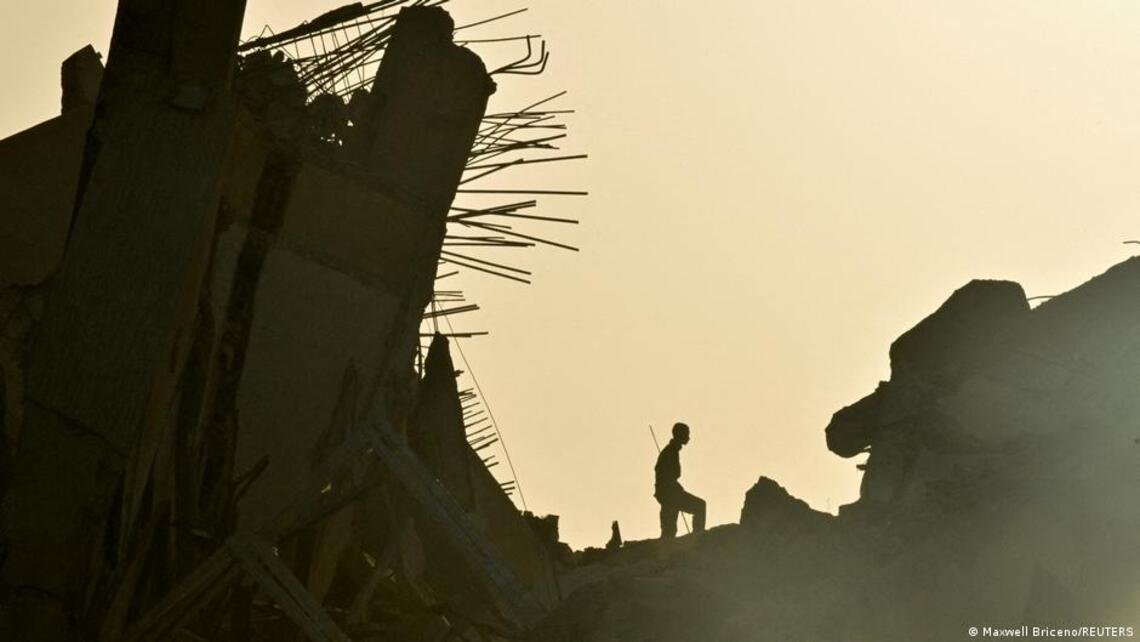
The scientists consulted by DW insist on another point: a strong earthquake does not automatically become a catastrophe. The impact depends on the vulnerability of the buildings, the application of standards and the preparation of the population.
Valenzuela emphasizes that one of the main Mexican lessons is to have “effective, consistent and appropriate” construction regulations for seismic risk and local geology. But he warns: “It is not enough to have a regulation that on paper can be very good if it is not complied with.”
Villalobos adds that not all buildings react the same. Height, geometry, rigidity and structural condition influence how a building moves. The biggest problem, he says, appears in informal construction or without supervision or regulated maintenance.
Bayona formulates it more forcefully: “Earthquakes do not kill people.” What kills, he specifies, are “the buildings that are not prepared for these earthquakes.” His statement points to an uncomfortable reality for many Latin American countries: self-construction, lack of oversight and inequality turn millions of people into a particularly vulnerable population.
In Latin America, Bayona recalls, it is common that “the grandparents’ house became the parents’ house” and then apartments continue to be built for new generations. Many times these extensions are not regulated or calculated to resist strong movements.
A warning for the region
The Venezuelan earthquake is not just a scientific case. It is also a regional warning. “As a Latin American society, we are still not fully prepared to face the arrival of the next earthquake,” says Bayona.
Villalobos points to a problem of collective memory. In regions where large earthquakes take decades or more than a century to repeat, the population and institutions tend to relax. “If it didn’t happen to my parents or my grandparents, then I don’t consider it important,” he summarizes. But the scale of geological time does not match human memory.
Hence, the three experts agree on several priorities: keeping seismic networks in operation, investing in research, updating and enforcing building codes, studying urban soils and educating the population. Also combat misinformation and strengthen civil protection.
For Bayona, the central question should not be where the next big earthquake will occur, but rather “how prepared are we going to be” when it arrives. Venezuela has just reminded the region that large earthquakes do not just belong to the past. The difference between a disaster and a manageable emergency can be decided many years before, in the quality of the regulations, the buildings and the culture of prevention.