On 27 April 1945 Mario Martinoni faced an armed German column that was trying to reach safety in Switzerland. He negotiated their surrender with the Allies and avoided bloodshed. But he was accused of not having notified his superiors
There were hectic hours during which even Switzerland risked losing its centuries-old neutrality and ending up plunged into the drama of the Second World War. These were the hectic days of the fall of fascism and the retreat of the Germans from Northern Italy. A Nazi column, fully armed, threatened to save itself break through the border at Chiasso, a fact that would have forced the Swiss to engage in battle. If this did not happen it was due to the initiative of a colonel of the Swiss army towards whom his homeland has not been very generous: dismissed and punished on the spot, only in 2010 (after his death) did he obtain rehabilitation.
A very little-known story in Italy, although it took place in the border area of Como, that is the places where the tragic end of the war and the Mussolini regime was taking place. Let’s talk about those who went down in history as i «Fatti di Chiasso» and of Colonel Mario Martinoni who of those hours – between 27 and 28 April 1945 – was a leading protagonist.
Switzerland had remained outside the massacre of the Great War and had managed to do the same even after Hitler and Mussolini had unleashed their violence throughout Europe. However, the country found itself in a dramatic situation: after the fall of France in June 1940 it found itself surrounded on all sides by Axis troops. Despite this, the Bern government, strengthened by its “vow” of neutrality, had guaranteed it for five years refuge for Jews and those persecuted by the Nazi-Fascists.
On April 25th Milan rises up, the routed Germans are looking for an escape route to the Norththe Duce and his last acolytes dream of a last-man resistance in Valtellina. But in reality the time has come for “every man for himself” to save himself. On 27 April the Allies have now occupied Como. And at that point a series of Wehrmacht, SS and even Navy units attempt the sortie. There are around 300 of them, fully armed, with trucks of food and ammunition in tow, heading towards the Italian-Swiss border crossing of Chiasso asking to be welcomed into neutral territory.
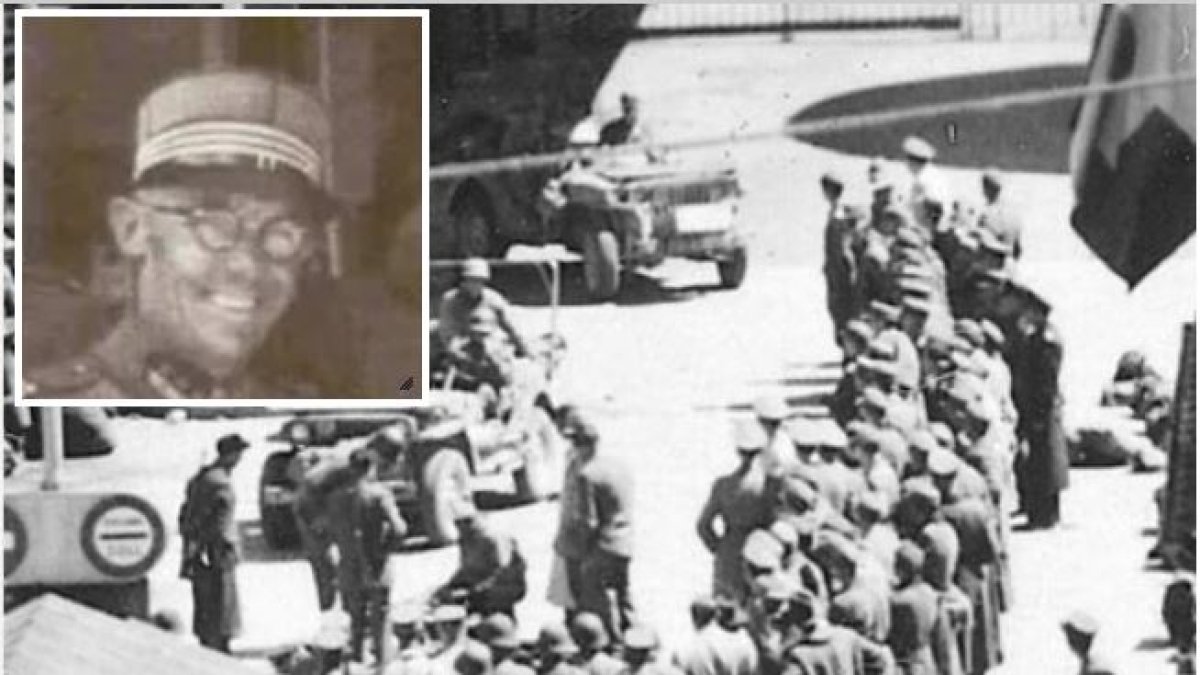
Beyond the border, around 3,000 Ticino soldiers are deployed under the command of the colonel Mario Martinoni, 49 year old career officer. The first attempt at dialogue fails. The leaders of the Swiss army consider the German request inadmissible because it would break the country’s neutrality in the conflict. But among the Nazi rankspressed from behind by partisans and Anglo-Americans, panic spreadsa feeling actually generated by an unfounded hypothesis: that of being taken prisoner and be sent to detention camps in the Soviet Union.
We are now in the early hours of April 28th and events are worsening. Benito Mussolinicaptured in Dongo while running away dressed as a German soldier, will end his days shortly thereafter, shot in front of the gate of Villa Belmonte in Giulino di Mezzegra. The German column blocked in front of Chiasso is pressing, threatening to break through the border and unleash the battle, adding death to death and also dragging Switzerland into the conflict.
At this point Colonel Martinoni comes into action. Determined to avoid bloodshed, he crosses the border with the aim of contact the Allied command in Como. Not before having strengthened the defense system and having evacuated the civilian population in the area closest to the “hot zone”. He wanders around the Como city and finally finds the right interlocutors installed at the Metropol hotel in Piazza Cavour. The person who is right for you is the American major Joseph Mc Divitt. It’s about convince the Germans to back down from their intentions, lay down their weapons with the promise of being imprisoned but under the more reassuring protection of the Allies.
This is what happens on April 28th itself. The German-Swiss conflict is averted but from here the troubles of the unfortunate Colonel Martinoni begin. The officer informs his superiors in Lucerne of the successful outcome of the negotiations with the Nazis and Anglo-Americans but is hit by a cyclone. The Swiss command accuses him of having acted without having previously informed his superiorsa fact denied by Martinoni who cites the names of high-ranking officials who would have given him the green light. He is not believed; rather, it comes immediately dismissed. Following this humiliation, the colonel has a nervous breakdown and has to be admitted to a clinic in Locarno. For the rest of his career he will no longer have command dutiesrelegated to an office with administrative duties. He died in 1981 in Lugano with the shadow of that sentence still hanging over him.
They will have to pass well 65 years after the end of the war for Martinoni to finally be recognized for his merits and his honor returned. A documentary from the Italian Swiss TV channel finds witnesses, reconstructs the facts and finally, in 2010, the Swiss federal council (i.e. the government) rewrote history correctly.
«It is clear that Martinoni facilitated the surrender of the German forces massed at the border, reducing the pressure of the latter in his sector for a internment in Switzerland which, according to orders, he could not accept. Taking into account the foreseeable and imminent end of the war in Europe, humanitarian considerations had to prevail over political concerns of neutrality. It was about preserving human lives and preventing destruction” is put on record.
Today in Chiasso a plaque commemorates the events of 27 and 28 April and celebrates the colonel’s courage. A testimony created also thanks to a particular contribution: a donation from Major Mc Divittthe officer who negotiated with his Swiss colleague in those hectic hours and he testified to his correctness and courage.