In Argentina, the connection between history and justice is still valid. In times of uncertainty in the face of Donald Trump’s historic denials and his rejection of basic democratic norms and procedures, Argentina offers an example of how to defend democracy.
This March 24, more than a million people participated in hundreds of events throughout the country, commemorating the 50th anniversary of the military coup that brought to power the military junta that led the last, but bloodiest, dictatorship in the country. While the government began the day by denying the genocidal responsibility of the military junta and questioning the real number of missing people, and ended it by denying the real number of people on the streets of the country’s cities. But in Plaza de Mayo alone, in the center of Buenos Aires, hundreds of thousands of people gathered. The Argentines said “never again” to the dictatorship.
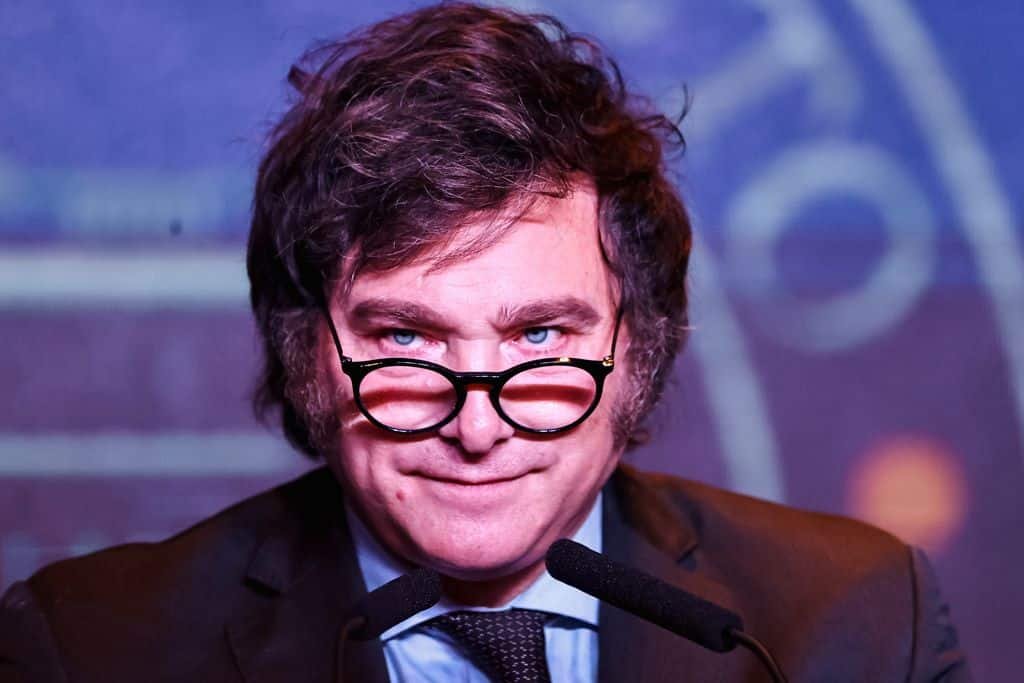
Milei’s denialism and his relegitimization of state terror are no exception. Globally, we are witnessing a paradigm shift where the revaluation of authoritarianism, coups d’état and other anti-democratic policies are no longer toxic within formal democratic regimes. Indeed, they have become the founding principle of would-be fascists like Donald Trump and Jair Bolsonaro, who attempted their own coups, or Georgia Meloni and Viktor Orbán, who have attempted to rehabilitate fascist and genocidal leaders like Benito Mussolini and Miklós Horthy, respectively.
Historical revisionism, including attempts at historical denial, is a common process that all democratic societies go through when faced with new interpretations of historical events. However, what Milei and other far-right leaders are doing is not critical revisionism, but a reactionary restoration of antidemocratic discourses typical of the dictatorships of the last century. By reclaiming state violence and (re)appropriating the past, Milei, Trump, Orbán and Meloni consider themselves the legitimate successors of a sacred mission to restore social normality to their nations and reconnect them with their past glories.
Today, the extreme right has reopened debates about the role of state violence in the 20th century, questioning the veracity of historical facts and reinterpreting processes and events as foreign conspiracies. These are based on political correctness and leftist propaganda discrediting true history. Denialism and the relegitimization of State terrorism constitute an ideological component of the extreme right to a supposed unified and homogeneous will of the people, which occupies a prominent place in its narrative manipulation of collective memory.
The nationalist political imaginary mobilized by the extreme right is largely based on the rehabilitation, whitening or glorification of an authoritarian past that opposes critical reflections on national history. This restorative political imaginary employs and manipulates a broad cultural and discursive repertoire to create the idealized image of a glorious past that must be recovered.
In short, the contemporary far right is reinterpreting the 1970s as a period of civil wars between leftist guerrillas and nationalist forces, relegitimizing state violence. This reinterpretation fulfills two objectives: first, to present his vision of “social consciousness” and second, to seek to claim a legitimate monopoly against the supposed cultural degeneration and national decline. Ultimately, this instrumentalization of history seeks to subvert the democratic ideals of equality and plurality.
In an interview with The Economist in 2023, Milei stated that in Argentina “there was a war between a group of subversives who wanted to impose a communist dictatorship and, on the other hand, the security forces who exceeded their limits in their actions.” For Milei, the actions of the leftist guerrilla were equivalent to a declaration of war that established national terror and brought the country to the brink of collapse. However, there was no war in Argentina during the 1970s and the country was never in real danger of becoming a communist state.
The so-called “dirty war” was not a war itself, but an illegal militarization of state repression. This is a popular expression that must be explained in relation to the country’s fascist genealogy. Historically, the “dirty war” did not have two sides, but rather victims and executioners. The State waged a “war” against its citizens. This state-sanctioned terror had its roots in the fascist movements of the interwar period. Historians speak of state terrorism, a concept that Milei’s vice president, Victoria Villaruel, denies, who has stated that “state terrorism does not exist.”
Villarruel and Milei maintain that the military junta’s state violence, although excessive in its methodology, was justified. But denying the systematic disappearance of tens of thousands of people; the murder, kidnapping, indefinite detention, torture and rape of thousands more; the robbery and looting of the private property of the disappeared, the kidnapped and their families; the kidnapping, detention and commercial exploitation of missing babies and children; and the nationwide construction of a clandestine network of concentration camps is, at best, ignorance and, at worst, a cover-up.
George Orwell wrote: “He who controls the past, controls the future; and he who controls the present, controls the past.” The massive demonstrations against the myth of Milei’s past, and his low popularity ratings, demonstrate that, far from being a mini-Trump, the master who controls the future, Milei represents a recycled populist chapter of the fascist past.
This past will not go away easily. Many Argentines support Milei and his ideas. But the massive demonstrations on March 24 show that their voice is not the only one and that history matters.
*This article was originally published in Latin America 21.