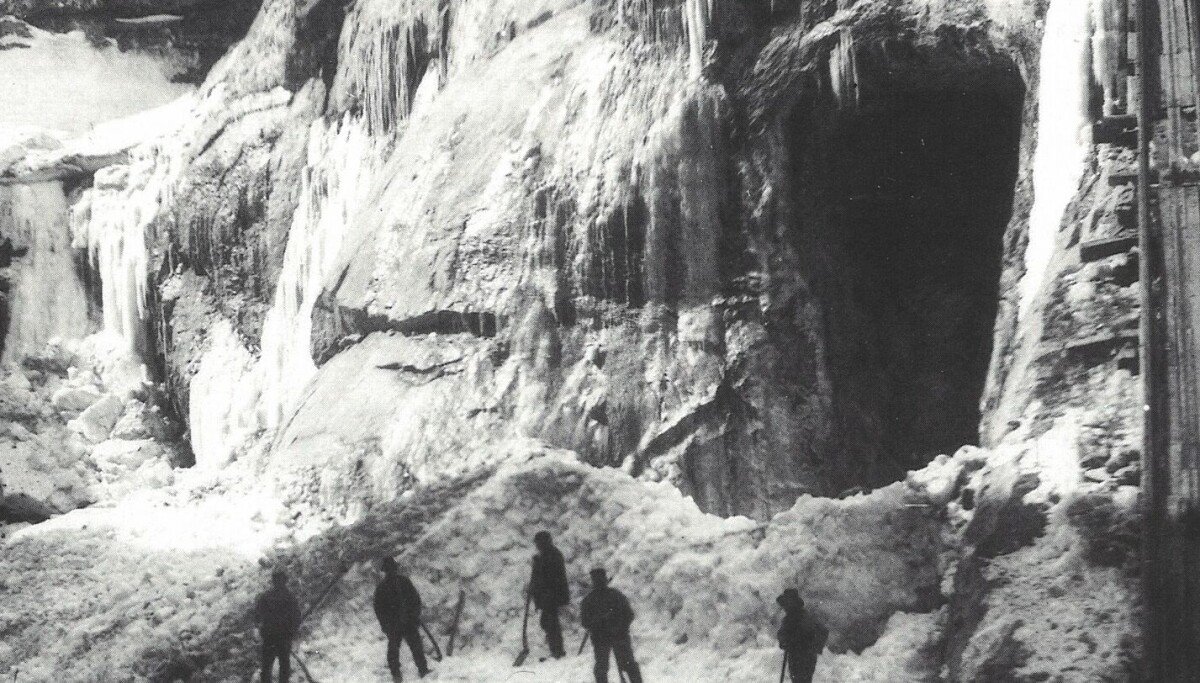
A summer day in 1870s A wife’s boat slips through the Arsukfjord in South Greenland.
From inside the mountainside at Ivittuut, you can hear the blasts from the blasts in the cryolite mine, which a few years earlier – in 1864 – had been seriously established as a permanent industrial project.
Coal smoke hangs over the fjord, and along the mine area, young Danish workers move between barracks, workshops and warehouses after the working day.
Some have come from Copenhagen. Others from harsh port and working environments around Denmark. Many have to stay in Greenland for a year at a time – isolated from their families and placed in the middle of a small Greenlandic prisoner community, which until then has lived on sealing, fishing and trade in KGH.
When the work ends and the opportunity presents itself, lively contact quickly develops between the cryolite mine and the surrounding Greenlandic settlements. The Greenlanders look for Ivittuut, where they can trade with the Danish workers and sell sealskins, game birds, fish and household goods to a market that did not exist anywhere else in Greenland at the time. At the same time, the mining town is becoming known for something else: alcohol.
In the shadow of the cryolite
In the small Greenlandic issuers, the sale of spirits to Greenlanders was prohibited, but in Ivittuut the booze flowed far more freely, and according to Henrik Knudsen, this also became part of the place’s attractiveness for both Danes and Greenlanders.
Along with the close contact between the Danish workers and the local population, relationships also arise between the workers and women from the area – relationships which later leave clear traces in the church records. In some cohorts, around half of the children born in Arsuk had Danish fathers out of wedlock – men who had often already returned to Denmark.
At the same time, local families are gradually being displaced from the summer settlements around Ivittuut, where generations before them have fished, dried meat and collected winter supplies. The mine requires space, control and greater distance between the Greenlanders and the Danish workers, and slowly the traditional prisoner culture in the area is beginning to show cracks.
Whoa – haven’t we heard that story before?
About young Danish workers who arrive in Greenland with industrialization. About alcohol, social tensions and children growing up without their fathers. About local communities, which must slowly adapt to a development that comes from outside – and people whose lives change, while others reap the benefits.
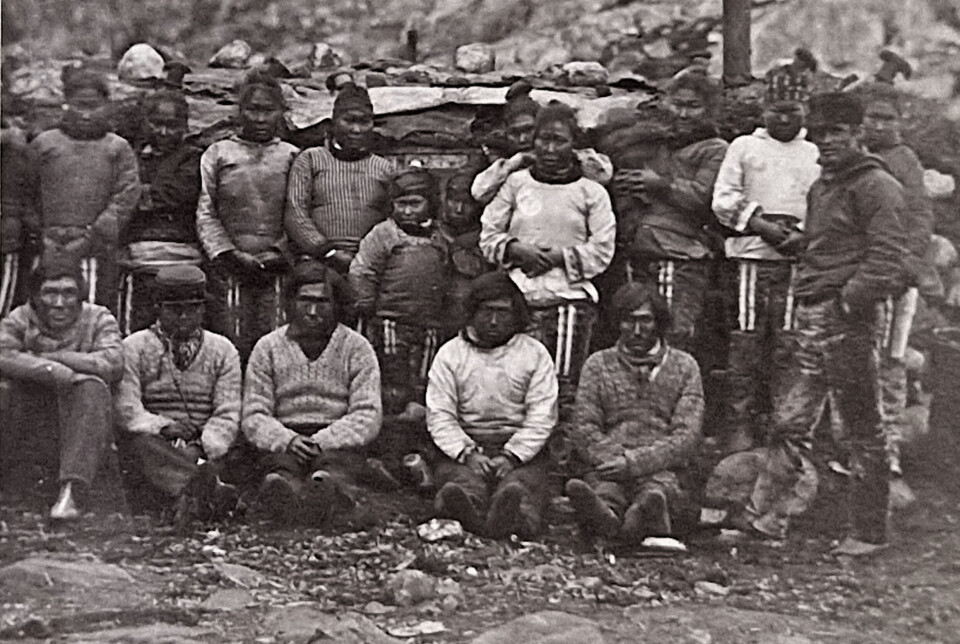
Most people will probably believe that this story only took off when modernization swept over Greenland in the 1950s and 1960s with the G50, Danish craftsmen and new industrial cities. But according to senior researcher at the National Archives in Viborg, Henrik Knudsen, it began much earlier – in the shadow of the cryolite mine in Ivittuut, where one of the first large-scale industrial projects in the Arctic already in the 1860s became an early meeting between Greenlandic local communities and the modernity that was later to change the entire country.
This is one of the main messages in his new book “In the shadow of the cryolite – Mine, power and the people of the fjord”, where he examines the cryolite mine in Ivittuut – not as a classic tale of industrial success, but as the story of the people who lived in the shadow of development.
An early industrial society in the middle of Greenland
When the cryolite mine really got into gear in Ivittuut in 1864, it didn’t just change the economy of the Arsukfjorden. It changed the social balance of the entire area.
Until then, the area had been a small Greenlandic prison community. In Arsuk, around 70-75 people lived in 10-15 households, while the nearby settlement of Isua housed another 30-40 people. Together, the population made up about one percent of Greenland’s entire population at the time.
It was a sparsely populated area far from the center of the colonial power.
But with mining, a whole new population suddenly came to the fjord.
Within a few years, the number of Danish workers in Ivittuut grew to between 130 and 150 young men – a startlingly high number in Greenland at the time. In comparison, there were only a small handful of Danes in many Greenlandic colonies and islands, while in Nuuk at this time only around 30 to 40 Danes lived.
– Down here in Ivittuut, there were up to 150 Danish employees, and many of them were replaced every year. It was a completely different scale than anywhere else in Greenland, says Henrik Knudsen.
For the local population, the meeting must have been violent.
Suddenly there was a modern industrial society in the middle of the fjord with explosions, ships, coal smoke, barracks and a constant flow of new workers from outside. At the same time, a new economic cycle quickly emerged around the mine.
The Greenlanders sold fish, game birds and sealskins to the workers. Housework and souvenirs became a lucrative business because the Danish workers wanted to take Greenlandic objects home to Denmark.
According to Henrik Knudsen, the business structure of the area began to change already in the 1860s.

– The locals suddenly had a market that was completely unparalleled in Greenland at the time, he says.
But the development also had a price.
The disease from the mine
The cryolite mine not only brought jobs, trade and new income to Arsukfjorden. With the many Danish workers also came diseases, social tensions and a growing pressure on the small Greenlandic prisoner community.
According to Henrik Knudsen, gonorrhea first appeared in Greenland in the Ivittuut area in the 1860s, and later a serious syphilis epidemic followed, which spread from the mine to Arsuk and the surrounding settlements.
– Syphilis was at the time a much feared disease. Not just for the adults, but also because children could be born with the disease, explains Henrik Knudsen.
At the same time, the number of children born out of wedlock grew significantly. The church records show that around half of the children born in Arsuk in some cohorts had Danish fathers out of wedlock – men who had often already returned to Denmark.
It created major social problems in the small prison community.
– When so many children grew up without fathers in society, the question also arose of who would support them and teach the boys to become catchers, says Henrik Knudsen.
In traditional Greenlandic society, training for prison life began as early as the age of four or five, and when family structures were broken up, it had consequences far beyond the individual home.
Gradually, the colonial authorities reacted with increasingly far-reaching interventions. From the 1880s, the Arsukfjord was practically sealed off from the rest of Greenland for almost 50 years in an attempt to prevent the epidemics from spreading up the coast.
Greenlandic women were no longer allowed to come to Ivittuut, and ordinary prisoners were forbidden to freely travel to the area. Local families were isolated from other settlements and summer sites, which they had previously moved between as a natural part of the trapper’s life.
– It is a very violent regime to impose on a captive population that lives by moving around after hunting animals and meeting at the summer camps, says Henrik Knudsen.
But at the same time, it was remarkable who the restrictions particularly hit.
– The restrictions hit the Greenlanders. Not the company and not the Danish workers, says Henrik Knudsen.
The workers continued to meet with the local population in secret around the Arsukfjord, where, according to contemporary descriptions, there was still heavy drinking and partying. Trade between the local population and the workers continued at the same time, because the company still needed fish, game birds and other supplies from the area.
Why didn’t they learn from it?
For Henrik Knudsen, the story of Ivittuut therefore also raises a bigger question: Why did the Danish authorities and civil servants not learn from the experiences of Ivittuut, when Greenland was modernized on a large scale many years later?
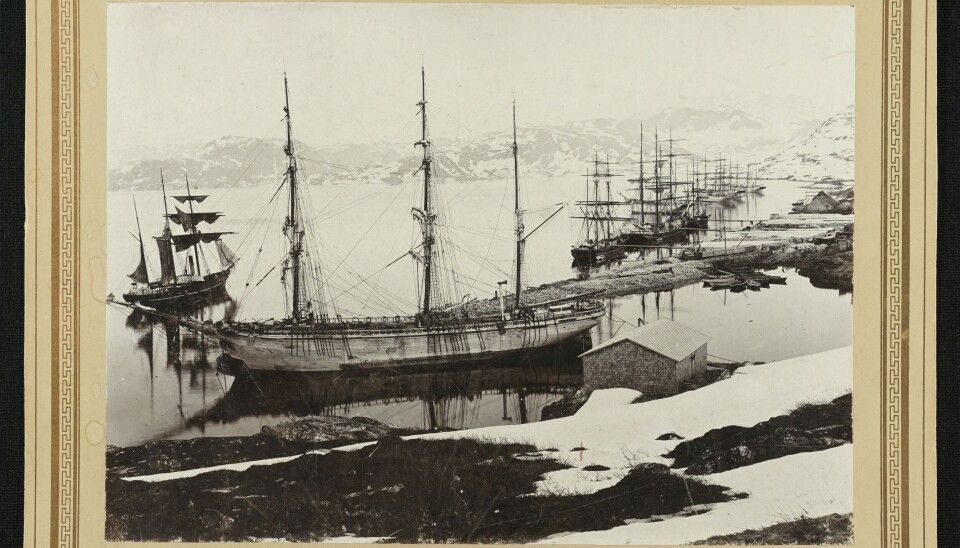
Many of the problems that arose around the cryolite mine in the 1800s later reappeared during the modernization of Greenland after the Second World War. Thousands of Danish craftsmen and workers traveled to Greenland to build homes, harbors and factories, and once again social tensions, alcohol problems and children born out of wedlock arose.
– I see a clear parallel to what happens in the 1950s and 1960s with the G50 and G60. They send a lot of Danish craftsmen to Greenland, and that leads to many of the same problems, says Henrik Knudsen.
According to him, it is noteworthy that some of the central officials who knew the history from Arsuk and Ivittuut were later also part of the administration during the post-war modernization.
– Still, you start the modernization without seriously taking the experience with you, he says.
For Henrik Knudsen, the story from Ivittuut therefore becomes more than the story of a mine in South Greenland. It will also be an early warning of the social and human costs that later came to follow the modernization of the whole of Greenland – long before the G50 was even thought of.