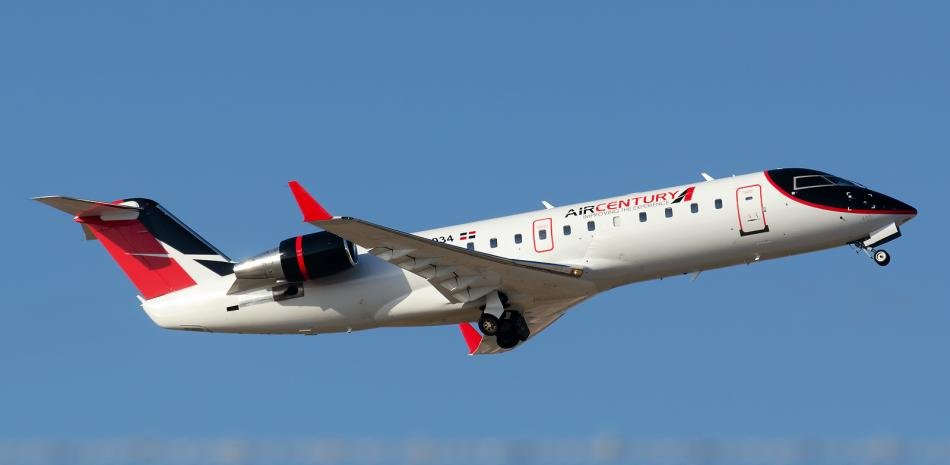
The reopening of the airspace between the Dominican Republic and Cap-Haïtien has been received with optimism by the aeronautical, commercial and tourism sectors of both countries.
However, although the Dominican and Haitian authorities have once again authorized air operations to that city in northern Haiti, the complete return to normality still faces important technical, administrative and operational challenges.
The president of the Dominican Association of Airlines (ADLA), Omar Chahin Lama, explained that charter flights already have authorization to operate and that national airlines are in a position to resume these services.
However, Chahin Lama clarified that the official reopening announcement was made just two days in advance, an insufficient period for some actors in the aeronautical industry to complete all the processes required for an immediate and full reactivation.
The measure marks a significant step in the reestablishment of air connectivity between both nations, especially to Cap Haitien, considered one of the main economic and commercial hubs of Haiti.
The city also constitutes a strategic point for the exchange of goods, the movement of businessmen and merchants, as well as for the movement of citizens who maintain family and work ties on both sides of the border.
However, he specified that behind the government authorization there is a complex operational structure that has yet to be reactivated. Among the main pending obstacles is the formal reestablishment of insurance company coverage for that area of Haitian territory.
Chahin Lama, who is also president of the airline Air century, explained that insurers play a fundamental role in the airline industry, since their policies guarantee the protection of aircraft, passengers, crews and operators against any eventuality.
As long as this process is not formally concluded, operations will not be able to develop with absolute normality, despite the fact that the airspace is already officially reopened.
“The authorization to fly is only one of the necessary elements. Commercial aviation requires multiple operational and financial guarantees that must be fully in force before expanding operations,” said the business leader.
Recovery expectations are especially important due to the impact of the suspension of flights to various areas of Haiti.
For months, the restrictions affected the flow of passengers and limited commercial activities between both countries, creating difficulties for businessmen, frequent travelers and tour operators who depend on this air connection.
For charter flights, resumption could occur relatively quickly once pending insurance issues are completed. However, the picture is more complex for regular operations.
As Chahin Lama explained, the restart of scheduled commercial flights requires much more extensive planning.
Airlines must reorganize their itineraries, re-enable reservation systems, start ticket marketing campaigns, coordinate schedules with airport authorities, schedule crews and verify compliance with all security protocols required by national and international regulations.
“A regular operation involves multiple processes that must be developed in a coordinated and orderly manner, so its restoration is not immediate,” he pointed out.