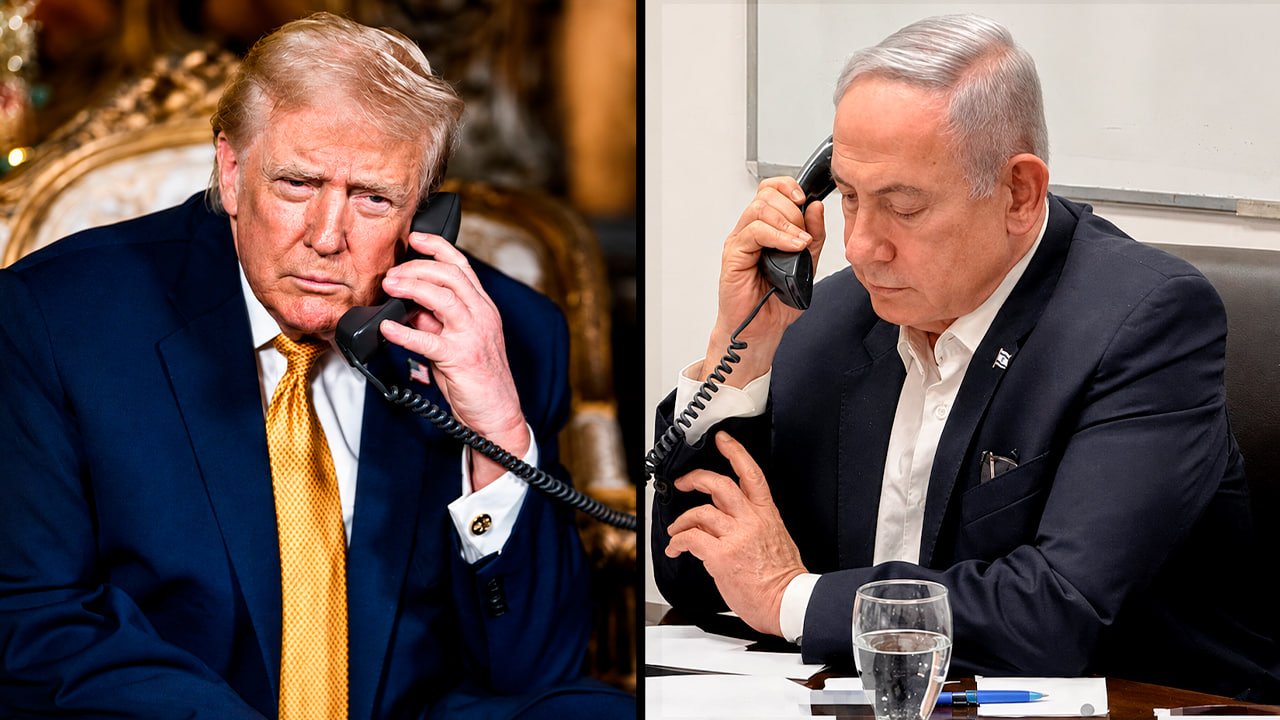
The tension between Trump and Netanyahu’s latest phone call shows that they are not on the same page on Iran. According to experts, these differences are mainly at the tactical level, and there is no division in the fundamental position of both sides regarding Iran and Hezbollah.
Political analysts Shavkat Ikramov, Abror Fathullayev and Jahangir Akramov spoke on the subject at the Kun.uz studio.
— After the phone conversation between Trump and Netanyahu, did differences arise in the positions on Iran?
Shavkat Ikramov: Israeli Prime Minister Benjamin Netanyahu has engaged in heated debates with several US presidents over the past 30 years, and in some cases has heard critical, even offensive, remarks. Therefore, Donald Trump’s sharp statements are not new for him.
Recently Axios published Trump’s comments about Netanyahu in detail, even verbatim (later Trump personally confirmed this news – ed.). It notes that Trump accused Netanyahu of defaming Israel, saying that if it hadn’t been for him, Netanyahu might already be in prison.
Nevertheless, it is not correct to draw too many conclusions from such drastic statements. The idea that there has been a cooling between the US and Israel is unfounded. Practice shows that the strategic cooperation between the two countries remains. An example of this is even the fact that they participated together in actions related to Iran in recent days.
In fact, in the current situation, the goals of Trump and Netanyahu differ to some extent. Donald Trump is trying to show himself as the winner before important dates such as domestic political factors – elections, the 250th anniversary of the United States. At the same time, factors such as the economic consequences of the war, such as the increase in fuel prices, are influencing his decisions.
The situation is also complicated for Netanyahu. He is also entering an important period politically and wants to come out with positive results. Therefore, the priorities of both leaders are not fully aligned. Their approach to the issue of Iran is also different. Netanyahu has been trying to persuade US presidents to completely halt Iran’s nuclear program for years. The most important result in this regard was the nuclear agreement signed in 2015 under Barack Obama. As part of this agreement, Iran agreed to certain restrictions.
According to experts, despite the tough policies and pressures of the Trump era, no significant result has been achieved on the nuclear program. On the contrary, tension in the region increased and a strategically complex situation arose.
In conclusion, it is not correct to expect a major political turn from Trump and Netanyahu’s tense relationship or statements. While their goals differ in some respects, the common strategic focus of limiting Iran’s rise remains important to both.
Abror Fathullayev: So far, the strategic directions have not changed, but there are some disagreements and differences at the tactical level. The sharp statements and insults observed in recent days are a political style characteristic of Donald Trump. Trying to get results through harsh criticism, pressure, and confrontation. He is known as a politician who often expresses strong opinions and then compromises.
Therefore, the conflicts that arose today will not prevent another agreement on strategic issues tomorrow. The parties will eventually be forced to continue cooperation in important areas. In the current situation, the US is pursuing a policy in two directions at the same time.
On the one hand, Israel is being urged to stop military operations against Lebanon. On the other hand, diplomatic negotiations are being conducted in Washington. In particular, the Speaker of the Lebanese Parliament, Nabih Berri, is in the United States and is participating in the negotiations. He is one of the important representatives of the Shiite community and plays an important role in political processes related to Hezbollah.
At the current stage, Israel is making serious attacks on Hezbollah’s infrastructure. Netanyahu is cautious or opposed to the agreements. Nevertheless, in the current situation, there is almost no alternative, and there is a high probability that an agreement will be reached in the end.
Peace processes are associated with certain deadlines, and similar situations were observed in previous conflicts. For example, a truce was reached after military clashes that lasted for about 50 days. The current situation is more abstract – it can be described as “neither war nor peace”.
Officially, it is said that there is a ceasefire agreement, but in practice this regime has been violated several times. Because of this, the situation is delicate and unstable. In general, the main role in solving this complex situation remains the United States of America.
You can watch the interview in full on YouTube channel “Geosiyasatkunuz”.