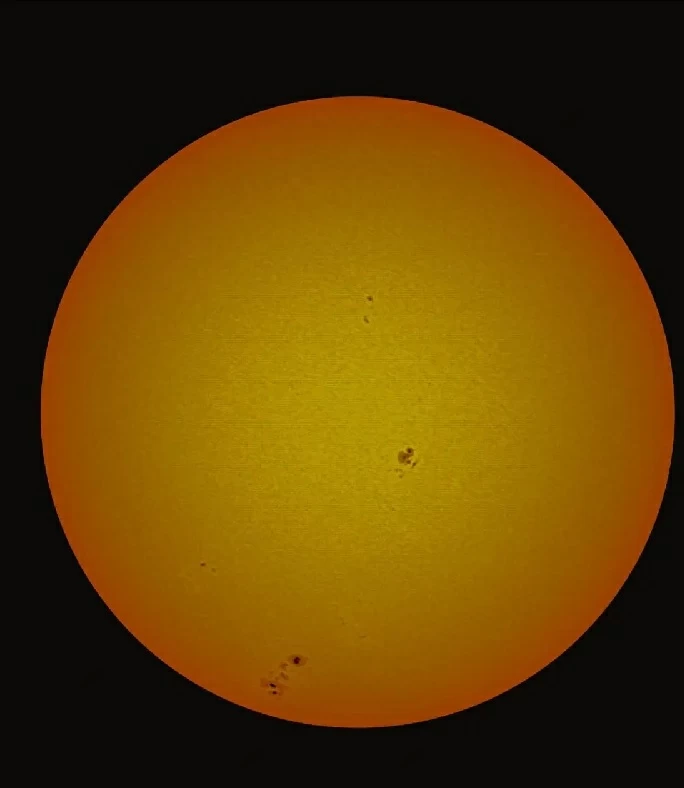
The Nour Astronomy Society observed increased solar activity in Sunspot No. 4478, represented by the appearance of Ellerman flashes, which are small magnetic explosions that are an indicator of a state of instability in the magnetic field of the active region.
The association’s president, Issa Al-Ghufaili, explained that monitoring these flashes indicates increasing magnetic activity in the sunspot, and may be a precursor to the occurrence of a strong solar flare of category X during the coming period, which is the highest category of solar flares in the approved scientific classification.
He explained that solar flares of this category, if directed toward Earth, may cause temporary disturbances in some communications systems, satellites, and navigation technologies, without having a direct impact on living organisms.
Al-Ghufaili stressed that monitoring solar activity represents an important aspect of modern astronomy, and contributes to understanding space weather and monitoring its changes and potential effects on modern technologies and related infrastructure.
He added that continuous monitoring of active areas on the surface of the sun helps specialists anticipate potential developments and raise the level of public awareness of solar phenomena, thus enhancing readiness to deal with any technical effects that may result from high solar activity.
The Noor Astronomy Association has observed an increasing solar activity in sunspot number (4478), manifested in the appearance of Ellerman flashes, which are small magnetic explosions that indicate a state of instability in the magnetic field of the active region.
The president of the association, Eissa Al-Ghafili, explained that the observation of these flashes indicates an increase in magnetic activity in the sunspot, and it may be a precursor to a strong solar flare of class X in the upcoming period, which is the highest category of solar flares in the established scientific classification.
He indicated that solar flares of this class, if directed towards Earth, could cause temporary disturbances in some communication systems, satellites, and navigation technologies, without having a direct impact on living organisms.
Al-Ghafili confirmed that monitoring solar activity represents an important aspect of modern astronomy, contributing to the understanding of space weather and tracking its changes and potential impacts on modern technologies and the infrastructure associated with them.
He added that continuous monitoring of active regions on the sun’s surface helps specialists anticipate potential developments and raise public activity awareness of solar phenomena, thereby enhancing readiness to deal with any technical impacts that may arise from elevated solar.