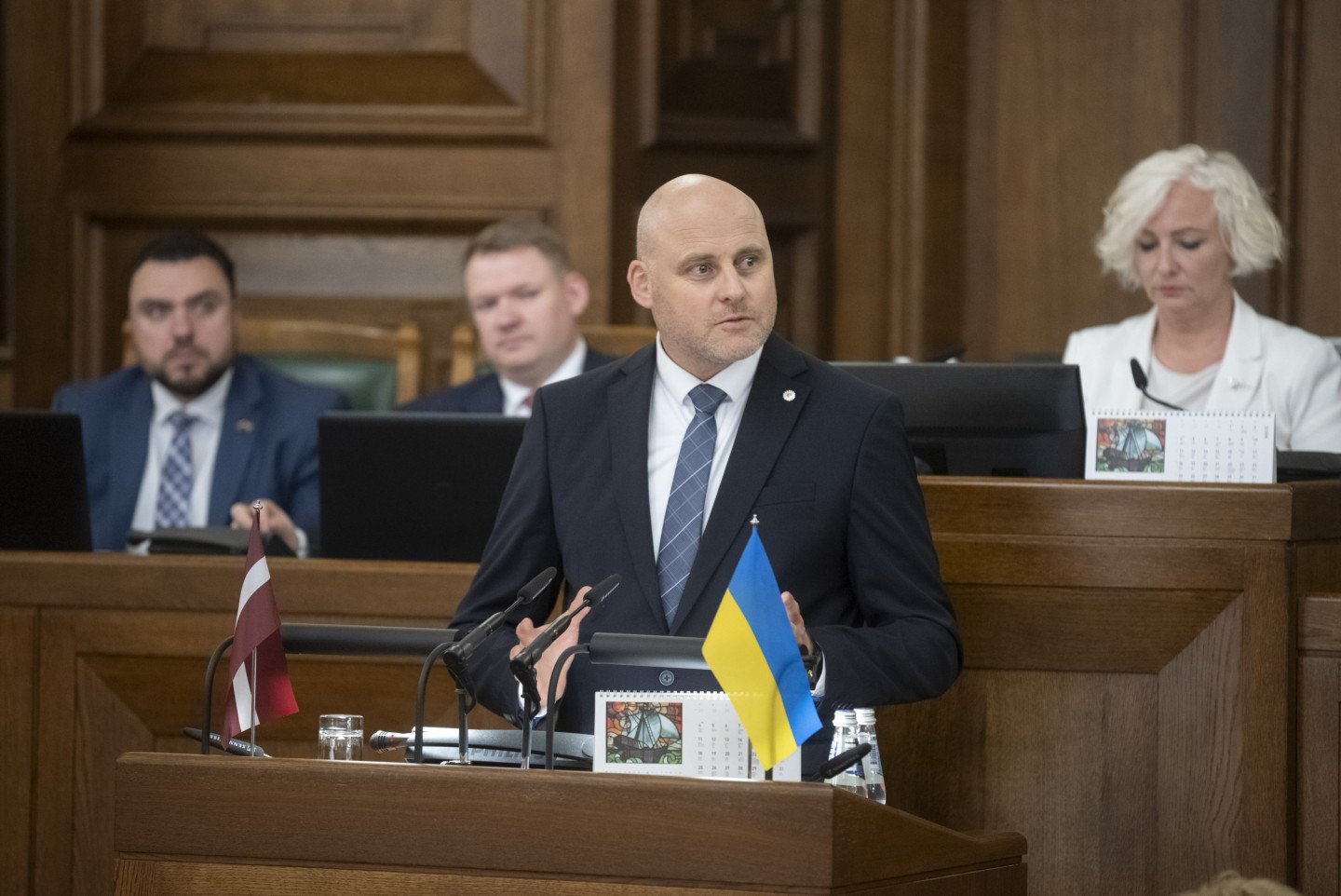
Not an alarm bell, but several bells are the inability of the parties of the ruling coalition to agree on the procedure for the future monitoring of non-bank creditors and the distancing of Prime Minister Andras Kulberg from deciding this issue even with such a respectable reason as going to Tallinn to meet with the President of Ukraine Volodymyr Zelensky.
One of the gifts of the old coalition and the government to the new coalition and the government is a ready-made package of draft laws, the adoption of which would transfer the supervision of non-bank creditors from the Consumer Rights Protection Center (PTAC) to the Bank of Latvia (LB). The reform was supported by the majority of Evikas Siliņa’s or “New Unity” (JV) government at the March 17 meeting of this year, after which Viktors Valainis, the Minister of Economy representing the Green and Farmers’ Union (ZZS), explained the decision-making by the fact that the ZZS government does not have a majority and therefore the further direction of the reform will be determined by the Saeima. Namely, JV and “Progresīvie” will recruit supporters of the reform in the Saeima, and ZZS – opponents. Now A. Kulberg’s government has decided to follow in the footsteps of E. Silina’s government, despite the fact that it is known where E. Silina’s government ended up.
The world is excited about what is not seen in Latvia
The legal powers of E. Siliņa’s government continued on May 26, when the government supported projects to amend 13 Latvian laws in accordance with the government’s March 17 decision. This package of amendments was prepared by the Ministry of Finance together with the Bank of Latvia. However, immediately after the change of governments, at the June 4 session of the Saeima, the majority of deputies decided not to consider the amendments to the laws necessary for the change of lending supervision. Now, the parties representing the majority of deputies have decided to consider the package of draft laws in the Saeima, but have not agreed on the outcome of this consideration.
E. Siliņa, who lost her position as the head of the government, but retained the status of JV leader, continued to insist on Monday that the members of the new and broad coalition must comply with the decision made by the majority in her government, which represented the minority in the Saeima. So JV and the “Progressive” bloc without ZZS or against ZZS, whose unchanged position against the reform was confirmed by the leader of the ZZS Saeima faction Harijs Rokpelnis.
Finance Minister Māris Kučinskis, who replaced the Prime Minister of the “United List” (AS) due to the weight of the minister’s portfolio and his involvement in the problems of credit institutions, continued to express himself as before, when he was the Prime Minister and the Minister of Internal Affairs in another government. So he admitted that there are disagreements in the coalition and that they will be discussed. His intention is to find out the essence of the problem in talks with LB and, as he said, with “representatives of the industry” even before the discussion begins in the Saeima. It would be logical if they mean non-bank lenders.
The non-bank lender’s most notable public appearance to date took place late last year and is described in the December 17 Independent under the headline “Latvia sweeps up unaccounted money from all over the world”. They put themselves forward as the “Fintech” association, which unites 127 financial technology companies, after which the countries of the world stand in line to entrust their money to management with such high-quality technologies as those created in Latvia.
Not everyone can slam the chat room door
Telling about the successes behind the thirty-nine countries is sometimes facilitated by the fact that it is not always possible to verify such stories, so verbally slamming the door to negotiations on monitoring non-bank lenders in Latvia became a demonstration of the true power of “Fintech”. On April 23, “Fintech” issued a statement that it decided not to continue participating in the negotiations on the change of supervision from PTAC to LB until the format of the discussions is changed from informative to constructive. Tina Luce, head of the association, explained that the association considers it useless to participate in meetings that simulate dialogue and negotiations with the industry. The industry is said to be open to dialogue, but the concerns expressed about the negative impact of the intended reform are not taken into account and the reform is being pushed forward at a giant pace. The arguments presented by the industry are not incorporated into the draft documents, so the negotiations become a formal procedure without practical impact. The Association maintains all its proposals for supervisory reform and therefore failure to participate in specific meetings shall not be construed as a waiver or withdrawal thereof. “Fintech” claimed that with the support of the Latvian Chamber of Commerce and Industry and the Confederation of Latvian Employers.
It is difficult to imagine how A. Kulbergs and M. Kučinskis will add LB and “Fintech” to the negotiations, in which it has already been clarified that such compromises are not possible that would not be the capitulation of one side to the other side. M. Kučinska’s assumption sounds completely plausible, that from what the parties have publicly expressed, it is not at all possible to understand what they are arguing about. It seems that the parties have agreed on the public non-disclosure of the real disagreements and that A. Kulbergs and M. Kučinskis do not know about them either.
Politicians need demons and fight against them
The standard technique for solving political and economic conflicts is to turn to the public, as “Progressives” hastened to do immediately after the decision of the Saeima on June 4. Head of the “Progressive” Saeima faction Andris Shuvaevs announced that such a decision was subject to “quick loans”. In other words, submission to the ‘usurers’. Such accusations were launched after accusations of politicians serving “oligarchs” went out of fashion. A. Shuvajevs particularly emphasized JV and the National Union’s turning away from the “progressive” reform. JV now seems to have improved, but improved from the point of view of the “Progressives” who were pushed out of the opposition. In that case, the question is whether JV sees itself now as a coalition or as an opposition party. A reminder that the JV broke the union with the “Progressives”, even though the consensus between these parties is showing through all the cracks.
The two words “quick loans” are regularly used as a public swear word. With them, the state administration apparatus as a whole and various political forces have presented scapegoats to be blamed for many and various misfortunes. There was a time when LB considered it his honor to supervise them. Thus, the “Progressives” activated a well-known complex of ideas to the public, to which many people will agree without question, with which some entrepreneurs or loans are worse than other entrepreneurs or loans.
However, the “quick loans” named by I. Shuvajev are issued in Latvia, have branched out into various types of lending and experienced noticeable quantitative growth during 2025. The summary of the growth is that the amount of newly issued loans during 2025 – and we are talking here only about Latvia – has exceeded the border line of one billion euros to at least 1.003 billion euros. The increase of this indicator compared to the year 2024 is 191.6 million euros or 23.6%, which surpasses practically all other creators of growth in Latvia. PTAC manager Zaiga Liepiņa (pictured) is proud of this.
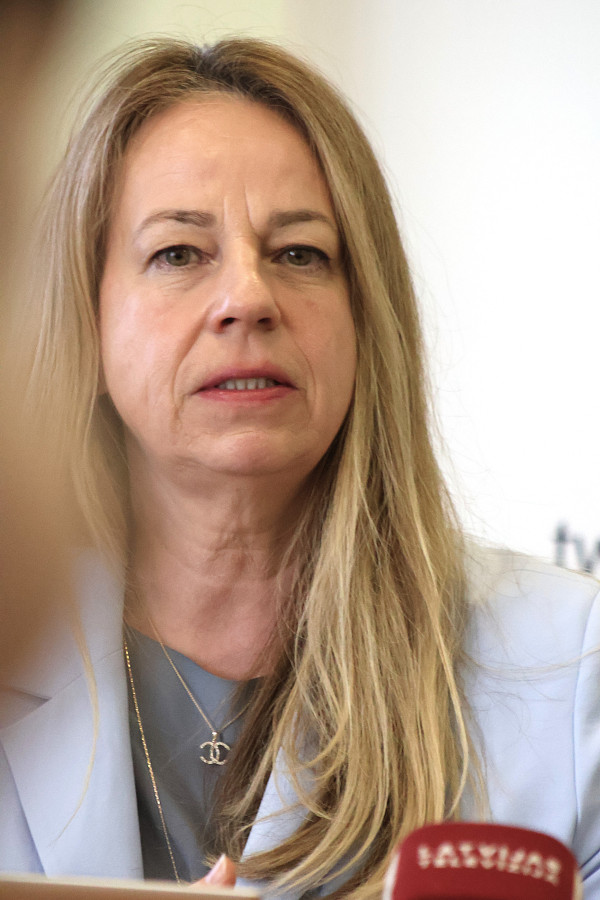
First of all, the country needs some kind of money circulation, at least in the form of “quick loans”. Secondly, politicians need scapegoats already known to the public, among whom providers of “quick loans” occupy long-held positions.
Everyone knows how to use beautiful and wise words
At the publicly accessible level, the arguments for and against the change in supervision of quick loans are expressed with practically the same words about increasing the efficiency of the state administration and preventing the fragmentation of functions. If it is done as requested by the authors of the reform, then the supervision of creditors is combined, but the supervision of the protection of consumer rights is divided, because the reform does not mean the elimination of PTAC.
PTAC has two arguments why the current monitoring system in Latvia is the best of the possible ones.
The first is that the purpose of bank supervision is to protect the interests of depositors, not borrowers. The basis for the classification of the providers of “quick loans” is not the speed of issuing loans in minutes or seconds, but the fact that the providers of these loans do not attract deposits in the form of deposits or account balances. They borrow money from the banks and are not responsible for how the banks will settle with the depositors. Therefore, a division of labor has developed, in which bank supervisors have to be content with the belief that quick loan companies will be able to collect money from borrowers and return this money to the banks. On the other hand PTAC ensures that quick loan providers do not rip off the end users of money. This creates a conflict of interest between bank supervisors and consumer rights supervisors. It is not a bad thing, but a good thing, that the opposite parties of the crediting process have public institutions where they feel sorry for the opposite party. It will be worse when LB gets into a conflict of interest with itself, simultaneously defending depositors and end users of loans.
Second, the reason for borrowing is the need to buy a product or service. “Through this prism, you can see cases where consumer rights are not respected,” emphasizes Z. Liepiņa.