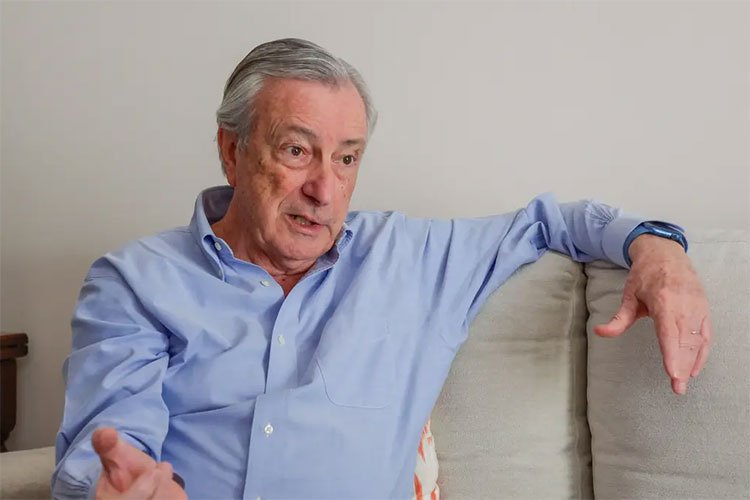
The former Spanish intelligence chief accused Rabat

father-in-law
Jorge Descalar
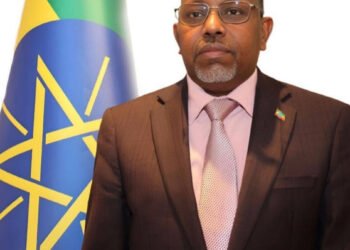
The director of Spanish intelligence and the former Spanish ambassador to the Moroccan regime, Jorge Descalar, attributed the crisis in relations between Spain and the Kingdom of Morocco to the recent improvement in relations between Algeria and Madrid, a development that officials in Rabat were unable to digest.
Jorge Descalar said in statements to a number of Spanish media outlets that the Moroccan regime interpreted the recent steps taken by the Spanish Prime Minister, Pedro Sanchez, towards Algeria as a shift in Madrid’s position on relations with its southern neighbors in the North African region, which prompted him to commit foolishness, by orchestrating the invasion of the Spanish city of Ceuta by no less than eighty thousand Moroccan illegal immigrants and a few coming from sub-Saharan Africa.
Descalar explained on Monday, September 28, in an interview with “Radio 4” and “2 Cat,” that among the data that angered the Moroccan regime was “the resumption or restoration of relations between Spain and Algeria,” which experienced an unprecedented rupture in the period between March 2022 and April 2024, the date of the joining of the Algerian ambassador, Abdel Fattah Daghmoum, to the Madrid embassy, after an absence of two years following his summons in March 19, 2022, against the backdrop of the change in the Spanish position on the Western Sahara issue.
The Spanish security official also linked what happened and is still happening between the Moroccan regime and Spain, with the Spanish Parliament’s vote to grant Spanish citizenship to the Sahrawis, after two years of hesitation by the government of Pedro Sanchez, a position that Jorge Descalar considered that “Spain has shown a greater degree of independence in its position on the issue of Western Sahara.”
In the estimation of the former Spanish diplomat, “these combined elements may have led Rabat to believe that there had been a change in Spanish policy towards the Moroccan regime,” who believed that the head of the Spanish government, Pedro Sanchez, and his senior ministers, in the form of the Ministers of Defence, Interior, and Foreign Affairs, had become his hostages since Moroccan intelligence had hacked their phones with software developed by the “ANSO” company, and stolen their documents, in what was known as the famous “Pegasus” silverware.
Hence, Jorge Descalar believes that “what happened in Ceuta (the Moroccan regime’s organization of an invasion of tens of thousands of illegal immigrants into the city) is a message from Rabat to remind Madrid that the Moroccan regime is the one holding the frying pan by the handle, that is, the one who holds the pressure cards in the relationship between the two countries.”
This invasion occurred only about a week after the visit of the Spanish Prime Minister to Algeria on the twentieth of last July (July 28 and 29), which is the timing that reinforced this narrative, which had previously been repeated by many media sources in many European countries, and was the reason for the European Parliament to issue, as is known, a regulation criticizing the Moroccan regime’s use of the illegal immigration card in order to pressure Spain to achieve political goals.
Jorge Descalar also warned the Spanish authorities against making concessions to the Moroccan regime in the Western Sahara issue, and said, “If the (Spanish) government believes that making concessions regarding Western Sahara will bring it calm in the cities of Ceuta and Melilla, this means that it does not know the Moroccan regime.”
Spanish-Moroccan relations are going through their worst stages, while relations between Algeria and Madrid are regaining their calm after an unprecedented crisis due to Spain’s change in position on the issue of Western Sahara. Algeria recalled its ambassador from Madrid on March 19, 2022, and suspended the Treaty of Friendship and Good Neighborhood signed in 2002. However, things returned to normal after the return of the ambassador and the lifting of the freeze on the Treaty of Friendship.