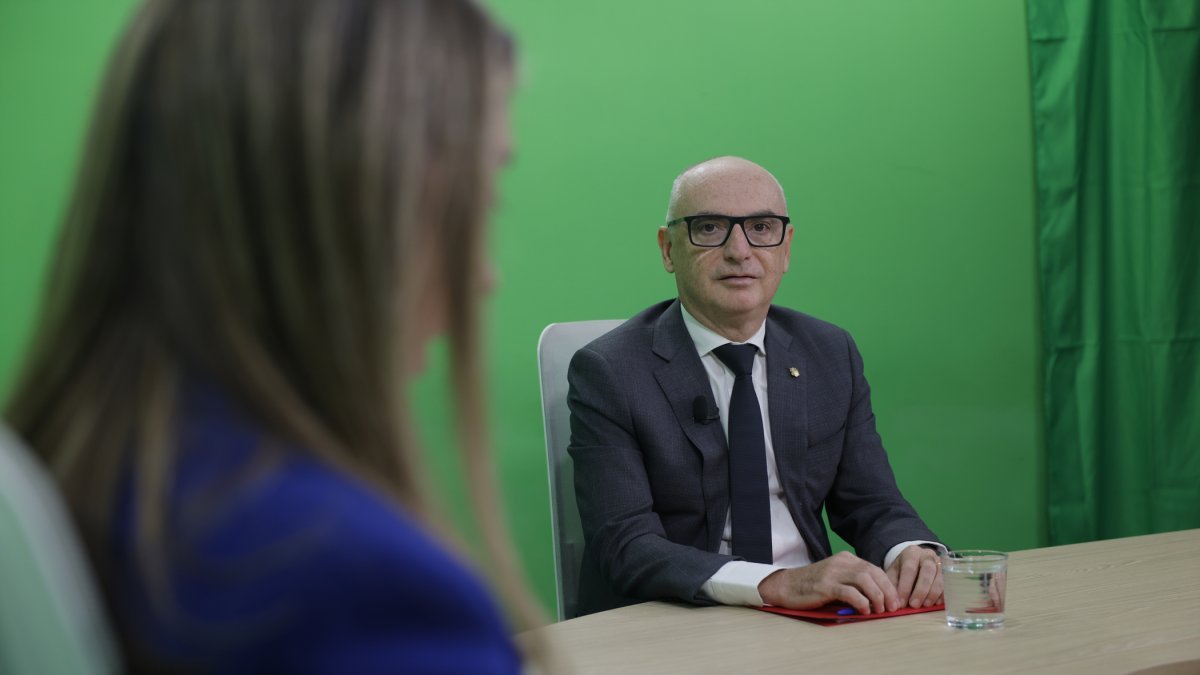
The Minister of Finance, Ramon Lladósbelieves that to maintain economic growth, a system capable of generating higher wages and attracting companies from sectors complementary to the current ones is needed. This is how he defended the Let’s talk about it, from Diari TVin which he remarked the need to move from the usual salaries of 2,200 or 2,300 euros to higher figureslinking this transformation of remuneration to the arrival of companies in the technological or financial sector that provide more added value, able to pay higher salaries and, consequently, contribute more in taxes.
Lladós he remarked that the challenge is to get these companies to “arrive here and choose Andorra” to be able to sell these services all over the world European Union “more efficiently”. According to the minister, the partnership agreement plays an indispensable role to ensure that the benefits derived from these activities stay in the country. “The financial sector is already there operating in Europe and paying high wagesbut it must do so through subsidiaries in countries of the EUlike Spain or Luxembourgto be able to operate. This means that a large part of the profits derived from the work they do in the EU they stay at Spain already Luxembourg“, he explained. With theassociation agreementmany of these barriers would be removed and, together with the robustness of the country’s public services and low taxation, Andorra would be more attractive for this kind of company: “And today, why don’t they? Because they can’t sell their services outsideAndorra or they have many difficulties”, explained the minister.
“We have to get these companies created from Andorra that generate these jobs”
Lladós numbered this salary increase up to the threshold of 3,000 or 3,500 euros, also linking it to the progressive aging of the population and with the objective of guarantee the sustainability of pensions: “This is what is really appropriate, because with this amount you already contribute substantially to the health branch of the CASSwith which you can already have money for deal with the health system and you can already contribute more to the pension systemso when you retire you have a higher pension.” That’s why he pointed out that the goal is not only to attract taxpayers with high incomes, but to get more people with higher salaries in the companies that provide this added value.
“There are no companies with 60 or 70 workers, but there are definitely starting to be 4 or 5”
The minister he maintained that this transformation has already begun, even if it does not result in the arrival of large multinationals. As he explained, finance it already detects companies that sell various types of services abroad and liberal professionals which were not there four or five years ago. Some of these companies, with structures of four or five workers, are already starting to declare profits and pay corporation tax. “There are no companies with 60 or 70 workers, but companies with four or five workers are starting to appear,” he explained.

A la carte
This diversification is particularly relevant in front of the moderation that is foreseen in the construction. The companies in the sector still have a portfolio of projects for the next two or three years, but the minister considered that the current pace “is unsustainable” and that activity will slow down in a horizon of four or five years. He did not foresee, however, a sharp drop in revenue, arguing that new services and activities with more added value can progressively compensate for income that the real estate sector ceases to contribute. The condition, he clarified, is that the change is gradual and that the emerging sectors continue to gain weight. The process is already perceived, according to them Lladósin the composition of taxes. The direct ones, linked to the business profits and incomeare the ones that grow the most, while the indirect ones, associated with products like tobacco, alcohol or fuels are more stagnant. Tobacco, which fifteen years ago represented about a quarter of state income, now contributes between 10% and 11%. Within corporate tax, construction gains share and so do professional services, which group everything from architects and doctors to technology companies.
Instead, trade loses relative weight. Lladós specified that it does not mean that the establishments earn less money in absolute terms, but that their results grow more slowly than those of other activities. The weight loss is seen in both corporate tax and imports, which remain flat in absolute terms while prices rise. However, he recalled that the sector remains important for employment and for the tax contributions of employees.
LLADÓS DOUBTS CONCÓRDIA’S ECONOMIC PLAN
The Minister Lladós questioned the economic model of concord and admitted that he does not quite understand how the training aims to diversify the economy without the association agreement with the European Unionadding that it is not clear what fiscal model he is proposing match led by Cerni Escalé. The minister contrasted this vagueness that he attributes to concord with the proposals of Social Democratic Partymore explicit, despite disagreeing. He rejected both increased fiscal pressure and the possibility of fund pensions through taxes. “It’s a model. I don’t share it, but I understand it”, he said about the approach of the P.S. Lladós he defended the continuation of current economic policies after the next general election and assured that the model promoted so far is the right one to keep public finances on track. On a personal note, he reiterated that his professional project is return to the private sector after the passage through the ministry and ruled out running as a candidate in the next elections.