The recent signing, on Monday of last week, of the Association Agreement with the European Union by the Principality of Andorra and at the same time also by the Republic of San Marino, is one of the last steps, said and done the penultimate, of the many that have been taken since the negotiations began now 11 years ago, in 2015. Now the Principality of Andorra must take the penultimate step: the binding referendum that will determine the yes or no to the agreement The last step, if the result of the referendum is yes, will be its approval by the General Council, with a majority in favor of 2/3 of the councillors. From then on, the Principality of Andorra would begin a new stage in its history, because the way it relates to Europe, which in fact is almost like saying the way it relates to the world, would acquire political maturity with a whole series of associated factors that would allow the citizens of Andorra a more favorable fit than they currently have. We can see on the horizon, then, the final stretch of the long road of approach to Europe that began in 1986, when Spain entered the European Economic Community and Andorra found a new scenario when dealing with its neighbors, both France and Spain, given the imbrication of these two states in the same common European policy. At that time, Andorra, with good judgement, began to move, with a whole series of contacts, negotiations and approaches that, initiated by the then head of government, Josep Pintat Solans, and continued by his successor Òscar Ribas Reig, began to try to understand how and in what way Andorra had to act, aware of the clear disadvantageous position of pre-constitutional Andorra on a not only European but international scale. The Constitution would soon arrive, and with it under its arm, Andorra could breathe a little more calmly in front of the world. But the European issue arose now and then, mostly when it came to securing commercial relations. The successive heads of government, one after the other: Marc Forné Molné, Albert Pintat Santolària, Jaume Bartomeu Cassany, Antoni Martí Petit and the current one, Xavier Espot Zamora, would not stop rowing so that Andorra’s fit with Europe made possible better economic and social prospects. This trip is well explained and in a succinct but understandable way in the article Andorra and Europe: a signature, forty years on the way, signed by Marc Forné, Albert Pintat, Jaume Bartomeu and Xavier Espot, published here in Diari d’Andorra on the very Monday in which the agreement was signed.
The agreement keeps Andorra outside the Schengen area with sporadic checks
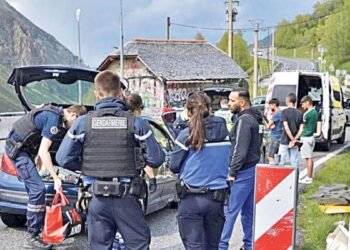
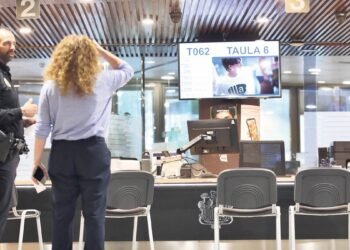
Looking to Europe with a renewed European commitment, Andorra can face the road to the future with more hope, because the key points of the agreement determine that Andorran citizens and legal residents will be able to live, study, work, retire or have their own business activities in any EU country on equal terms with EU nationals, without having to modify Andorran nationality laws. With regard to Andorra’s integration into the European internal market, and in order to protect the most sensitive sectors, well-limited and sufficiently generous transitional periods are established: 30 years for the tobacco sector, 15 for the financial sector and 7 in the field of telecommunications. The agreement keeps Andorra outside the Schengen area, but with sporadic border controls. In taxation, Andorra will maintain fiscal sovereignty.
After the negotiations and the signing of the agreement, and while waiting for the referendum, we can well assume that Europe would understand a yes to the agreement as a handshake, as a good deal; otherwise, one would not see it as a turning of the back, as a lost opportunity for Andorra. Albert Pintat made it very clear last Thursday, referring to the path of Yes towards Europe, in the context of being awarded the Cross of the Seven Arms: “It is the only path if you want to guarantee the prosperity of the Principality. Any other path involves difficulties, unpredictability and the uncertainty of what Andorra can be in the future.”