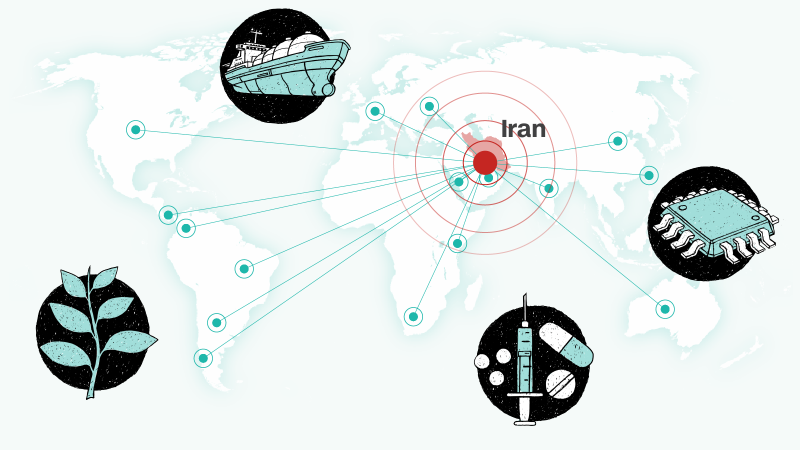
The ongoing conflict in Iran has had far-reaching implications for the global economy — from food to fertilizer. Between increasing oil prices, exports caught in the bottleneck or delayed by the near-closure of the Strait of Hormuz and widespread security concerns throughout the Middle East, many of these consequences have had a ripple effect on nearly every aspect of daily life. CNN tracks some of these effects and how they compound one another.
Here’s how the war in Iran has shaken countries around the globe.
The near shutdown of the strait has resulted in skyrocketing oil — and gasoline — prices. This, in turn, has created a series of consequences across everyday life, including access to food and energy costs.
Bottleneck in the strait is causing backlog and price surges for key exports
Iran’s de facto blockade on the strait has effectively closed down the waterway, causing major export disruptions and supply shortages. The price of key exports — like aluminum and plastic — have already surged or are expected to surge as the war continues.
Escalating tensions have raised concerns around security and safety, with companies rerouting cargo ships to avoid the strait and insurers significantly raising insurance premiums.
CNN’s Ivana Kottasová, Chris Isidore, John Towfighi, David Goldman, Eleni Giokos, Stephanie Yang, Hanna Ziady, John Liu, Abeer Salman, Laura Sharman and Travel staff contributed to this report