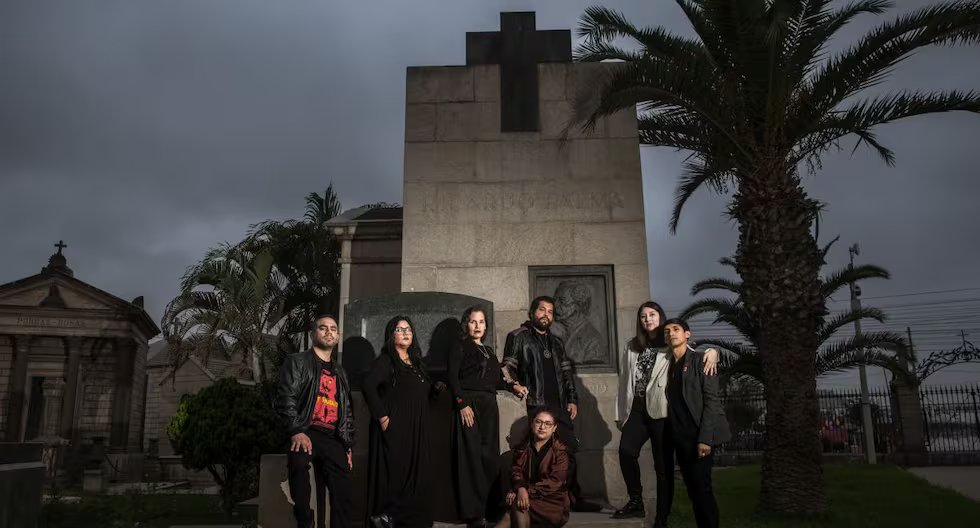

We are on the north side, at the height of door 4 of the Master Priest. The guide tells us that there are several writers in this cemetery, such as Ciro Alegría, Abraham Valdelomar, José Carlos Mariátegui and Manuel González Prada. Palma’s children, Clemente and Angélica, also accompany him in other locations.
The occasion was special. We visited the famous Peruvian traditionist regarding the publication of the “Macabre Traditions of Ricardo Palma”, a collection with four volumes of the writer’s renowned stories, but selected and studied with a new reading: “As a publisher specialized in fantastic narrative, we wanted to see that side of Ricardo Palma, the fantastic side. He has historical traditions with anecdotes from real life at the time; however, these traditions divided into four books talk about ghosts, the devil, witchcraft, paranormal situations and the criminal investigation of the time,” explains Tania Huerta from Pandemónium Editorial, responsible for the publication.

We are talking about the same writer, the classic gentleman with the mustaches and round glasses, as well as the same widespread traditions, only brought together with another perspective: “We wanted to surprise and rediscover him. Everyone knows about Peruvian traditions, but the ones that are fantastic are not always known,” says Luis Bravo. The publisher is thinking about new generations of readers bombarded with images and excess information, with less retention capacity and a solemn fondness for cell phone screens. Tania Huerta tells us that many young people see Palma as a boring writer; However, taking them into the realm of the paranormal or the demonic will generate curiosity and they will discover that it was not what they thought.
For Lessy Galván from Tenebris Blog, this publication excites her as a reader, since she always looks for the dark side of the authors: “This rescue gives another look at the Peruvian classic. There is an interesting cosmogony of characters like the devil, the ghosts and the specters that haunted the cemeteries and alleys. These types of very traditional stories have been lost.” For his part, Diego Alva, leader of the Sociedad Insomne club, maintains that Palma “does not intend to scare or introduce terrifying elements that cause some type of anguish, but rather to portray the mind of an era through apparitions, witchcraft, curses. It is a way of rescuing an era and resisting.”

Visitors read some traditions from Ricardo Palma at the Presbítero Maestro cemetery.
/ JOEL ALONZO
Demons with style
The four books are “Transgressive Palm: Traditions of Criminal Minds,” with traditions about violence, crimes and passions; “Palma gothic: traditions of frights”, where ghosts and apparitions are the protagonists; “Deviled Palm: Maleficent Traditions”, with the devil and superstitions associated with the Andean world quite present; and “Palma bewitched: fantastic traditions”, where supernatural stories from the pen of the Lima writer are gathered.

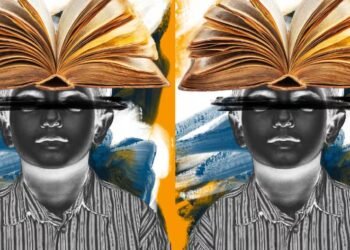
One of the covers of the collection “Macabre Traditions by Ricardo Palma”. The four books are “Palma transgressor: traditions of criminal minds”, “Palma gothic: traditions of horrors”, “Palma deviled: evil traditions” and “Palma bewitched: fantastic traditions”.
You will find the most widespread traditions such as “Don Dimas de la Tijereta”, “Why Fray Martín de Porres, a saint from Lima, no longer performs miracles” and “The mosquitoes of Santa Rosa”, to which popular knowledge can easily refer; and other more far-fetched or little-known ones such as “The Robbery of the Skulls”, “The Hooded Man”, “The Duendes of Cuzco”, “The Black Mass”, “The Witches of Shulcahuanga” or the pre-Hispanic story “Palla-Huarcuna”. In “Palma devilish” it is not that there are sinister or bloodthirsty demons, for example, since Palma has his own style and a characteristic of his pen is precisely humor, the editors clarify; but you will find satirical devils and even Andean devils. “There is the entire demonic universe of Palma, as well as in the perverse traditions and criminal minds, some more dramatic and others more funny,” adds Huerta.
The collection is the result of the study and selection of Cusco researcher Mayra Flores, PhD from the University of Michigan. This academic support provides a historical and scientific context and generates new ideas from fantastic literature often considered unserious, unlike realistic literature. It is the publisher’s purpose to continue investigating the author, propose a thesis around his work, reread him in our time and not let him die in oblivion as has happened before with other writers, some of them perhaps buried in this cemetery without anyone visiting them. //
Besides…
Presentation at FIL-Lima
The collection “Macabre Traditions of Ricardo Palma” (Pandemónium Editorial, 2026) will be presented on Monday, July 27, at 8 pm, in the José María Arguedas Auditorium of the Lima International Book Fair. Merlín Chambi, Jorge Casilla and Tania Huerta participate. This publication was achieved thanks to economic stimuli from the Ministry of Culture. On the other hand, the editing and selection of the traditions was in charge of researcher Mayra Flores (PhD), from the University of Michigan. Each volume comes with a preliminary study prepared by specialists such as Rocío Quispe Agnoli, from the University of Michigan; Giovanni Rivera, from the University of Oklahoma; and Erika Almenara, from the University of Arkansas.