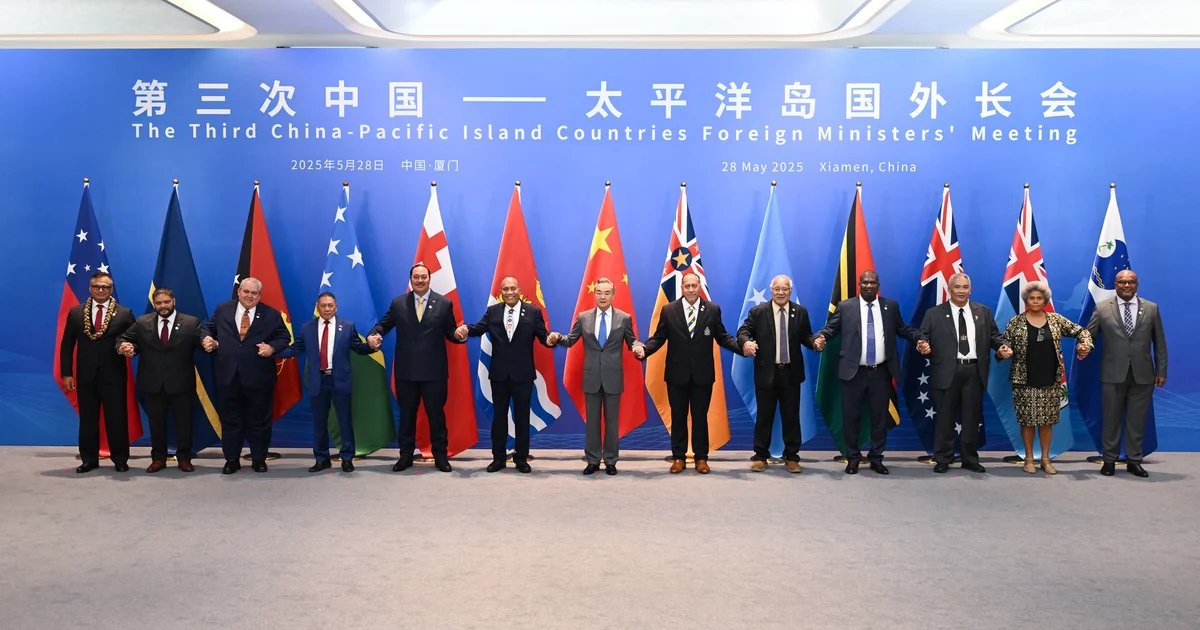
China already has the building blocks. In May 2025, Beijing announced $2 million for Pacific climate cooperation, 100 “small and beautiful” community projects over three years, and pledged to collaborate (Opens in new window) on early warning and coastal protection, including disaster monitoring from its weather satellites.
Beijing also has technical expertise others desire. It has created “sponge cities,” designed to absorb heavy rainfall and prevent flood-displacement, with measurable improvements in pilot cities’ resilience. And China has conducted planned relocation at a scale and speed no other country has matched: between 2015 and 2020, China relocated 9.6 million (Opens in new window) people, including (Opens in new window) many from disaster-prone areas.
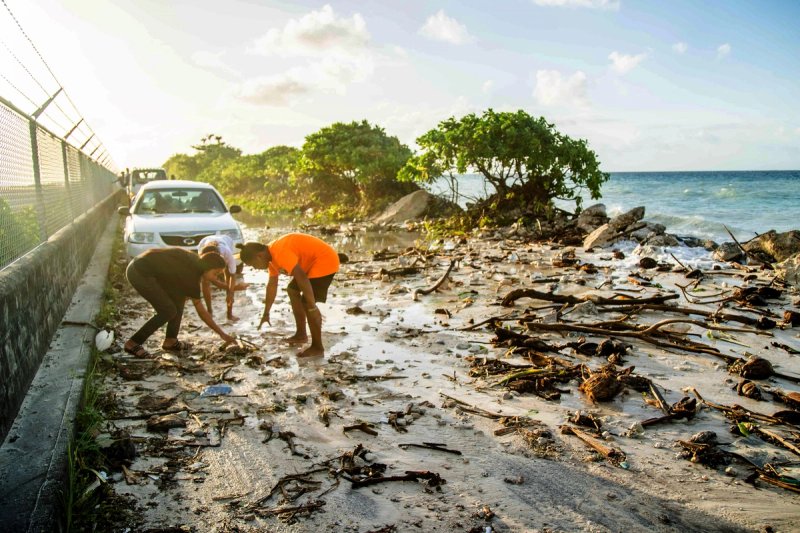
Together, these efforts would amount to a climate mobility strategy. A COP presidency could bundle them into one package: funding for the Pacific’s Climate Mobility Action Hub, technical expertise for communities trying to stay, and planning support for those that have to move. Bolder still, as Washington continues to shrink visa access for countries, Beijing could instead open temporary labour pathways for its most climate-exposed partners.
Beijing has reasons to be hesitant. Elevating its relocation record to the global stage would invite scrutiny of documented human rights concerns and open questions about community consent. Beijing has also shown little appetite for the politics of migration, preferring to help countries keep people in place, backing Pacific claims that their statehood (Opens in new window) survives rising seas.
While Beijing deliberates, others are making a play. In August, New Zealand committed NZ$17.9 million (Opens in new window) (roughly US$10 million) to a Pacific Climate Mobility Partnerships Program. Despite this, it is clear that no middle power can match China’s money, technology, and relocation experience.
For China, with existing inroads across the Asia-Pacific, climate mobility is a unique opportunity: a cogent strategy would draw upon established policy and speak directly to the needs of partner governments. Pacific Island states hold a dozen UN seats and carry real weight in a climate process that runs on consensus.
Ultimately, Beijing may decide that seawalls and satellites are enough and that an explicit climate mobility agenda carries more risk than reward. But Washington (and Canberra) should not count on it. If the United States won’t help Pacific countries plan for climate mobility, China has the tools to do so, and COP33 may give it the stage.