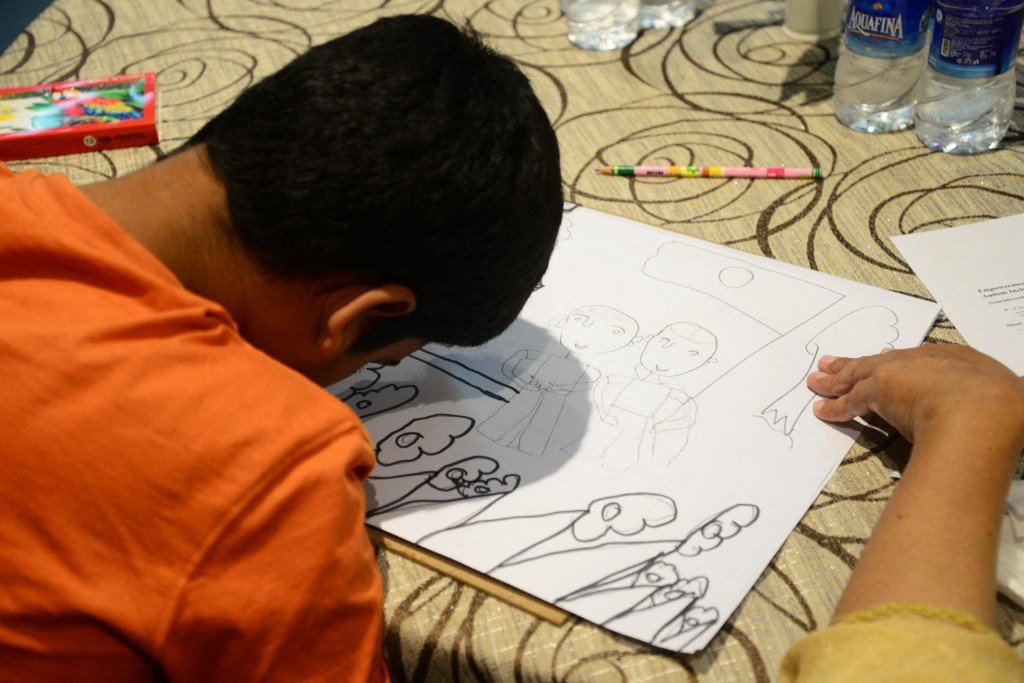
The daily life of girls, boys and adolescents with austism In Venezuela it is crossed by difficulties that go beyond the needs of each person.. For many families, guaranteeing access to therapies, specialized food, inclusive education and medical care means facing, at the same time, economic limitations, failures in public services and insufficient institutional responses.
That reality is reflected in the TEA Survey 2026diagnostic research carried out by the Venezuelan Autism Organization (OVA) that gathered 2,082 valid responses from families of entities in the country. The report was conceived as a tool to understand the situation of children and adolescents on the autism spectrum and their families and to provide information for the formulation of public policies from a human rights approach.
Although the survey had participation from families from a good part of the country —Aragua, Caracas, Miranda, Carabobo, Zulia, Guárico, Monagas, Lara, Anzoátegui, Falcón and other entities— The lack of official data from the State does not allow determining the prevalence of autism in each state, the organization warns.
Families carry the economic and care burden
One of the main findings of the TEA 2026 Survey is related to the economic situation of households. 60.3% of the families consulted, equivalent to 1,228 households, reported monthly income less than a basic basket. Another 32% indicated that their income is strictly enough to cover it and only 7.7% indicated that they have sufficient resources to cover specialized medical and therapeutic expenses.
In this context, economic responsibility is combined with a marked feminization of care work. The mother appears as the main caregiver in 91.6% of the casesthat is, in 1,851 families.
The households surveyed are distributed between two-parent structures, which represent 51%; single parents, with 24.8%, and extended families, with 24.5%.
The economic situation is also reflected in access to medicines. 45% of the minors included in the survey receive medication. Of them, 95.4% face serious difficulties in acquiring it, mainly due to costs.
Added to this is limited coverage of state financial aid. According to the report, 90.7% of families do not receive a bonus or special financial aid from the State for disability.
The diagnosis also indicates that 5.3% of minors remain under suspicion without formal certification. Among those who did receive a diagnosis, the average age was 4.1 years, with a main peak at 3 years. However, access to diagnosis shows a marked difference between the public and private sectors: 71.3% obtained the diagnosis in private institutions, compared to 23.8% who were treated in public institutions such as CAIPA, hospitals and CDI.
Regarding the level of support required, 58.8% of the minors were identified as ASD level 1, 34.4% as level 2 and 6.8% as level 3.
Findings from the 2026 National Autism Survey
The report from the Venezuelan Autism Organization exposes the economic vulnerability and diagnostic gaps in families with ASD.
60.3%
Income less than the basic basket (1,228 households)
91.6%
Mothers as primary caregivers (1,851 families)
90.7%
Households without bonuses or state financial aid
Distribution according to levels of required support
Level 1 (Light support)
58.8%
Level 2 (Moderate Support)
34.4%
Level 3 (Substantial Support)
6.8%
Access and origin of diagnosis
71.3% Private institutions
23.8% Public sector (Hospitals/CAIPA)
Average age of diagnosis: 4.1 years.
Source: Venezuelan Autism Organization (TEA Survey 2026)

Inclusive education still faces barriers
The school is another space where families encounter obstacles. According to the survey, 9% of the children and adolescents included in the sample—182 cases—are outside the educational system.
The majority of those consulted are in primary school, with 52.6%; 21.2% are in middle school or high school, and 17.7% are in kindergarten or initial education.
Regular public education accounts for 43.1% of the cases and private education accounts for 26%. Meanwhile, 22% attend public special education and 4.5% private special education.
Incorporation into the educational system does not guarantee, however, that the necessary conditions exist to address the particularities of each student. 49.8% of schools implement curricular adaptations, but 42.6% of students do not receive these types of adjustments. Another 5.8% of the families stated that they had formally requested them and had received an institutional refusal.
The figure of the pedagogical companion also shows differences in access. Although 76.9% of students do not require a companion, among those who do need one, 10.7% must be paid for by the family itself and only 12.4% is provided by the school.
The organization warns that Educational inclusion does not depend solely on the physical presence of the student in the classroom. The necessary adaptations and supports seek to facilitate their participation and learning within the educational system.
Therapies and special nutrition, out of reach of many families
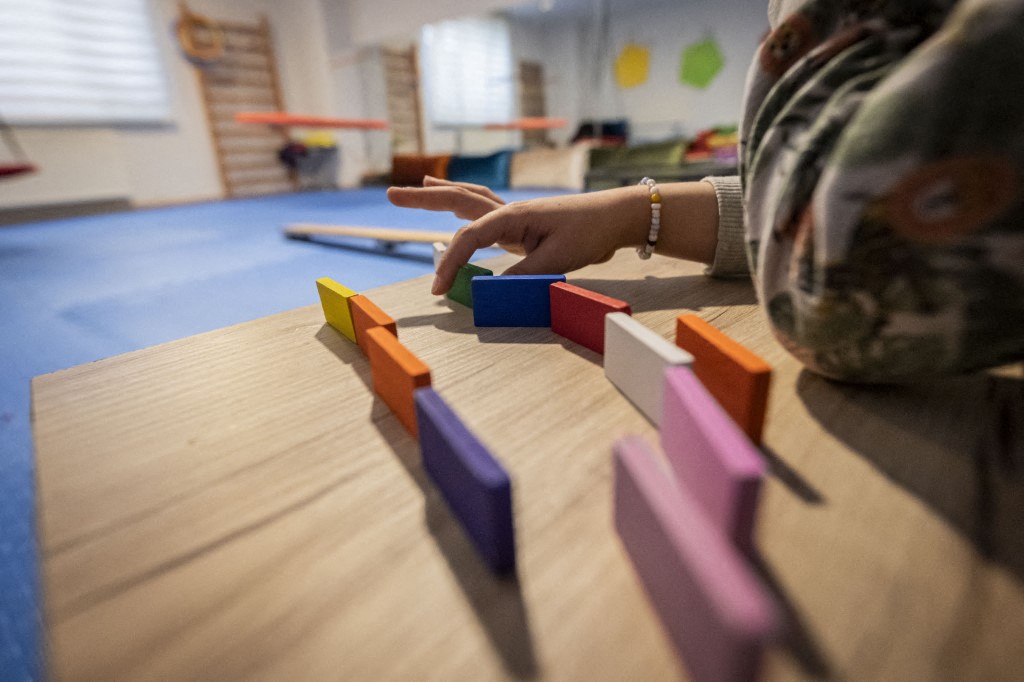
Access to therapies constitutes another of the main issues identified by the research. 60.9% of the minors surveyed have access to some type of therapy, while 39.1%, equivalent to 773 families, lack this service.
Among the disciplines with greater availability are psychopedagogy, occupational therapy and language therapy. Other areas, such as social skills, sensory therapy, physical therapy, music therapy, and specialized behavioral approaches such as ABA, have more restricted access, particularly for lower-income households.
OVA highlights that These therapies should not be understood as a luxury, but as tools linked to the development and autonomy of minors. They can contribute to the development of communication and social interaction, sensory and emotional regulation, self-care skills, and adaptation to the school environment.
Food represents another difficulty. 75.9% of the minors included in the survey require a special diet, according to the needs reported by their families. However, 86.3% of these households say they cannot afford it.
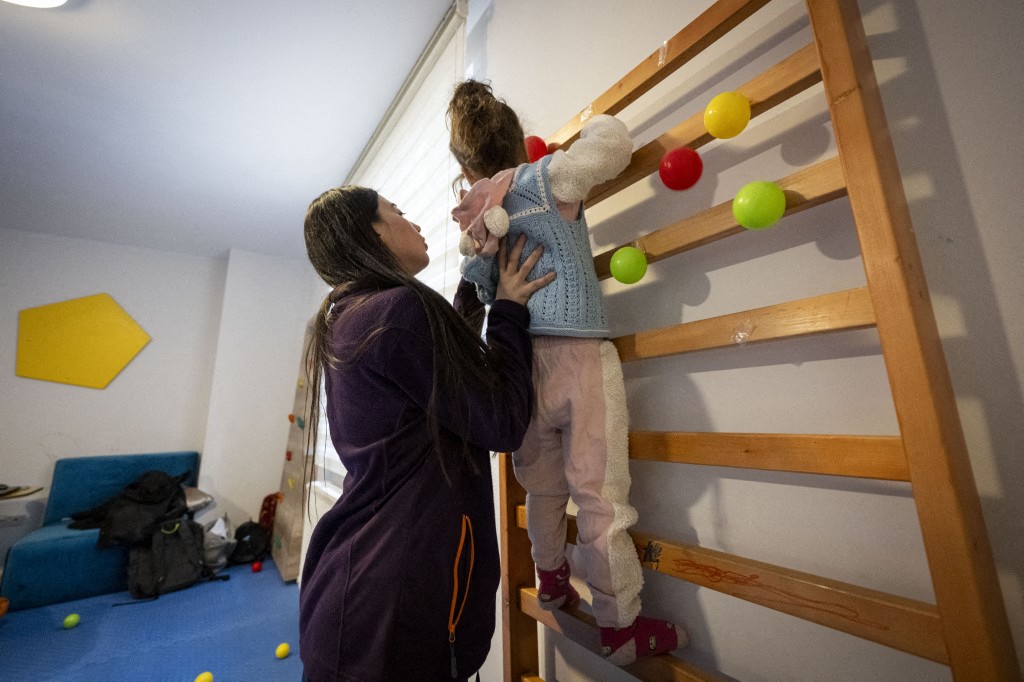
Public services also interfere with the continuity of routines. 58.7% of households, equivalent to 1,128 families, reported that recurrent water and electricity failures alter daily routines and cause the suspension of therapies.
For people with autism, whose daily lives can be supported by predictable routines and structures, the interruption of activities associated with failures in basic services represents an additional barrier in a context already marked by economic difficulties and access to specialized care, according to the organization.
Discrimination persists while few families report
52.4% of the families, corresponding to 1,050 reports, stated that the minor or their environment had suffered acts of discrimination. The educational field appears as the main space indicated, with 65.3% of the cases, followed by public spaces, with 24.4%.
Despite the reported violations, most families —89.8%— affected did not go to the authorities to file a formal complaint. Among those who did, the majority stated that they had not obtained justice or an effective resolution from the competent agencies.
Violation of rights in the autism community
Findings from the Venezuelan Autism Organization on discrimination and access to official identification.
1,050
Reports of discrimination (52.4%)
89.8%
Affected people who did not formally report
51.8%
Minors who do not have a Conapdis card
Distribution of areas of discrimination
Access to the Conapdis card
Source: Venezuelan Autism Organization
Another indicator related to access to rights is the card of the National Council for People with Disabilities (Conapdis). The survey found that 51.8% of minors do not have this document, while 48.2% do.
The organization concluded that the main challenge posed by the report is to convert this information into a basis for discussing public responses that allow access to diagnosis, therapies, education, food, medicines and rights protection mechanisms not to depend exclusively on the economic capacity of each family.