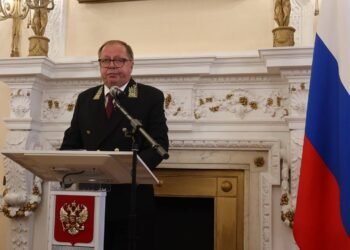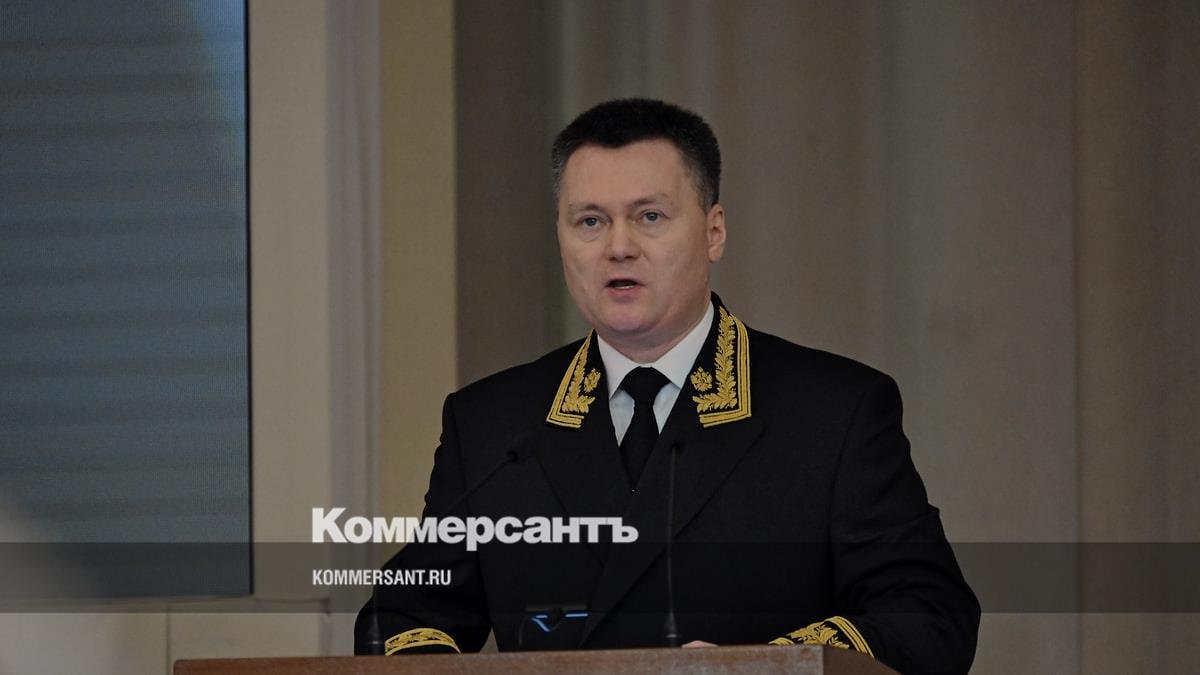
On June 10, the Chairman of the Supreme Court (SC) of the Russian Federation, Igor Krasnov, completed a two-day visit to Minsk, during which he spoke about plans to introduce artificial intelligence (AI) into legal proceedings and expressed his readiness to share his experience in the field of IT technologies with colleagues. According to him, Russian courts are already testing AI assistants in pilot mode.
Igor Krasnov touched upon the topic of the influence of artificial intelligence on the field of law when speaking at a round table meeting in Minsk dedicated to the use of AI in criminal proceedings. “On my instructions, a large-scale analysis of court cases affecting the use of artificial intelligence technologies is being carried out. By and large, its influence on the formation of the entire legal environment remains to be assessed,” said the head of the Supreme Court of the Russian Federation.
The topic of cooperation between the judicial systems of Russia and Belarus in the field of IT technologies was one of the key ones during Mr. Krasnov’s working visit to Minsk on June 9–10, which became his first foreign trip as Chairman of the Supreme Court.
Igor Krasnov arrived there at the invitation of his Belarusian colleague Andrei Shved, for whom, as a source in the Russian delegation notes, this is also the first foreign reception in his current position: by a curious coincidence, before being elected Chairman of the Supreme Court of the Republic of Belarus in December 2025, Mr. Shved, like Mr. Krasnov previously, held the position of Prosecutor General.
The meeting participants discussed the general principles of interaction between the two judicial systems – they are reflected in the memorandum of understanding and cooperation, which the chairmen of the Supreme Court signed on June 10. As the press service of the RF Armed Forces reported, the document provides for ensuring the effective implementation of international agreements binding on both countries, including agreements on the provision of legal assistance in all categories of cases, as well as studying and expanding the practice of using modern information and telecommunication technologies in judicial activities, including in cross-border interaction.
In addition, Igor Krasnov shared with his Belarusian colleagues his plans for introducing AI into legal proceedings. He said that courts in ten regions of Russia are now testing domestic programs that will free secretaries from having to spend hours transcribing audio recordings of court hearings, and will give judges the opportunity to quickly analyze case materials and check the texts of judicial acts for compliance with the legal positions of the RF Armed Forces.
According to Kommersant, we are talking about the Unica AI platform developed in the Dubna special economic zone, which allows you to run AI scenarios on internal facilities without transferring documents and data to public services.
The Chairman of the RF Supreme Court noted that technologies not only open up new opportunities, but also carry new risks. “The challenges we face are not only technical in nature – we are talking about legal, organizational and ethical issues,” he emphasized. It is important that digitalization not only simplifies the work of judges and staff, but also strengthens guarantees of fair justice. Ultimately, responsibility for making the final decision always remains with the judge, Mr. Krasnov concluded. He also declared his readiness to share his experience in the scientific and educational sphere with Belarusian colleagues.
The first exchange of experience took place at the same round table, where the rector of the Russian State University of Justice Olga Tissen made a report on the difficulties that arise when identifying and investigating cases related to the use of cryptocurrencies. Ms. Thyssen recalled that amendments to the Criminal Procedure Code of the Russian Federation adopted at the beginning of this year clarified the procedure for confiscation of cryptocurrencies, however, in practice, this process is still complicated by various factors: from the anonymity of the owners of crypto wallets to the unwillingness of virtual asset providers to cooperate.