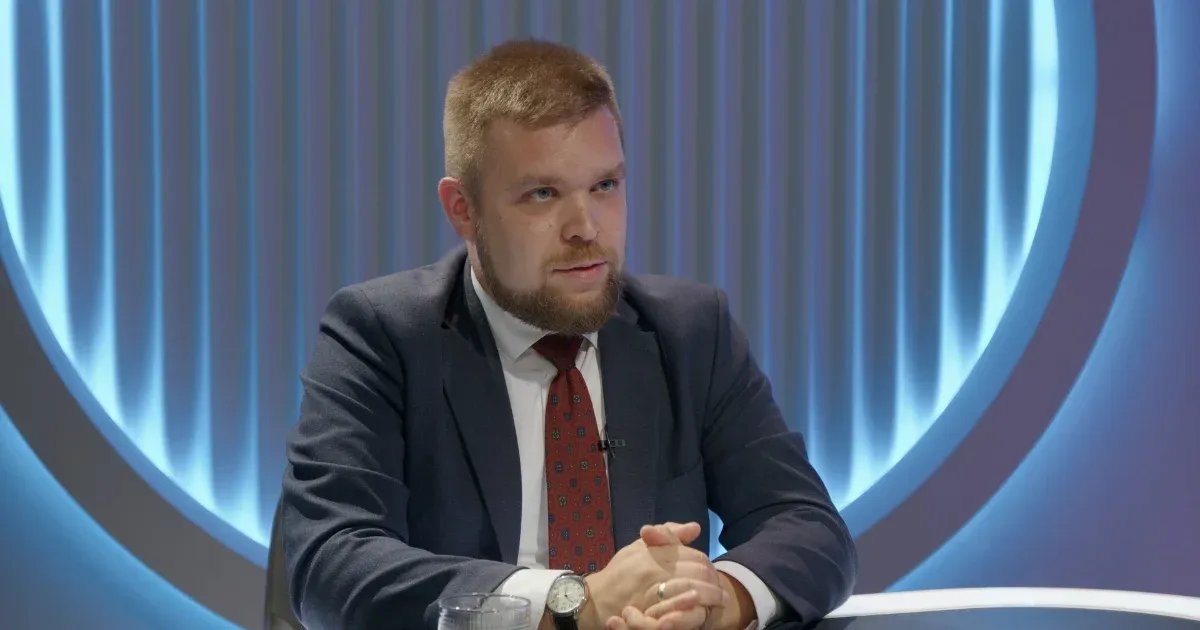
“Personally, it doesn’t bother me if I earn less than a company manager. It’s unfortunate, but I don’t make a deal out of it,” said Bence Pintér, mayor of Győr, on Wednesday’s broadcast of Színten túl. He considers this a multifaceted question, but if this is the price of bringing back to Győr the sums that the previous government took away, then he can accept the reduction of his salary.
Contrary to the reduction of his salary, he would not support that a mayor could not lead a settlement for more than two terms. According to him, the Tisza should think about this, because the operation of local governments is different from that of the parliament.
“The prime minister is elected by the parliament, the mayor is elected by the people”,
which he says makes a big difference. He said, therefore, in the case of prime ministers, yes, but in the case of mayors, he does not support term limits.
He spoke at length about the fact that in Győr, since his election in 2024, a lot of work has been done on accountability. The one that erupted in February was discussed Győr-Szol casewhich is about HUF 1.7 billion that disappeared from the city’s housing fund through the city company. “Győr-Szol is in an alarming financial situation, it is also struggling with liquidity problems at the moment,” Pintér said of the municipal company.
Speaking in connection with Győr-Szol, the company operating under the previous maintenance, a He was considered the mouthpiece of Fidesz about the media center, Győr Plusz, which was revealed to be closed in mid-May. According to him, the fact that Győr-Szol gave 1 billion forints to Győr Plus in ten years cannot be justified. “Amazing discrediting materials were created about us and Tisza, and obviously about all actors who were not Fidesz.” He cannot accept the explanation that people were forced to do this because it was the only way they could make a living, while many people from Győr also work in Austria, for example.
Regarding accountability, which is also treated as a priority by the Tisza government, he said that all information about the Győr cases will be shared with the National Asset Recovery and Protection Office when the office has already been established. He noted that in cases of suspected corruption in Győr, not only local but also nationally known politicians may be involved.
In the interview on Wednesday, he talked a lot about the biggest problems in Győr after the change of government in April. About the solidarity contribution, about which together with several mayors he also wrote a letter to the prime minister, he said his proposal was to abolish the entire system. According to him, we should find “a new system for how the otherwise really wealthy local governments, such as Győr, Székesfehérvár, Debrecen, Budapest, should undertake solidarity”.
He said the same, so far, unlike other cities, they have been able to manage the withdrawal of almost half of the income from the business tax, the performance of certain local government tasks may be directly threatened by the system developed under the Orbán governments. If the city has to pay the next HUF one and a half billion installment of the solidarity contribution into the state coffers, then
they have to close the city’s swimming pools.
Apart from the solidarity contribution, according to Pintér, the most important issue affecting local governments is that they cannot have a say in what should be built in the given settlement. The building authority’s powers have fallen into the hands of the government office, even though, according to him, these matters could best be solved locally. He spoke about the issue of public education as an emblematic matter, saying that Győr would take advantage of the opportunity if the municipality could regain control of the schools.