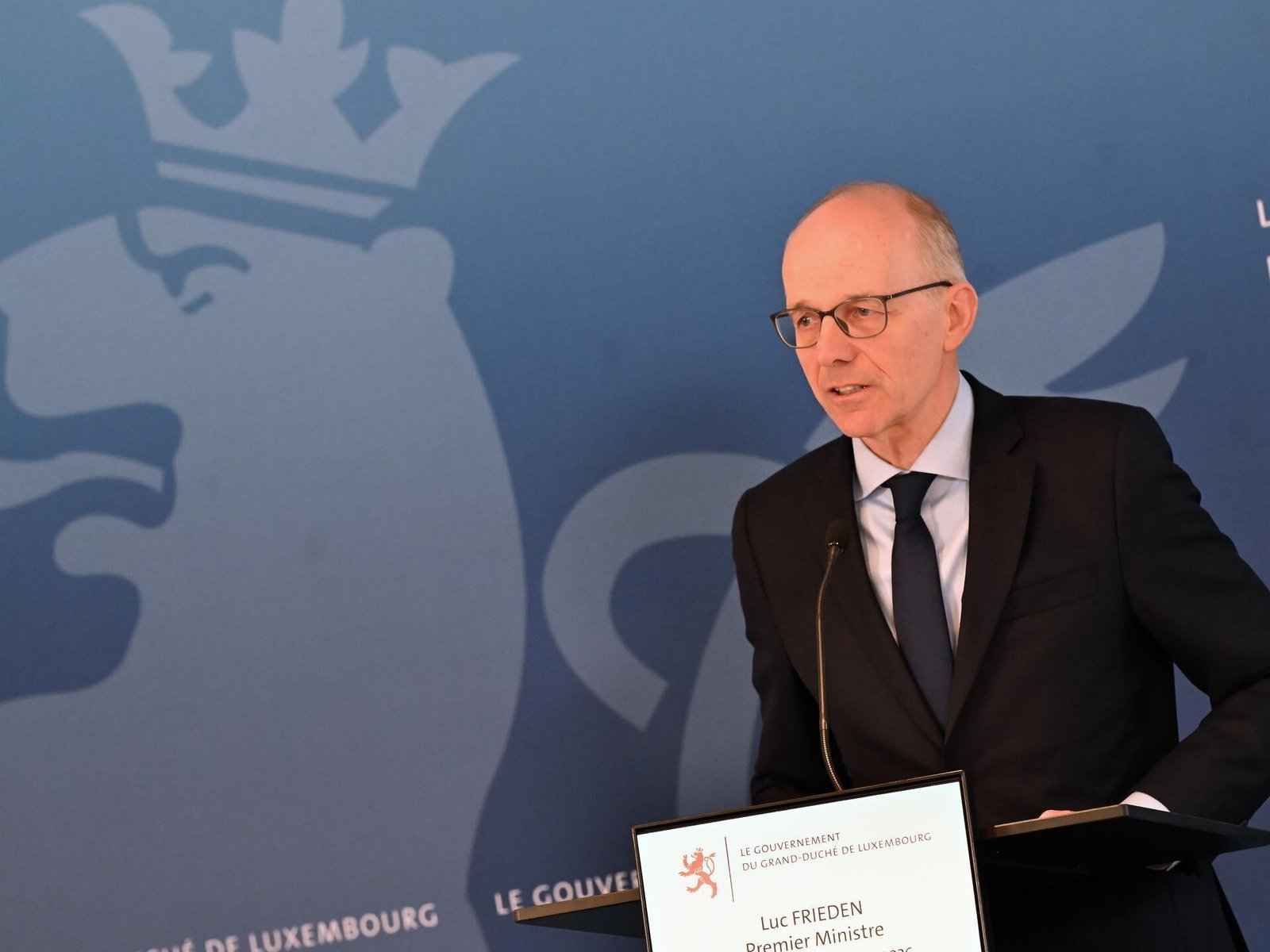
The tripartite is coming. Later, when unions and opposition parties demanded, Luc Frieden could not help but give in with the additional pressure from patronage and the politically astute junior partner. When Luc Frieden says that the government “has been preparing for this in the past few weeks,” he was not wrong. She did, just not entirely voluntarily. And there are good reasons for that.
Peace has increasingly lost control of action in recent months. Instead of “governing calmly,” the CEO was primarily concerned with reacting. First to the trade union union, then to the faux pas of his former sports and labor minister. And when his new Labor Minister Marc Spautz and Economics Minister Lex Delles once again turned the unions against the government, he probably didn’t necessarily expect that his coalition partner was sharpening his knives in the background in order to stab him in the back at the right moment.
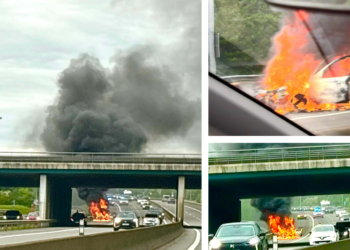
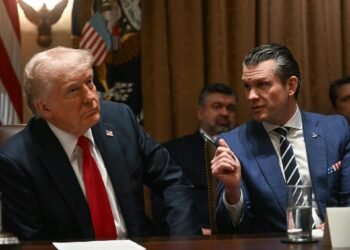
What’s unintentionally funny is that Luc Frieden, of all people, is the erratically acting president in the White House who rushes to help. Its war in Iran is causing oil prices to skyrocket. For now, at least, the crisis is only noticeable at the gas stations; unlike in 2022, the price of gas and electricity is not increasing directly.
And yet the escalating crisis now provides the excuse to call a tripartite. But only summon the social partners to Senningen because of rising fuel prices? A legitimate question that Radio 100.7 journalist Maurice Molitor asks both Finance Minister Gilles Roth and GCFP President Romain Wolff. Both answer similarly: Luxembourg’s citizens are already feeling the effects, action must be taken now. And then Finance Minister Gilles Roth says meaningful words. There is a tripartite not only because of fuel prices, but also because of falling purchasing power. And the logement.
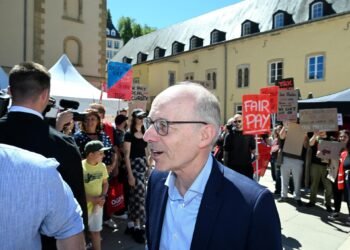
This opens the door for OGBL and LCGB to discuss structural problems such as the minimum wage at the Tripartite. After half of the legislative period it is clear: Structural crises (lodgement, pensions…) have so far been more likely to be papered over or postponed than solved. The OGBL and LCGB should be pleased that structural problems appear to be part of the bargaining chips in Senningen in June. This doesn’t make the task any easier for chief negotiator Luc Frieden. The wish for simple dossiers, which Luc Frieden was looking forward to at the beginning of the year, has not been fulfilled. But this is not only due to the war in Iran.
So far, the CSV/DP government has lagged behind when it comes to key election promises. The background is the economic upswing that did not materialize but was promised in the election campaign and the resulting additional tax revenue to finance the election promises. Administrative simplification and the poverty plan are just drops in the ocean. The question of a debt ceiling has subsequently been transformed from a question of principle into a scope for interpretation. Only Triple A counts.
In the coming weeks, the Prime Minister will have to examine the key issues on which he believes an agreement is possible. Ultimately, only these will find their way onto the agenda in Senningen. The Prime Minister called for a “constructive approach” when making the announcement on Wednesday. However, a success of the Tripartite with a structural package of measures is likely to be incredibly expensive. “We have to see how the budget situation develops in the medium term,” said Finance Minister Gilles Roth on Radio 100.7, avoiding the question of how this should be paid for. He knows that from a political perspective, the Luc Frieden government can hardly afford to fail.