The Greens and the FPÖ have jointly appealed to the Constitutional Court to overturn the regulation decided by the government. Negotiations will take place on June 22nd.

Constitutional Court Clemens Fabry, press
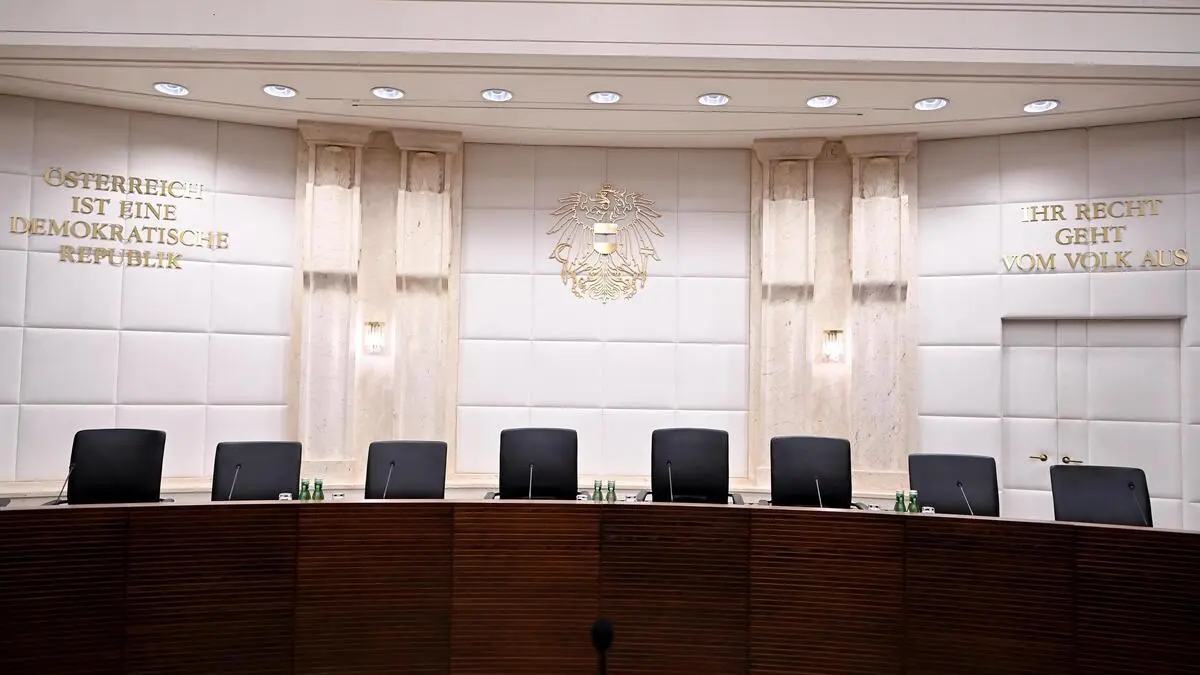
The Constitutional Court (VfGH) is publicly hearing the complaint from the FPÖ and the Greens against messenger surveillance. The two opposition parties had turned to the highest court with a third complaint in order to overturn the regulation decided by the government. In the summons, the VfGH has already asked relevant questions that an IT expert should answer. Negotiations will take place on June 22nd.
The fear expressed by the Freedom Party and the Greens is that a “technically powerful instrument” like messenger surveillance “carries enormous potential for abuse.” Such encroachments on fundamental rights are not proportionate. After years of discussion, messenger monitoring was made possible by the National Council at the beginning of July last year. There was also resistance within the coalition. NEOS MPs also voted against the proposal.
Messenger monitoring can be used in cases that indicate terrorist and unconstitutional activities. It can also be used for espionage. In principle, the authority to monitor messengers can only be ordered for a period of three months, although an extension is possible. Some levels of approval are built in before application.
The legal protection officer and the Federal Administrative Court also play central roles. The FPÖ and the Greens see the regulation as clearly unconstitutional. Your third complaint has been signed by 62 MPs. In addition to the proportionality due to encroachments on fundamental rights, the political groups also raise other points of criticism. The application fears that the software required for surveillance “per se” cannot be legitimized by the state.
The VfGH wants computer science professor Edgar Weippl from the as an expert at the public hearing University of Vienna use as a person to provide information. For example, the highest judges want to know how monitoring basically works from a technical point of view. Also of interest is who installs the purchased software, to whom the monitoring program sends the results, and how the evidence is handled. (APA)