Senior Multimedia Reporter
Poultry operators in South Trinidad say they are receiving up to 50 per cent fewer birds, forcing some businesses to reduce staff and, at times, close their doors as chicken prices continue to rise due to the shortfall.
The shortage has also resulted in smaller birds reaching the market, while the retail price of chicken in parts of South Trinidad has increased from about $5.99 to as much as $9 per pound.
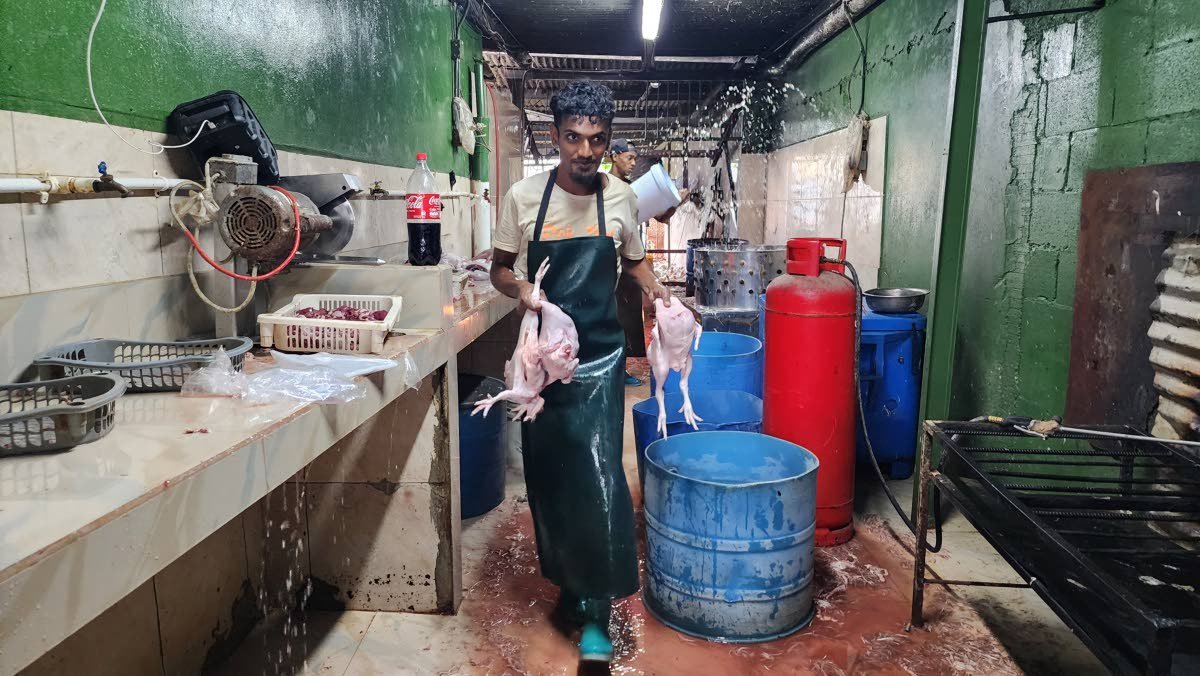
RN Poultry owner David Jitta yesterday told Guardian Media that he was unaware of the reason for the reduced supply but said the situation had affected his business.
“Sometimes we have to close because we’re not getting any supplies right now,” Jitta said.
He said the business would normally employ four workers, but because there was less poultry to process, only two workers were currently being employed.
Jitta said the supply problems had been ongoing for several months.
At the Lalbeharry Chicken Depot, a source said the business previously sold about 7,000 chickens per week but was now receiving between 3,000 and 4,000 birds.
The reduced supply has also affected consumers, with some customers turning to other types of meat because of the limited availability and increased price of chicken.
St Mary’s Hatchery owner Vijay Bhagwat said his supply of chicks from the United States had declined significantly, adding that the wider poultry sector was being affected by international disruptions, including an avian influenza outbreak which has decimated breeding flocks in several countries.
He explained that this has impacted the local fertilised hatching egg market and reduced the number of chicks available for export and import.
Bhagwat said hatcheries were also facing inconsistent results, with hatch rates in some cases falling below the expected average of around 65 per cent. He noted that some local hatcheries were experiencing additional incubation problems linked to equipment malfunction, further tightening supply to the domestic market.
He added that in many cases, contract farms were being prioritised over the general supermarkets, where limited supply dynamics were pushing prices upward.
Bhagwat also pointed to broader production challenges, including heat stress affecting bird mortality and reduced laying performance, as well as possible feed quality issues. He said samples had been sent abroad for analysis, but new export restrictions had complicated testing procedures.
He further noted that import constraints from the United States had limited the ability to supplement local shortages, with suppliers indicating reduced availability even at short notice.
Customers yesterday confirmed they were having trouble sourcing a supply.Nancy Chaitoo said at a poultry depot in Penal, customers could get no more than two chickens.
Customer Franklyn Ramsaroop said the heat waves were causing the shortage.
“Not all the farms have proper insulation, so they cannot produce as they want,” he said, adding he was grateful some suppliers were still able to produce in limited quantities.
In Debe, however, customer Shivani Ghisayawan said the chicken shortages should not really affect customers that much because there are alternatives.
“We have a wide range of vegetables to eat, and we can buy fish or any other kind of meat if we cannot get chicken,” she said.
Over the past month, record heat levels have affected poultry farmers, who have been forced to reduce their numbers inside their pens. Avian influenza has also affected over 30 farmers in the US, having been spread by migratory birds.