Friday, November 13, 2026
    The GeoStrategic Consensus
    No Result
    View All Result
    • Login
    • HOME
    • AMERICAS
      • Argentina
      • Brazil
      • Canada
      • Chile
      • Colombia
      • Costa Rica
      • Cuba
      • Dominican Republic
      • Ecuador
      • El Salvador
      • Greenland
      • Guatemala
      • Honduras
      • Mexico
      • Nicaragua
      • Panama
      • Paraguay
      • Peru
      • United States
      • Uruguay
      • Venezuela
    • ASIA-PACIFIC
      • Australia
      • Brunei Darussalam
      • Cambodia
      • China
      • Federated States of Micronesia
      • Fiji
      • Indonesia
      • Japan
      • Kiribati
      • Laos
      • Malaysia
      • Marshall Islands
      • Mongolia
      • Myanmar
      • Nauru
      • New Zealand
      • North Korea
      • Palau
      • Papua New Guinea
      • Philippines
      • Samoa
      • Singapore
      • Solomon Islands
      • South Korea
      • Taiwan
      • Thailand
      • Timor-Leste
      • Tonga
      • Tuvalu
      • Vanuatu
      • Vietnam
    • CARICOM
      • CARICOM – Non-English
        • Haiti
        • Suriname
      • CARICOM Associates
        • Anguilla
        • Bermuda
        • British-Virgin-Islands
        • Cayman-Islands
        • Curacao
        • Turks-and-Caicos
      • CARICOM English
        • Antigua and Barbuda
        • Barbados
        • Belize
        • Dominica
        • Grenada
        • Guyana
        • Jamaica
        • Montserrat
        • Saint Kitts and Nevis
        • Saint Lucia
        • Saint Vincent and the Grenadines
        • The Bahamas
        • Trinidad and Tobago
    • EURASIA
      • Armenia
      • Azerbaijan
      • Balarus
      • Georgia
      • Kazakhstan
      • Kyrgyzstan
      • Moldova
      • Russia
      • Tajikistan
      • Turkmenistan
      • Ukraine
      • Uzbekistan
    • EUROPE
      • Albania
      • Andorra
      • Austria
      • Bosnia and Herzegovina
      • Bulgaria
      • Croatia
      • Cyprus
      • Czech Republic
      • Denmark
      • Estonia
      • Finland
      • France
      • Germany
      • Greece
      • Holy See
      • Hungary
      • Iceland
      • Ireland
      • Italy
      • Kosovo
      • Latvia
      • Liechtenstein
      • Lithuania
      • Luxembourg
      • Malta
      • Monaco
      • Montenegro
      • Netherlands
      • North Macedonia
      • Norway
      • Poland
      • Portugal
      • Romania
      • San Marino
      • Serbia
      • Slovakia
      • Slovenia
      • Spain
      • Sweden
      • Switzerland
      • United Kingdom
    • MIDDLE EAST AND NORTH AFRICA
      • Algeria
      • Bahrain
      • Egypt
      • Iran
      • Iraq
      • Israel
      • Jordan
      • Kuwait
      • Lebanon
      • Lybia
      • Morocco
      • Oman
      • Palestinian Territories
      • Qatar
      • Saudi Arabia
      • Syria
      • Tunisia
      • Turkey
      • United Arab Emirates
      • Western Sahara
      • Yemen
    • SOUTH ASIA
      • Afghanistan
      • Bangladesh
      • Bhutan
      • India
      • Maldives
      • Nepal
      • Pakistan
      • Sri Lanka
    • SUB-SAHARAN AFRICA
      • Angola
      • Benin
      • Botswana
      • Burkina Faso
      • Burundi
      • Cabo Verde
      • Cameroon
      • Central African Republic
      • Chad
      • Comoros
      • Cote d’Ivoire
      • Democratic Republic of the Congo
      • Djibouti
      • Equatorial Guinea
      • Eritrea
      • Eswatini
      • Ethiopia
      • Gabon
      • Gambia
      • Ghana
      • Guinea
      • Guinea Bissau
      • Kenya
      • Lesotho
      • Liberia
      • Madagascar
      • Malawi
      • Mali
      • Mauritania
      • Mauritius
      • Mozambique
      • Namibia
      • Niger
      • Nigeria
      • Republic of the Congo
      • Rwanda
      • Sao Tome and Principe
      • Senegal
      • Seychelles
      • Sierra Leone
      • Somalia
      • South Africa
      • South Sudan
      • Sudan
      • Tanzania
      • Togo
      • Uganda
      • Zambia
      • Zimbabwe
    No Result
    View All Result
    Agentially
    No Result
    View All Result
    Home AMERICAS United States

    Study Hard, Get a Career and Get Ahead? It’s Not What It Used to Be.

    The Analyst by The Analyst
    November 13, 2026
    in United States
    Study Hard, Get a Career and Get Ahead? It’s Not What It Used to Be.


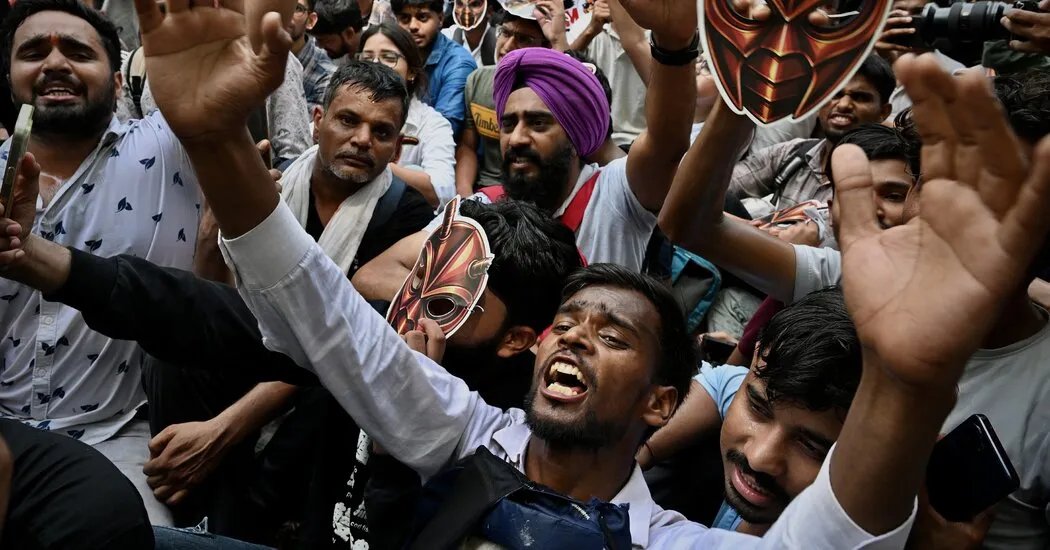
    Protest movements have long relied on students as some of the most ardent foot soldiers. Young people have been on the front lines of protests against war, climate change and racial inequality. But in huge protests that have shaken India and France this fall, students have revolted against the failed promises of education itself.

    In India, students took to the streets after the government abruptly canceled the results of a medical-school admissions exam because test questions had been leaked online. Aspiring doctors had to take the test again, after many spent years studying for up to 12 hours a day in hopes of winning one of the coveted spots — and the chance of upward mobility. Young people across the country saw the scandal as emblematic of a broken education system and were furious.

    In France, students in poor suburbs outside Paris began protesting the decrepit physical condition of their schools, an opaque university admissions system and absent teachers. French education had long promised to serve as a “social elevator” enabling young people to advance in society, but had fallen into disrepair. Soon, demonstrations spread across the country and, in some cities, spiraled into rioting.

    In both countries, the anger of the students shows no signs of abating. And while in many ways France and India could hardly be more different, their unrest was sparked by a similar source of outrage: the breakdown of a foundational social contract that one could call the meritocratic bargain.

    It is a promise that lies at the core of many countries’ political compacts. Though specifics can vary, the central proposition usually goes something like this: A fair society rewards merit. Educational achievements are a good measure of merit because education is open to all and leads to valuable skills. Therefore, education should be a route to social and economic advancement.

    The value of this system is not just that it selects for those with high ability, but also that it offers a justification for the resulting socioeconomic hierarchy — including who ends up at the bottom. “All selection mechanisms generate losers,” said Nicholas Kuipers, a professor at Princeton University who studies the politics of meritocracy. “The question is, Who do you want to be a loser, and who do you want to be a winner?”

    In many places around the world, that system has proved to be remarkably effective, in large part because education has translated relatively straightforwardly into economic mobility.

    But increasingly, many who work hard at higher education, often going into debt and sacrificing years of earnings potential to do so, are finding that the rewards are not there at the end. Instead of expected winnings, many young people are greeted with a life of economic struggle.

    This discontent is affecting politics elsewhere as well. In the United States, data from The New York Times showed that 70 percent of voters under 30 in the recent midterm elections cast their ballots for Democrats, who tapped educated young people’s widespread frustration over being saddled with debt and stuck in low-paid, dead-end jobs.

    In Serbia, student protests grew into a political movement that ousted Aleksandar Vucic, the country’s longtime nationalist strongman, in an election last month. And young people across Europe are set to walk out on Nov. 20 in a general strike that could disrupt schools and businesses throughout the continent.

    An even bigger threat looms on the horizon, one that could upend the bargain everywhere: A.I. promises to dramatically restructure, or perhaps sever completely, the relationship between education and well-paid work.

    That has the potential to further challenge not only the distribution of economic rewards, but the political bargain on which modern societies have been built.

    Historically, such moments have been explosive — even revolutionary.

    Meritocracy’s Promises and Pitfalls

    The version of the meritocratic bargain we see today, with university education as a primary filter for middle-class careers, is a relatively recent construct, and not to be taken for granted.

    Britain didn’t introduce universal, free secondary education until 1944. In the United States, college was largely the province of the privileged few until the G.I. Bill opened access to veterans after World War II. Around the same time, the SAT created the first nationally standardized benchmark for admissions.

    In countries whose economies developed later, the bargain took even longer to take shape. In India, the national college entrance exam was not introduced until the 1960s. In China, there is a long history of using meritocratic exams to select civil servants and other elites, but that system was disrupted by 20th-century reforms and the Cultural Revolution. The modern system was ushered in by Deng Xiaoping. In 1977 he re-established the national “gaokao” exam system as part of a post-Cultural Revolution rebuilding process. In the late 1990s, further reforms radically expanded university access.

    For individuals, this access to education promised more money, more status or both. But for governments, it also offered political stability — a way to convince people to buy into society as currently structured, by promising the potential for advancement to the underprivileged without ousting those who had wealth and power already.

    Research has shown that the prospect of upward mobility — sometimes abbreviated as POUM — can make the poor less likely to demand redistribution. In China, merit-based selection for civil service jobs made people more willing to tolerate inequality, Hanzhang Liu, a political scientist at Florida State University, has found.

    When people believed the system was meritocratic, they were more likely to attribute their failures to their own poor abilities, or to the high quality of the competition, she said. But when they did not believe so, those who lost out on jobs were more likely to consider the system rigged.

    Still, education-based meritocracy puts significant burdens on the young people working to advance, and on their families. In India, students often go into debt and spend years of grueling study to try to win spots at the most prestigious engineering and medical programs.

    In South Korea, national tests have generated an entire industry of cram schools known as hagwons, where students toil for hours each day on top of their regular schoolwork. In the United States, networks of charter schools like KIPP popularized the idea that for poor, ambitious kids, “college starts in kindergarten.” And when actual college starts, American students can easily take on six-figure debts for their degrees.

    The Danger of Shattered Expectations

    Just as the meritocratic bargain can be a source of social cohesion, a breakdown can become a trigger for social explosion.

    In 1905, China abolished the national civil service exam that had for 1,300 years been a major way to recruit elites, including government bureaucrats. That move came as a shock to the people who had invested in years of education, hoping to earn a privileged position in society.

    Those shattered expectations contributed to the revolutionary uprisings that eventually overthrew the imperial dynasty in 1911, according to the economists Ying Bai, at the University of Hong Kong, and Ruixue Jia, at the University of California, San Diego.

    In an influential 2016 paper, they found that frustrated commoners who had hoped to become elites via the exam were especially likely to join the revolution. Disillusioned scholars flocked to revolutionary organizations in search of alternative routes to advancement, and became a major force behind the revolt.

    That is not to say that France’s unrest signals the imminent return of the guillotine. But the recent protests there, and in other European countries like Italy and Spain, were fueled, in part, by the sense that the old order was enriching itself at the expense of providing opportunities for young people.

    Much the same can be said of the student protest movement that led to the election defeat of Mr. Vucic in Serbia, where angry young people felt that meritocratic opportunity had been crowded out by corruption.

    Protests can be a blunt instrument. But data show that the demonstrators have a point. In Europe, high unemployment rates for young people, paired with skyrocketing costs of living, have put the traditional milestones of independent adulthood out of reach for many.

    Even in countries with healthier economies, there are signs that the breakdown of the meritocratic bargain is already having political consequences. In India, economic growth has been stronger, but it has not created enough jobs to keep up with the expansion of higher education.

    In the United States, the emphasis on higher education as a sorting mechanism has led to people pouring tens of thousands of dollars into degrees that no longer necessarily confer economic advancement but still charge as if they do. Discontent has fueled the rise of political movements like the Democratic Socialists of America and efforts to unionize the work forces of companies like Starbucks and Amazon, Noam Scheiber, a Times labor reporter, writes in his new book, “Mutiny: The Rise and Revolt of the College-Educated Working Class.”

    But the biggest blow to the meritocratic bargain may be yet to come, as many fear that A.I. could do for knowledge work what a meteor strike once did for the dinosaurs.

    A.I.’s arrival has already wiped out some entry-level technical jobs. In the United States, young coders are finding themselves working at Chipotle rather than starting the highly paid tech careers they had expected.

    Even if A.I. does not eliminate professionals like lawyers, scientists and doctors, it may radically reshape those fields — and perhaps slash the salaries that come with them.

    Some professions may adapt by making greater use of A.I. tools, even as other careers see their pay and numbers collapse. With time, new educational structures may also develop to match skills and meritocratic selection to the demands of a new economy.

    READ ALSO

    The savings account mistake that’s costing you hundreds each year

    Van Hollen will challenge Schumer to lead Senate Democrats

    But such profound economic change is by its very nature disruptive. In the meantime, it is likely to sow even more confusion about how young people can set themselves up for success, or prevent themselves from sliding down the economic ladder.




    Source link

    Related Posts

    United States

    The savings account mistake that’s costing you hundreds each year

    November 13, 2026
    United States

    Van Hollen will challenge Schumer to lead Senate Democrats

    November 13, 2026
    Opinion | The Fallout From the Fall of Jensen Huang
    United States

    Opinion | The Fallout From the Fall of Jensen Huang

    November 12, 2026
    Opinion | An EV Mandate for Disneyland
    United States

    Opinion | An EV Mandate for Disneyland

    November 12, 2026
    Opinion | Jensen Huang Is a White House Scandal
    United States

    Opinion | Jensen Huang Is a White House Scandal

    November 12, 2026
    Nvidia Starts Search for Next CEO
    United States

    Nvidia Starts Search for Next CEO

    November 12, 2026
    Next Post
    Notable conditional on the partnership agreement

    Notable conditional on the partnership agreement

    POPULAR NEWS

    2026 Regional and International Conventions of Jehovah’s Witnesses

    2026 Regional and International Conventions of Jehovah’s Witnesses

    July 7, 2026

    All posts

    July 23, 2026
    OPINION: How Argentina used war, disease, enslavement, racial ideology, immigration policies, census practices, to erase blacks

    OPINION: How Argentina used war, disease, enslavement, racial ideology, immigration policies, census practices, to erase blacks

    July 15, 2026
    This is how Nicolás Maduro and Cilia Flores reappeared in their hearing

    This is how Nicolás Maduro and Cilia Flores reappeared in their hearing

    July 24, 2026
    Thaksin, Yingluck and Paetongtarn meet Indonesian President Prabowo for investment talks

    Thaksin, Yingluck and Paetongtarn meet Indonesian President Prabowo for investment talks

    July 13, 2026

    EDITOR'S PICK

    Shell to buy 30% stake in proposed Bay du Nord oil project off Newfoundland

    Shell to buy 30% stake in proposed Bay du Nord oil project off Newfoundland

    October 9, 2026
    Carney and Trump Talk Again as Deadline Nears on New U.S. Tariffs

    Carney and Trump Talk Again as Deadline Nears on New U.S. Tariffs

    August 18, 2026
    ANNOUNCEMENT: Dominica Bureau of Standards solicits public comments on draft standards

    ANNOUNCEMENT: Dominica Bureau of Standards solicits public comments on draft standards

    July 19, 2026
    Police detained rapper Navai on Kordai after a concert in Bishkek. He is suspected of drug smuggling

    Police detained rapper Navai on Kordai after a concert in Bishkek. He is suspected of drug smuggling

    October 16, 2026

    Recent Posts

    • Algerian-Chinese cooperation to develop the infrastructure of energy and mining ports in Annaba and Skikda
    • Iran: Tanker carrying LNG hit mine, suffered explosion in Hormuz
    • 6 people died due to a traffic accident on Jawzjan-Sirpal highway
    • The Hindu on Books Newsletter Dissent, perspective, and history

      © 2026 Agentially - Navigating shifting sovereignties and global risk .

      Welcome Back!

      Login to your account below

      Forgotten Password?

      Retrieve your password

      Please enter your username or email address to reset your password.

      Log In
      No Result
      View All Result
      • HOME
      • AMERICAS
        • Argentina
        • Brazil
        • Canada
        • Chile
        • Colombia
        • Costa Rica
        • Cuba
        • Dominican Republic
        • Ecuador
        • El Salvador
        • Greenland
        • Guatemala
        • Honduras
        • Mexico
        • Nicaragua
        • Panama
        • Paraguay
        • Peru
        • United States
        • Uruguay
        • Venezuela
      • ASIA-PACIFIC
        • Australia
        • Brunei Darussalam
        • Cambodia
        • China
        • Federated States of Micronesia
        • Fiji
        • Indonesia
        • Japan
        • Kiribati
        • Laos
        • Malaysia
        • Marshall Islands
        • Mongolia
        • Myanmar
        • Nauru
        • New Zealand
        • North Korea
        • Palau
        • Papua New Guinea
        • Philippines
        • Samoa
        • Singapore
        • Solomon Islands
        • South Korea
        • Taiwan
        • Thailand
        • Timor-Leste
        • Tonga
        • Tuvalu
        • Vanuatu
        • Vietnam
      • CARICOM
        • CARICOM – Non-English
          • Haiti
          • Suriname
        • CARICOM Associates
          • Anguilla
          • Bermuda
          • British-Virgin-Islands
          • Cayman-Islands
          • Curacao
          • Turks-and-Caicos
        • CARICOM English
          • Antigua and Barbuda
          • Barbados
          • Belize
          • Dominica
          • Grenada
          • Guyana
          • Jamaica
          • Montserrat
          • Saint Kitts and Nevis
          • Saint Lucia
          • Saint Vincent and the Grenadines
          • The Bahamas
          • Trinidad and Tobago
      • EURASIA
        • Armenia
        • Azerbaijan
        • Balarus
        • Georgia
        • Kazakhstan
        • Kyrgyzstan
        • Moldova
        • Russia
        • Tajikistan
        • Turkmenistan
        • Ukraine
        • Uzbekistan
      • EUROPE
        • Albania
        • Andorra
        • Austria
        • Bosnia and Herzegovina
        • Bulgaria
        • Croatia
        • Cyprus
        • Czech Republic
        • Denmark
        • Estonia
        • Finland
        • France
        • Germany
        • Greece
        • Holy See
        • Hungary
        • Iceland
        • Ireland
        • Italy
        • Kosovo
        • Latvia
        • Liechtenstein
        • Lithuania
        • Luxembourg
        • Malta
        • Monaco
        • Montenegro
        • Netherlands
        • North Macedonia
        • Norway
        • Poland
        • Portugal
        • Romania
        • San Marino
        • Serbia
        • Slovakia
        • Slovenia
        • Spain
        • Sweden
        • Switzerland
        • United Kingdom
      • MIDDLE EAST AND NORTH AFRICA
        • Algeria
        • Bahrain
        • Egypt
        • Iran
        • Iraq
        • Israel
        • Jordan
        • Kuwait
        • Lebanon
        • Lybia
        • Morocco
        • Oman
        • Palestinian Territories
        • Qatar
        • Saudi Arabia
        • Syria
        • Tunisia
        • Turkey
        • United Arab Emirates
        • Western Sahara
        • Yemen
      • SOUTH ASIA
        • Afghanistan
        • Bangladesh
        • Bhutan
        • India
        • Maldives
        • Nepal
        • Pakistan
        • Sri Lanka
      • SUB-SAHARAN AFRICA
        • Angola
        • Benin
        • Botswana
        • Burkina Faso
        • Burundi
        • Cabo Verde
        • Cameroon
        • Central African Republic
        • Chad
        • Comoros
        • Cote d’Ivoire
        • Democratic Republic of the Congo
        • Djibouti
        • Equatorial Guinea
        • Eritrea
        • Eswatini
        • Ethiopia
        • Gabon
        • Gambia
        • Ghana
        • Guinea
        • Guinea Bissau
        • Kenya
        • Lesotho
        • Liberia
        • Madagascar
        • Malawi
        • Mali
        • Mauritania
        • Mauritius
        • Mozambique
        • Namibia
        • Niger
        • Nigeria
        • Republic of the Congo
        • Rwanda
        • Sao Tome and Principe
        • Senegal
        • Seychelles
        • Sierra Leone
        • Somalia
        • South Africa
        • South Sudan
        • Sudan
        • Tanzania
        • Togo
        • Uganda
        • Zambia
        • Zimbabwe

      © 2026 Agentially - Navigating shifting sovereignties and global risk .

      This website uses cookies. By continuing to use this website you are giving consent to cookies being used. Visit our Privacy and Cookie Policy.