Important amendments to the “Bylaws” and this is all that parents should know:
Enforce uniform application and strict controls to protect the dignity and privacy of consumers
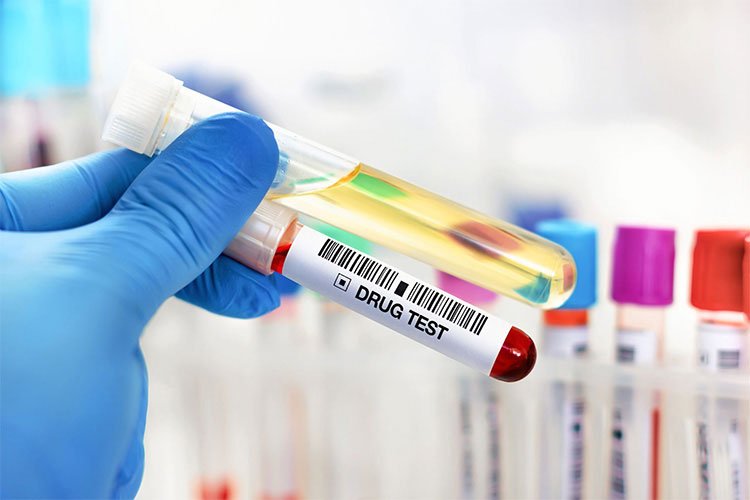
The Ministry of National Education ordered its state directorates to adhere to the unified application of the amended internal system of educational institutions, while implementing its provisions in full, until stability is achieved for the Algerian school. In this regard, it was decided to impose strict controls and oblige principals to follow them when making a decision to conduct tests to detect drugs or psychotropic substances among students, while maintaining complete confidentiality of the process, to protect the dignity and privacy of those concerned and to avoid social stigma within the school environment.
In an instruction issued by him on September 7, No. 460, the Director General of Education asked his executive directors of the importance of adopting and implementing the unified internal system for educational institutions, which carries with it new provisions and amended clauses, in line with developments in the educational arena. This is because it is the only regulatory reference that frames school life, as well as in order to embody the Ministry’s policy aimed at unifying the methods of managing educational institutions, establishing the rules and regulations that must be adhered to, and guaranteeing the rights and duties of the various members of the group. Educational.
The system will go into effect starting September 21st
In this regard, the Director General announced the entry into force of the unified internal system starting from school entry 2026/2027, while calling for all directors of educational institutions to be informed of the content of this circular, while ensuring that it is approved and that no local systems, instructions or regulatory arrangements are approved that conflict with its provisions or with the applicable legislative and regulatory texts.
In addition, the Director General of Education has assigned inspection and follow-up bodies to verify the extent of actual compliance with the provisions of the unified internal system, and to include this within the institutional inspection and evaluation processes, in addition to ensuring that the difficulties and problems that institutions may encounter in implementing its provisions are addressed, and to take appropriate measures regarding them, while raising issues that require clarification or intervention from the competent central departments.
At the institutional level, the first official in charge of the General Directorate of Education ordered the study of the provisions of the bylaws and understanding of its contents, within the Council of Teachers in the primary school, the Council of Education and Management in the middle school, and the Council of Management and Guidance in the secondary school, especially those related to the rights and duties of students, employees, and parents, as well as the rules and regulations governing school life.
In detail, the bylaws precisely specified in Chapter Five, “Prevention, health, hygiene and security, the controls that must be respected before conducting drug detection tests, with the requirement to rely on three important indicators, which are either including the tests within the programmed periodic examinations, noticing an imbalance in behavior, or determining the presence of “reasonable suspicion,” so that their rights are not violated and their freedoms are not infringed, and thus, their privacy is preserved.
These behaviors are prohibited within schools
From this standpoint, Article 35 stipulates that all immoral behavior is prohibited in the educational institution, especially the possession, introduction or use of bladed weapons, glass bottles and pipes, firecrackers, fireworks, or any tools or materials that pose a threat to the safety of members of the educational group and the security of the educational institution.
Likewise, possession, consumption, or promotion of all types of tobacco, electronic cigarettes, drugs, psychotropic substances, and energy drinks in school settings, as well as promotion or engagement in dangerous digital challenges.
Excluding primary school students from drug tests
Regarding the categories concerned with drug detection, Article 36 stipulates that students in educational institutions, with the exception of primary school students, are subject, unless their best interests require it, to tests to detect drug and/or psychotropic substance abuse.
Regarding the conditions of the process, Article 37 authorized the director of the educational institution to request the conduct of tests to detect drug and/or psychotropic substance abuse by the doctors of the detection and follow-up units, in accordance with Executive Decree No. 26-77 of January 14, 2026, which specifies the conditions and methods for detecting drug and/or psychotropic substance abuse in educational and training institutions, which must be conducted in three cases, namely including the tests within the periodic examinations programmed in coordination with the detection units. and follow-up; As well as the appearance of a behavioral disorder or aggressive behavior in the student towards his colleagues and/or professors and/or the administrative staff, or the presence of “reasonable suspicion” that he is abusing drugs or psychotropic substances according to the observations of the professors and/or administrative staff as well as the doctors of the detection and follow-up units during periodic health examinations.
Requiring the written consent of the guardian before the tests
Regarding the controls of the process, Article 38 stipulates that the method of conducting tests to detect the use of drugs and/or psychotropic substances is subject to a set of procedures, and accordingly, with regard to a minor student, the director of the educational institution is the one who is responsible for summoning the guardian or legal guardian, and presenting the case to him for consultation on the appropriate measures that must be taken, with the requirement of obtaining his clear written consent to subject the student to the tests. If he refuses, the director of the institution shall request, directly or through the Directorate of Education, the approval of the regionally competent juvenile judge and notify the legal representative thereof.
As for the student who has reached the age of civil majority, the director of the educational institution directly requests his personal consent to conduct the analyzes in the presence of his guardian or legal guardian. If he abstains from consent within the specified deadlines, he will be notified that this abstention will necessarily lead to his referral to the disciplinary council.
Informing parents of the results of the tests and the obligation to undergo treatment
In addition, Article 39 stipulates that “if the results of the tests show the presence of drug abuse and/or psychotropic substances, the guardian or legal guardian of the minor student shall be informed of this, and when necessary, the juvenile judge who agreed to subject the student to the analysis, and the student who has reached the age of civil majority shall also be informed of this.”
In order to immediately follow up and monitor the process, Article 40 calls for the necessity of informing the guardian or legal guardian of a minor student, or a student who has reached the age of civil majority, of the necessity of submitting to the remedial measures stipulated in Law No. 04-18 of December 25, 2004 relating to the prevention of narcotic drugs and psychotropic substances and the suppression of their illicit use and trade, as amended and supplemented.
Preventing the punishment, exclusion or marginalization of consumer students
In order to protect the rights of students, Article 41 strictly prohibits taking any punitive, disciplinary, exclusionary, or pedagogical marginalization measures by the institution’s administration against a student whose test results appear positive. While it was decided to subject everything related to analysis procedures and results to complete professional confidentiality. Provided that every person who discloses related information or harms the student’s private life will be subject to the penalties stipulated in the applicable legislation and regulation.
As for Article 33, it obliges the educational group to appear in a clean and decent appearance, which does not violate public morals, and makes it possible to identify students, while preventing students from appearing with strange hairstyles, using cosmetics, or wearing hats and torn clothes that are contrary to public morals.
Zero marks for cheaters on assignments and tests
Regarding the third chapter, which includes “organizing school life,” Article 20 detailed the issue of a student’s absence from an assignment or a semester test with an acceptable justification. Accordingly, the professor is required in this case to commit, in coordination with the institution’s administration, to repeat the assignment or test within appropriate deadlines. If the justification is not provided, a zero mark will be given to him.
While Article 21 stipulates that a zero mark be awarded directly to the student in the event of proven cheating or an attempt to cheat or falsify in any assessment or test, with his immediate referral to the disciplinary council in the intermediate and secondary general and technological education stages, to apply the penalties stipulated in the applicable regulation.
In this context, education experts have called for the necessity of listening to the student who received a grade of zero or completing disciplinary procedures, so that this punitive measure does not contradict the principle of the presumption of innocence and the legally guaranteed right to defense.
Guardians to compensate for losses and damage to the institution’s property
As for the fourth chapter, which is concerned with organizing the school canteen, the regular and semi-regular students, and school transportation, Article 25 calls on students to eat their meals quietly and avoid making noise or wasting food, and it is forbidden to bring in or take out food from the canteen.
On the other hand, the same article stipulates that the guardian or legal guardian must bear the financial cost of any deliberate destruction of eating utensils and utensils, with compensation for all other educational equipment and means that their children cause to be destroyed.
While Article 32 prohibits students and all members of the educational group from bringing or bringing valuables, money, etc., the educational institution does not bear any responsibility if they are lost or stolen.
Prior licenses for students to use communication devices
As for Chapter Six, which includes “Codifying the Use of Institutional and Personal Media and Communication,” Article 42 authorized the use of automated media devices and electronic boards belonging to the educational institution exclusively for educational and pedagogical purposes, and under the direct supervision of the responsible professor, with the necessity of maintaining the safety of the approved equipment and software.
On the other hand, Article 43 strictly prohibited students from bringing or using personal mobile phones, smart communication devices, or photographic and recording means inside classrooms and pedagogical facilities.
In the event of extreme pedagogical necessity, the use of media and communication technologies is subject to a “prior written” license issued by the administration of the educational institution. Violating these provisions will result in the device being temporarily seized and a guardian summoned.
Prohibiting students from being photographed without official written permission
Article 44 also strictly prohibits any photography, audio or visual recording, or publishing pictures of students, teachers, employees, or educational institution facilities on social media networks or personal digital systems, without obtaining an official written license from the Director of Education.