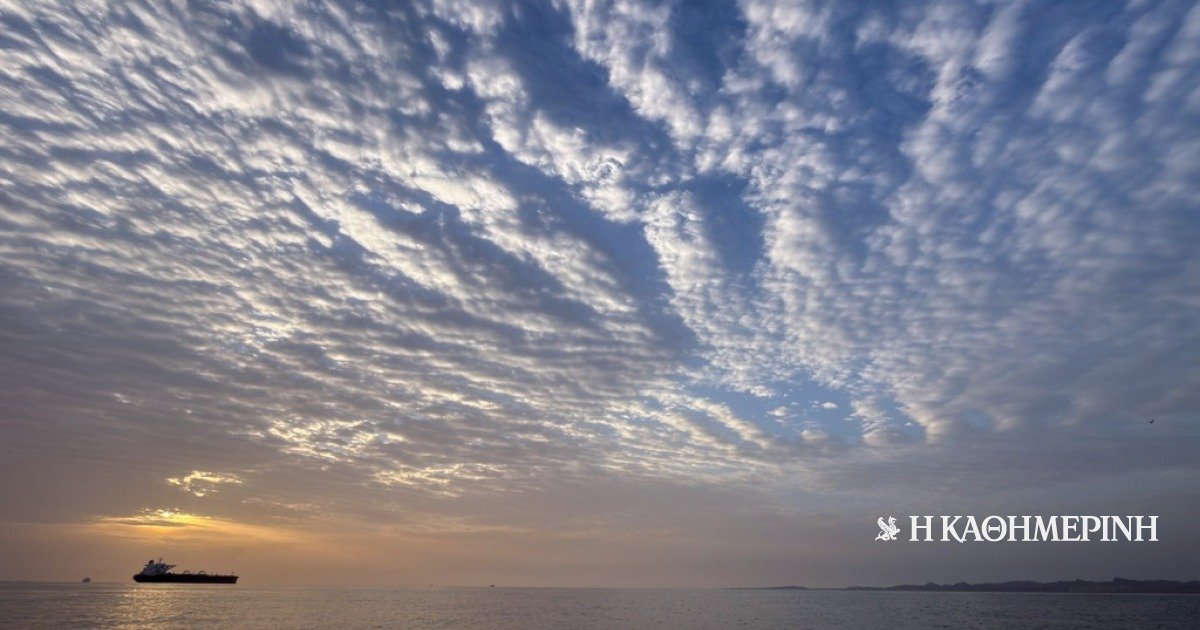
Iran considers its control over it Hormuz as a critical lever of pressure in the peace negotiations with the United States, to such an extent that it appears pwilling to compromise the ceasefire in order to maintain this advantage.

The four-day cycle of attacks launched by Iran against the United States in the Straits risked overturning the recent truce agreementin a war that it is clear both sides desperately want to end.
However, according to analysts, “for Iran it was a necessary move.”
As noted in a New York Times article, this new tactic of Iran to disrupt commercial navigation through the pivotal – for the global economy and energy – sea route, is a critical advantage that it cannot lose – either at the negotiating table or in the event of a new attack against it.
Last week, Oman and the UN’s International Maritime Organization defined a new route to Hormuz, which passes exclusively through Oman’s territorial waters. This development could threaten what has emerged as the cornerstone of Iran’s entire strategy, namely determining control of the Straits.

“For better or worse, they need that advantage,” said Ali Vaez, senior Iran analyst at the International Crisis Group.

It is not yet clear when or where Iran and the United States might meet again for talks. However, if this happens, as Vaez mentioned, Iranian officials see their control of the strait as the best means of extracting concessions from the US.
Fears and the “supership” of Hormuz
The Iranians are seeking the lifting of painful years-old sanctions if the two sides move forward with a nuclear deal. Such an agreement would in all probability entail the delivery or reduction of Iran’s uranium stockpile highly enriched – material that could be used to make a nuclear weapon.
Iran’s nuclear program – developed for energy purposes according to Tehran, and with the ultimate goal of building a nuclear weapon, according to the West – was seen as the key strategic means of deterrence until the current war began. Most, Iran has demonstrated that through limited attacks, but mainly a permanent threat in Hormuz, it can close the sea route and lead the global economy into a permanent hostage.
Therefore, fearing worst-case scenarios, Hormuz occupies a leading role in the new Iranian strategy.

In fact, some Iranian officials fear that the Trump administration may have signed a preliminary agreement with Iran with the sole purpose of buying time to alleviate financial pressures in the run-up to the US mid-term elections, before returning with new attacks.
In this scenario, therefore, Hormuz is absolutely necessary as a lever of pressure for Iran.
“This is really critical. It is the main means of pressure they have,” Vaez notes to the NYT. “It makes no sense for them to allow it to be undermined before they reach a final agreement.”
Tehran feared that this weakening of its power in the Straits was exactly the situation that Washington may have sought to provoke last week, according to regional analysts.
During his visit to various Gulf Arab states last week, Marco Rubio, the US secretary of state, repeatedly assured that free navigation would be restored in the strait.
Oman and the International Maritime Organization then proceeded to chart a new route that bypasses Iranian waters.
“The Iranians realized they were losing control,” said Farzan Sabet, an Iran analyst at the Geneva Graduate Institute in Switzerland. They probably began to realize that their influence only works “in time of war and during a hostile truce, with regular hostilities.”
This is the reason, according to experts, that Iran’s reaction to the new announced route was so immediate – with an attack, on Thursday, against a Singapore-flagged container ship.
Tehran has never claimed responsibility for that attack, nor for a second attack on a ship on Saturday, which prompted US retaliatory strikes.

Yesterday, Sunday, Iran’s Foreign Minister Abbas Araghtsi appeared to issue an indirect warning that further instability will follow if efforts to bypass Iranian control of the sea route continue.
“Any attempt to adopt new or separate arrangements from those currently sought by the Islamic Republic will only lead to further complications, delays in the reopening of the Straits and increased tensions,” he told a news conference during a visit to the Iraqi capital, Baghdad.
According to analysts, for Iran the route organized by Oman in cooperation with the UN maritime agency — and without consulting Tehran — violated that framework and should be challenged.
As Eli Geranmaye, analyst of the European Council on Foreign Relations on Iran, notes, this attitude of Tehran, not hesitating to clash even in the middle of a peace process, reflects the doctrine of the new leadership that appears willing both to make a deal with Washington and to clash with it.
The political elites surrounding the new Ayatollah, Mojtaba Khamenei, “have a different risk appetite,” he said. “The regime is ready to take bold escalations, such as the recent attacks in Hormuz, that could overturn the memorandum of understanding. However, it is also ready to pave the way for peace with the US through a new, direct, high-level negotiating channel.”