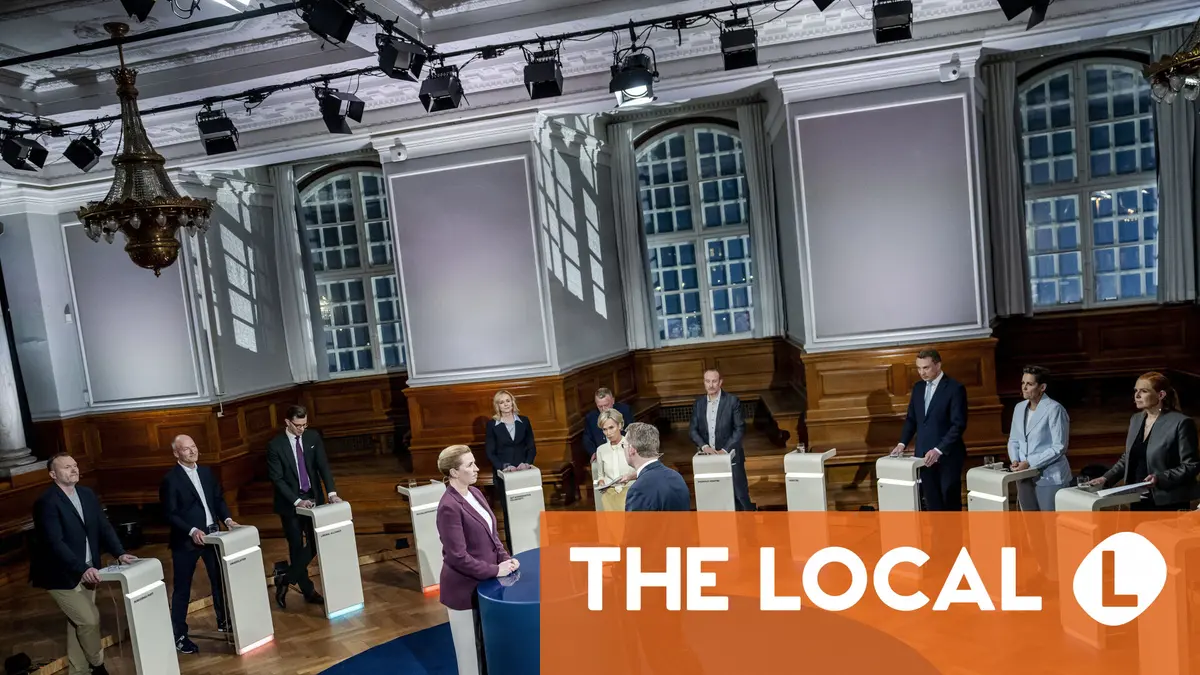
Mette Frederiksen, who has served as Denmark’s prime minister since 2019, resigned as prime minister after her coalition suffered a defeat in the general election. With negotiations still ongoing, who is currently running the country?
On March 25th, the day after Denmark’s inconclusive election, the so-called SVM coalition government made up of the Social Democrats, Liberals (Left in Danish, hence the V) and Moderates, stepped down. All three parties lost seats in the election and the Liberals said they no longer wanted to govern with the Social Democrats.
So, if the government and Mette Frederiksen officially resigned when Frederiksen met with the king on Wednesday… who is running the country?
Interim Prime Minister
The answer is in the Danish constitution, which states that the Danish government formally turns into a business ministry between the former government resigning and the new one taking over.
A business ministrysometimes referred to as an transitional governmentis essentially what we would call a caretaker government in English. This means that the government in place before the election stays on to keep things running smoothly, while any controversial decisions or packages of laws are paused until the new government can take over.
Things like government payouts to municipalities and regions need to be signed off by a minister, which obviously still has to happen no matter who is in government.
This also means that Denmark’s current prime minister is still Mette Frederiksen, and it will remain that way until negotiations are complete between Denmark’s 12 political parties. Frederiksen will be referred to as an interim prime minister during this period.
Advertising
Will Mette Frederiksen be prime minister again?
Probably, but it’s by no means certain.
She wants to form a government with the Green Left (SF) and the Social Liberals (Radikale Venstre), with the support of the entire left wing bloc and the non-aligned centrist Moderates.
This could prove difficult, as it involves the far-left party Red-Green Alliance agreeing with the Moderates to back Frederiksen as PM, which it said prior to the election it would not do.
Green Left leader Pelle Dragsted said after the election he will “try” to work with the Moderatesled by Lars Løkke Rasmussen.
Frederiksen has attempted to negotiate with the left-wing parties and the Moderates, as well as the right-wing Liberals and Conservatives, without success.
The most likely alternative currently appears to be a centre-left government, if the Moderates can be convinced to join.
Should talks on the left wing or the center fail, the right wing parties would probably face even more obstacles in getting all of the parties within the group to agree on a government.
To give you an idea of the tricky puzzle that must be put together, have a go at building your own Danish government, based on the seats won by each party in the election, with our handy election widget.
We’re unlikely to have an answer on which parties will lead the next government before the end of the month.