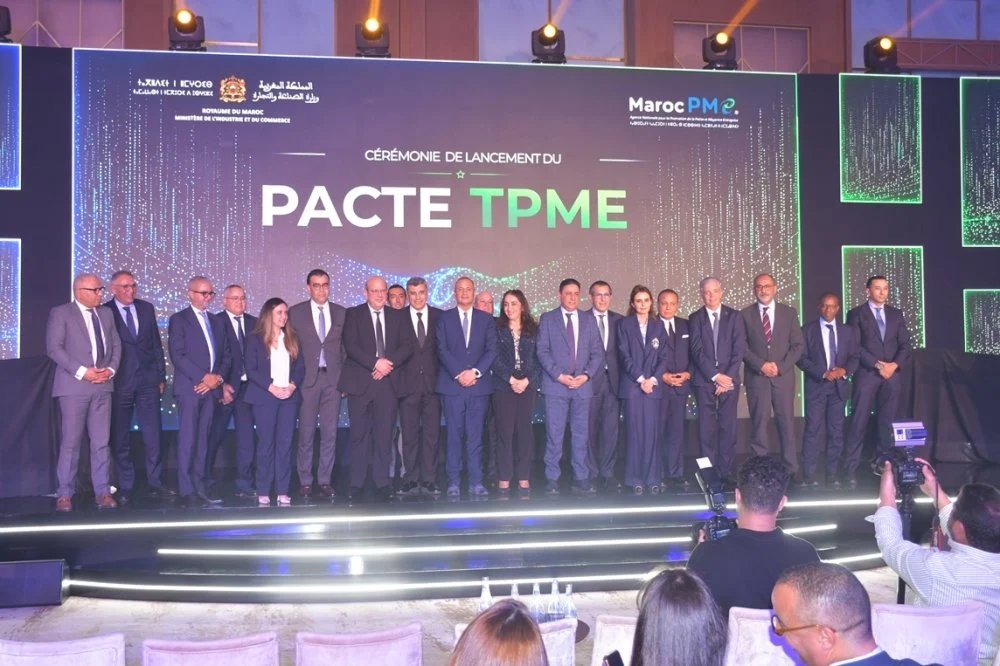
The tone was both ambitious and proactive last Wednesday in Rabat. Ministers, employers and public operators displayed a united front for the launch of the new SME Pacta device called to profoundly redesign the support of small and medium Moroccan businesses. Behind the announcements, a shared conviction: without solid SMEs, no sustainable growth.
An offensive political discourse centered on the ground
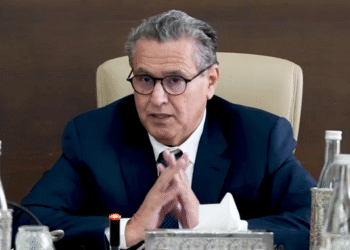
From this perspective, the political discourse was intended to be particularly offensive. From the opening, the Minister of Industry and Commerce, Ryad Mezzourset the framework: that of a program designed as a direct response to the needs on the ground. “We do not come with policies designed in air-conditioned offices, but with concrete responses to the expectations of businesses,” he insisted. The minister particularly highlighted a major innovation: the axis of resilience, unprecedented in Moroccan public policies. In an unstable international context, it is now a question of helping companies not only to emerge, but also to survive in the face of shocks. “We live in an uncertain, vulnerable world, and our SMEs are the first to be exposed. We needed a system to support them in these difficult times,” he explained.
Tourism, showcase of support policies
Central SMEs, but still fragile
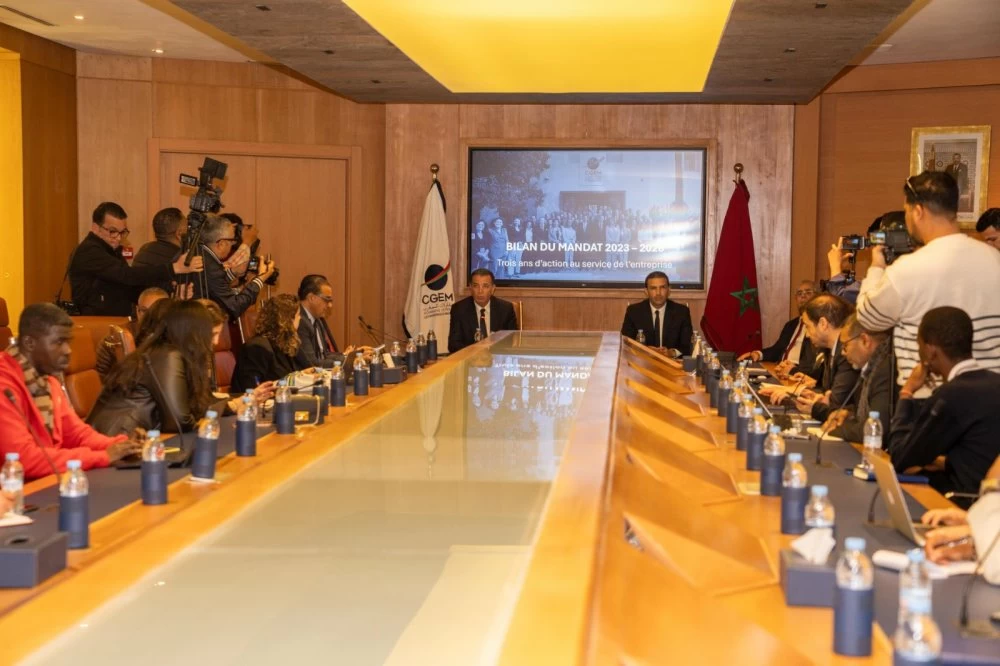
However, despite this progress, economic players point out that structural challenges persist. On the side of the General Confederation of Moroccan Enterprises (CGEM)its president, Chakib Aljrecalled an unavoidable reality: SMEs are omnipresent, but still underexploited. “SMEs represent more than 98% of businesses and nearly 80% of jobs created. However, they are still struggling to reach decisive milestones,” he stressed. On this occasion, he highlighted three major challenges: access to financing, the difficulty in changing scale and the low contribution to added value. For him, the key does not lie only in financing: “Growing an economy is not just about releasing funds. It’s about creating an environment of trust, simplifying pathways and ensuring continuity in action.”
A change of model driven by Maroc PME
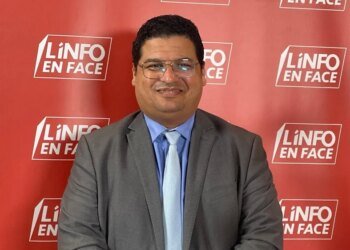
It is precisely to respond to these challenges that a change of model is proposed. The general director of Morocco SME, Anouar Alaoui Smaïlicame to detail this transformation. The SME Pact, he explains, is the result of long field work, with two tours in the 12 regions of the Kingdom to listen, then co-construct the solutions. “We are moving from a centralized logic to a territorialized, multi-sectoral and tailor-made approach,” he said. Concretely, Maroc PME will now deploy itself as close as possible to businesses, with a reinforced presence in all regions and personalized support. The system is based on four main axes: growth, competitiveness, resilience and structuring.
Operational tools to change scale
This approach also results in the implementation of concrete tools. Beyond the principles, the SME Pact aims to be operational. Several measures have been announced: increased support for SMEs with high potential, with comprehensive diagnostics and acceleration plans of up to 10 million dirhams per company; a decarbonization program covering up to 80% of expertise costs; support for certification and market access; as well as a system dedicated to TPE to improve their productivity and economic integration. The stated objective would thus be to create 4,000 jobs and preserve as much.
An ambition for sustainable transformation… subject to execution
Ryad Mezzour’s message summarizes this ambition: “A company capable of succeeding in Morocco can succeed anywhere in the world.” However, a central issue remains: that of implementation. As recalled Chakib Aljthe real test will not be the volume of resources mobilized, but the real impact on the ground. With this SME Pact, Morocco is taking a gamble: transforming its SMEs into real engines of growth, capable of resisting, innovating and conquering new markets.