Cuba has long suffered from severe economic and social hardship. The situation worsened when the US tightened sanctions and completely restricted oil imports. This further crippled the Cuban infrastructure, and consequently also the health care.
It was once famous as a country with an exemplary health system and the most doctors per capita in the world. Now, most of the doctors are going abroad, and those who remain are struggling with a severe lack of supplies. Medicines are in short supply in pharmacies, so Cubans often look for them on the black market, where prices are very high.
A group of five Slovenian students therefore decided to found a group called Prebijmo embargo. In the campaign, they announced on social networks that they would travel to Cuba at the end of April. They joined forces Lovro Marinčiča student at the Faculty of Computer Science and Informatics, Tinker Rakoveca student at the Faculty of Biotechnology, and three students at the Faculty of Social Sciences: Luka Rotar, Jan Vajgl and Erik Žnidaršič. They left for the trip today.
The desire to travel to Cuba appeared even before Trump’s latest blockade, but it was unrealizable due to expensive plane tickets, explained Luka Rotar. When they found affordable plane tickets, they got together and decided to also organize a humanitarian campaign to collect medicine.
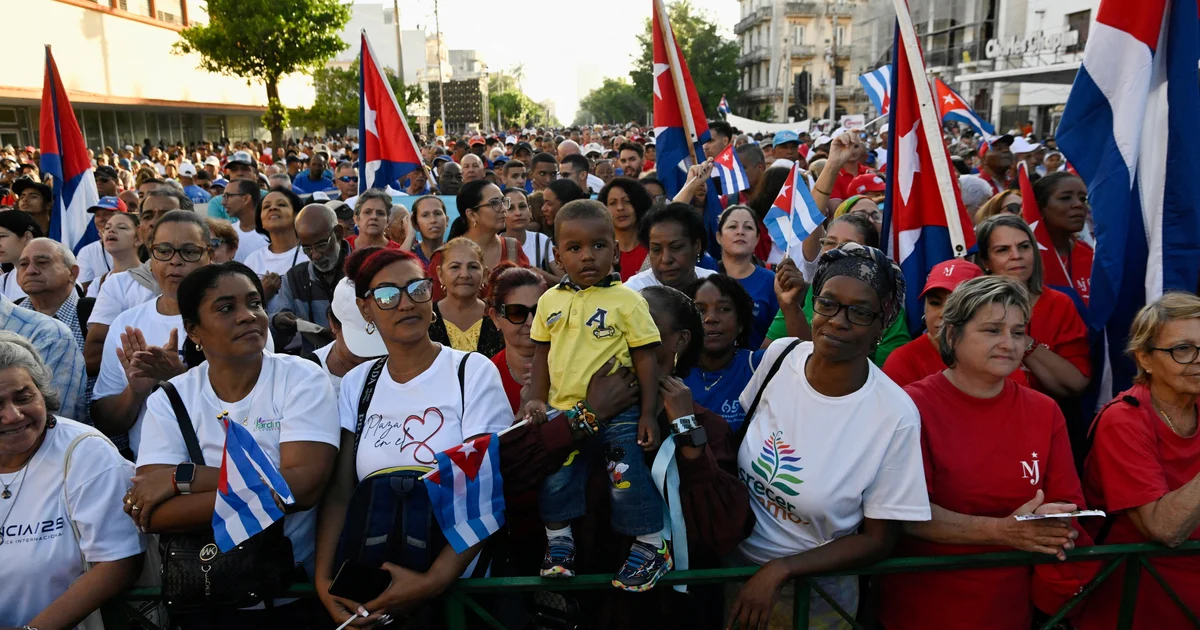
They travel to Cuba on the occasion of International Labor Day, which is widely celebrated there. It is marked by parades in Revolution Square in Havana and other cities. Hundreds of workers parade through the streets all the way to the monument to the Cuban revolutionary José Martí. It is a massive display of support for the Cuban revolution. The event highlights workers’ rights and includes international delegations.
Collection, delivery and challenges
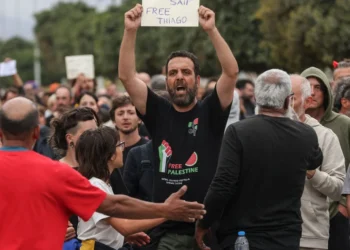
“It started with an appeal on social media. We coordinated and started collecting medicines at certain events and places. The permanent meeting place was the Participatory Autonomous Zone of Ljubljana, where Cuban film evenings were held in April. We agreed that people can bring donations there. We also gathered at a protest organized by the Movement for the Rights of Palestinians,” said Jan Vajgl.

They filled their suitcases to the brim with the collected medicines. PHOTO: Luka Rotar
They mainly collected medicines. The list of those urgently needed was obtained in coordination with the Cuban embassy in Vienna, which otherwise works for a wider area and covers Slovenia as well as Austria, since we do not have a Cuban embassy here. In addition to medicines, people also donated nutritional supplements, water purification tablets and baby formula.
Each student can bring one 23-kilogram suitcase of medication on the plane. “We were worried that the customs officials would not be impressed if they got a suitcase full of medicine. After several interviews and constant communication with the embassy in Vienna, we found that since the covid-19 pandemic, Cuba does not have any customs restrictions regarding the amount of medicine you can bring into the country,” said Vajgl.
After landing, medicines and other supplies will be handed over to the Instituto Cubano de Amistad con los Pueblos, an independent Cuban organization. “They have a network all over the country that distributes medicines to different polyclinics. Cuba is known for having polyclinics in almost every district, in every village, and this is where medicine is most lacking. If the medicines were only taken to the general hospital in Havana, they probably wouldn’t be distributed to the local communities, which we think is the most urgent at the moment,” added Jan.
All medicines that they cannot deliver themselves will be handed over to the MediCuba organization in Switzerland, which they will visit soon.
Humanitarian and information campaign
During the visit, they will be accommodated mainly in Havana, as public transport is said to be limited due to the lack of oil.
There, they want to collect as much material as possible, such as recordings of conversations with local residents, videos and photos, with which they would present what the situation really is. They will do this when they return, including at a round table with the Cuban ambassador from Vienna.

In the 1990s, Cuba was the most affected, as it was cut off from its traditional trading partners from the Eastern Bloc. Nevertheless, the country had hundreds of thousands of volunteer doctors abroad. PHOTO: Norlys Perez/Reuters
They were motivated to take action by the desire to help people and raise awareness among the Slovenian public about what is happening in Cuba. “The embargo is not only economic, but also media. “A lot of people have a wrong idea of Cuban society, what kind of political system they have and why they found themselves in such a situation,” emphasized Vajgl.
They hope that their campaign will encourage others who are also traveling to countries where conditions are difficult to think about whether they could do more. They say they put a lot of work and effort into the campaign, but no more than anyone else could. It is important for them to help and show that there are many things that can be done when you look around you.
Encouraging as well as negative comments
“The responses have been extremely positive. Many organizations, juniors, societies, other humanitarian organizations and individuals responded and helped us. They donated a lot. We didn’t expect to collect so much so quickly. Despite the overwhelming majority of positive responses, there were also some hostile comments on Facebook,” explained Rotar.
In their desire to continue helping other countries in need, they founded an official association that will enable permanent help and the spread of humanitarian campaigns. Soon they will also open a bank account and inform the public about the possibilities of donating.
Vajgl said that the most common criticism was that they work for their own benefit, or enrichment and promotion. Some asked them why they don’t prefer to help Slovenian healthcare. But such comments were overruled by many supporters who want to do something for a fellow human being thousands of kilometers away. Cuba sent doctors abroad even when it could not afford it itself. That’s why Jan explains that he was moved when some people also recognized it as a moral duty to lend a hand to a person in need. Despite the support of many organizations, they remain completely independent.
A few days before departure, there were no worries or fears. The most skeptical were the parents, who at first did not even want to tell them what path they were going on, the students explain. In the end, their only thought was to transfer as much medicine as possible to Cuba. In their view, what Cuba needs most now is support, compassion and solidarity, as well as condemnation of the senseless and illegal embargo. Rotar emphasizes that political pressure is needed and that a country that has done a lot of good should not be excluded.